Oil prices fell sharply Monday evening after President Donald Trump described U.S.-Iran negotiations as "proceeding nicely." West Texas Intermediate crude for July delivery dropped 5.61% to $90.99 a barrel. Brent crude for July settled down about 7% at $96.14. The move occurred in thin holiday trading with U.S. equity markets closed for Memorial Day. The selloff extended a trend from last week, when oil already declined on speculation of a diplomatic breakthrough.
The diplomatic signal is not matched by military reality. The U.S. Central Command said it conducted "self-defense strikes" targeting Iranian missile launch sites and boats attempting to lay mines in southern Iran. The strikes occurred after Trump's comments, meaning the Pentagon continues to press operations even as the White House talks peace. That gap creates a two-way risk for oil traders.
The Simple Read vs. The Better Market Read
The simple read: Trump says talks are going well, oil falls, equities rally. Investors conclude the Strait of Hormuz supply risk is fading.
The better read: Tehran appears to be "blinking," according to former CIA director David Petraeus, who spoke at the UBS Asian Investment Conference. That supports the oil selloff at face value. The U.S., however, is still conducting strikes, and Trump warned he could "resume attacks" if talks fail. The market is pricing a resolution, not a pause. A true resolution would require Iran to cease its own naval operations and allow free passage through the Strait of Hormuz. That has not happened. The actual supply disruption–roughly 3-4 million barrels per day of oil transit through the strait–remains impaired. The oil price drop reflects hope, not certainty.
If talks collapse, oil could rally back above $100. If a ceasefire emerges and the strait reopens, oil could test $85-$90. The current price at $90.99 represents a midpoint of those two outcomes.
Asia Equity Futures Confirm the Oil-Led Relief
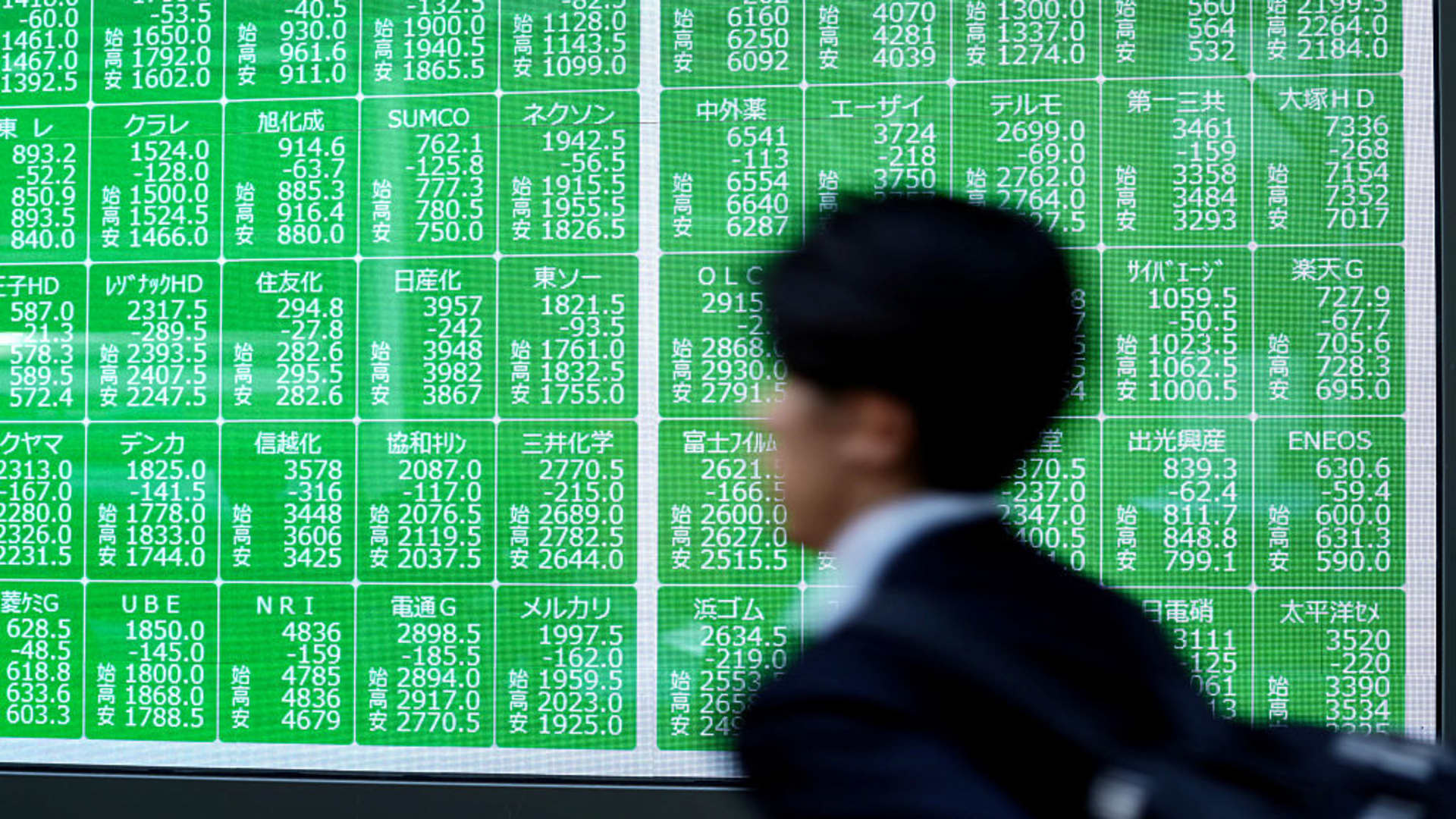
Japan's Nikkei 225 was set to open higher, with Chicago futures at 65,290 and Osaka futures at 65,460, above Friday's cash close of 65,158.19. The index broke above 65,000 for the first time Monday. Hong Kong's Hang Seng futures were at 25,430, below the last close of 25,606.03. Australia's S&P/ASX 200 futures traded at 8,735, above the index's close of 8,692.
U.S. futures also rose in after-hours trading. S&P 500 futures gained 0.78%, Nasdaq-100 futures advanced 1.14%, and Dow futures added 371 points, or 0.73%. The equity reaction shows investors treating lower oil as a net positive for global growth, even if the geopolitical root cause remains unresolved.
The Next Decision Point
The market now awaits a formal ceasefire announcement or a breakdown. The next concrete marker is whether the U.S. Central Command confirms a halt to airstrikes. If strikes continue while talks proceed, oil will struggle to hold below $90. If a truce emerges, further downside is likely. If talks collapse, the Strait of Hormuz risk returns in full. For now, the diplomatic signal dominates–but the military data points in the other direction.
See also: Oil Drops 7% as Trump Signals Strait of Hormuz Reopening and commodities analysis.