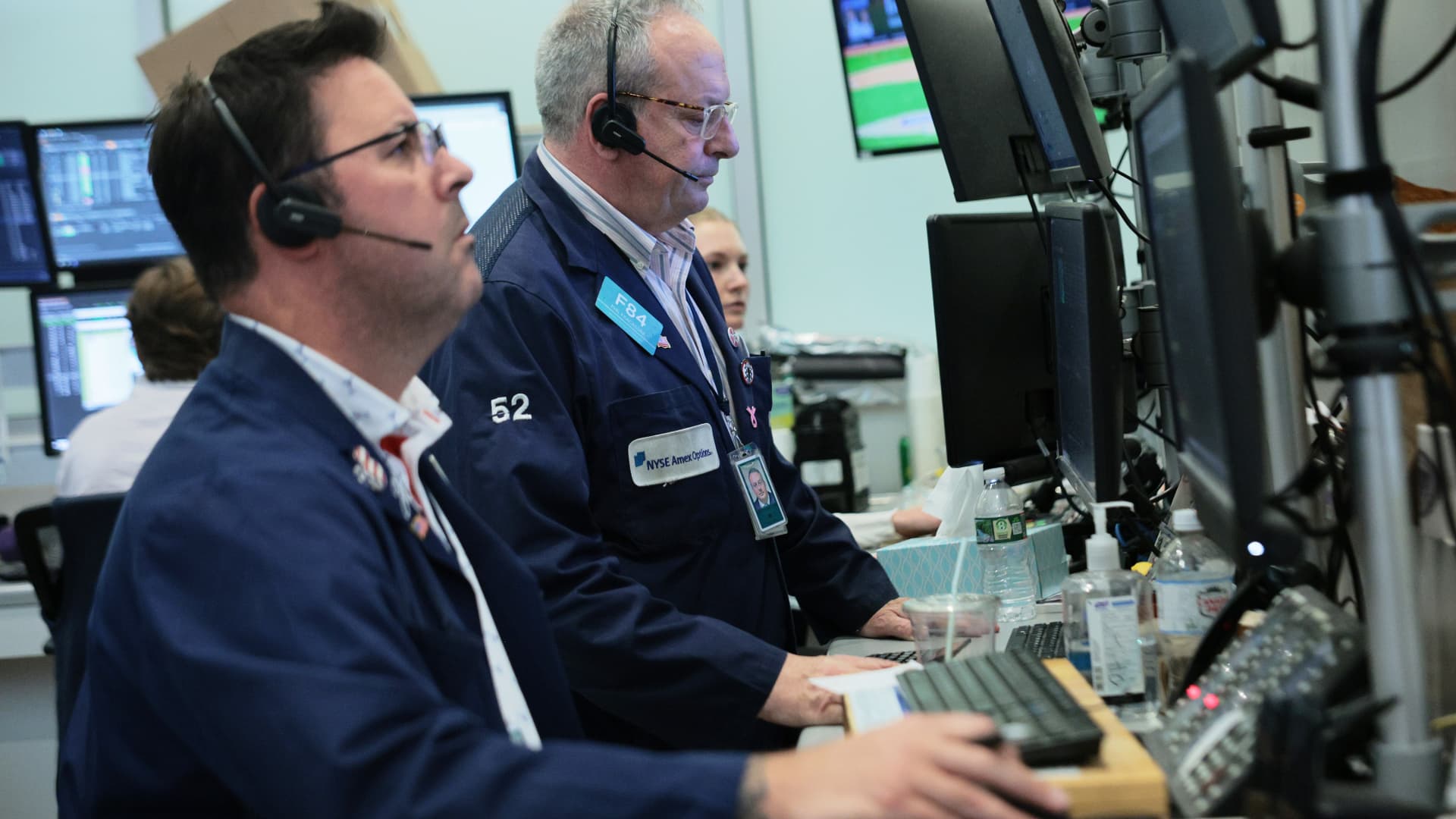
U.S. stocks flopped again Wednesday as fresh selling in the tech cohort dragged all major indexes into the red after an early rally attempt.
The question on every trader's mind: how bad could it get? Options-market makers are always calculating the odds. For the S&P 500, a technical bear market decline of 20% from the closing high of 7,610 would mean a slide to 6,088. Put contracts on the index price in a 10.5% chance it closes at that level on Aug. 31, according to ThinkOrSwim data. The odds of touching that price between now and then are generally double, or about 21%.
For the Nasdaq 100, the chance goes up to 32%. Implied volatility in the Nasdaq 100 sits near 33, compared to 22 in the S&P 500. Concentrated selling in big-tech AI winners is responsible for the spread, which means the odds of steeper moves in either direction are higher in the tech-heavy index.
"I think it sounds high in the Nasdaq and low in the S&P 500 – from a volatility standpoint I'd be selling Nasdaq, buying S&P vol," Scott Bauer, CEO of Prosper Trading Academy, said in a call. "This individual stock volatility is affecting Nasdaq more but eventually that should at least stop going higher, it's at pretty extreme levels. There's definitely some FOMO selling with people trying to free up cash for SpaceX."
Small-cap stocks sit somewhere in between. The Russell 2000's 30-day implied volatility is 29. Odds of losing at least 20% between now and Aug. 31 are about 24%.
The last technical bear market in the S&P 500 was the roughly 10-month downturn amid higher interest rates in 2022. On an intraday basis, the index fell more than 21% during last year's sell-off around tariff announcements.