The Case for Profit-Taking in Nucor
Nucor Corporation (NUE) has long served as a bellwether for the industrial health of the United States, commanding a premium valuation due to its diversified business model and its status as the nation’s largest steel producer. However, recent valuation metrics suggest that the stock may have outpaced its underlying fundamentals. For investors who have enjoyed the steady appreciation of this industrial giant, the current market environment offers a compelling argument for taking a tactical step back.
Valuation Headwinds: P/OCF and EV/EBITDA
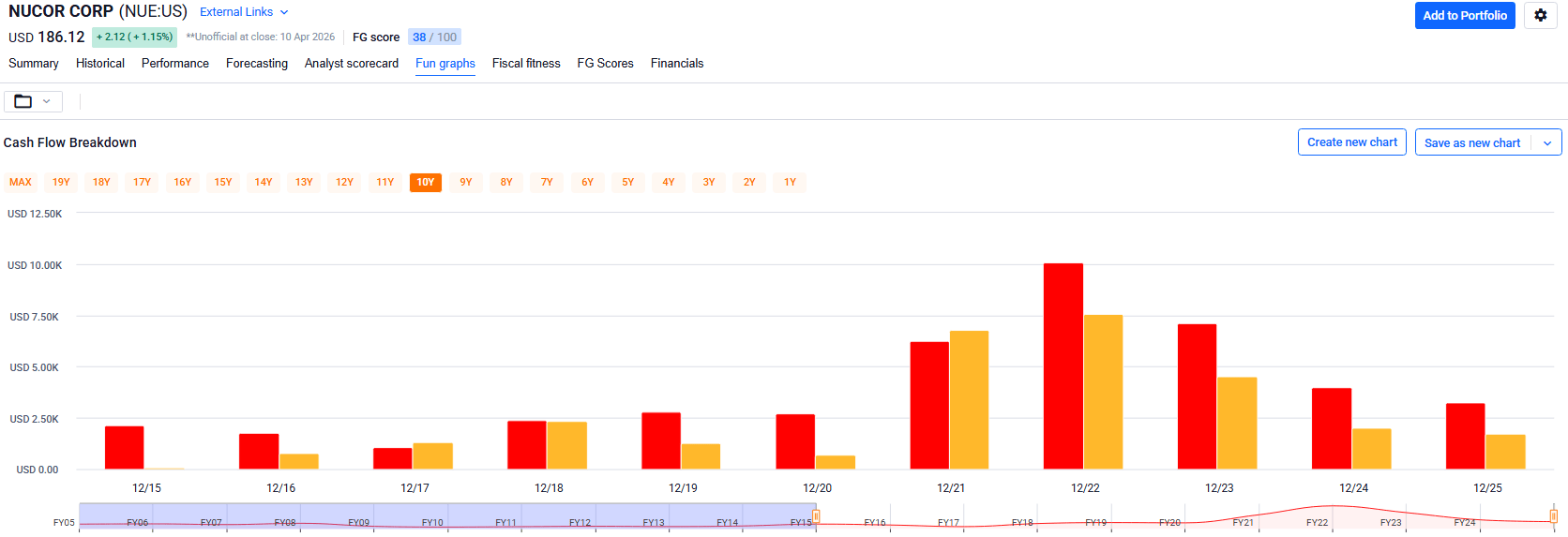
A rigorous analysis of Nucor’s current financial standing reveals significant tension between its share price and its operational efficiency. When evaluating the company through the lens of Price-to-Operating Cash Flow (P/OCF), Nucor currently trades at a multiple that sits at the high end of its historical range. This suggests that the market is pricing in aggressive growth expectations that may be difficult to sustain given the cyclical nature of steel demand and the potential for cooling industrial output.
Furthermore, the Enterprise Value to EBITDA (EV/EBITDA) ratio—a critical metric for capital-intensive industries like steel—indicates that the market is paying a premium for Nucor’s earnings before interest, taxes, depreciation, and amortization. When EV/EBITDA metrics climb significantly above historical averages, it often signals that the company’s capital allocation and operational leverage are fully priced in, leaving little room for error if the macroeconomic environment shifts toward a contractionary phase.
Macro Context and Sector Sensitivity
Steel producers are inherently sensitive to macroeconomic variables, including interest rates, infrastructure spending, and general manufacturing activity. While Nucor has benefited from favorable domestic policies and robust demand in sectors like automotive and construction, the broader macro outlook remains murky. Persistent inflationary pressures and the high cost of capital are beginning to weigh on capital expenditure projects, which historically serve as the primary engine for steel consumption.
For traders, the current setup in NUE is a classic exercise in risk management. While the company remains a "premier" operator within the sector, the disconnect between its current valuation and the potential for a softening economic cycle makes it an ideal candidate for portfolio rebalancing. Taking “a little off the table” is not necessarily a bearish call on Nucor’s long-term operational health, but rather a prudent recognition that the risk-to-reward ratio has shifted in favor of caution.
What to Watch Next
Investors should closely monitor upcoming quarterly filings for any hints of margin compression. Specifically, watch for fluctuations in average selling prices (ASP) and any commentary from management regarding order backlogs. If Nucor begins to show signs of softening demand in its downstream segments, the current valuation multiples will likely face downward pressure, potentially offering a more attractive entry point for long-term holders later in the cycle.
Until then, the focus should be on capital preservation. With the industrial sector facing a potential pivot in the broader macro narrative, maintaining excessive exposure to stocks trading at top-tier multiples carries an asymmetric risk profile that savvy market participants are currently looking to mitigate.