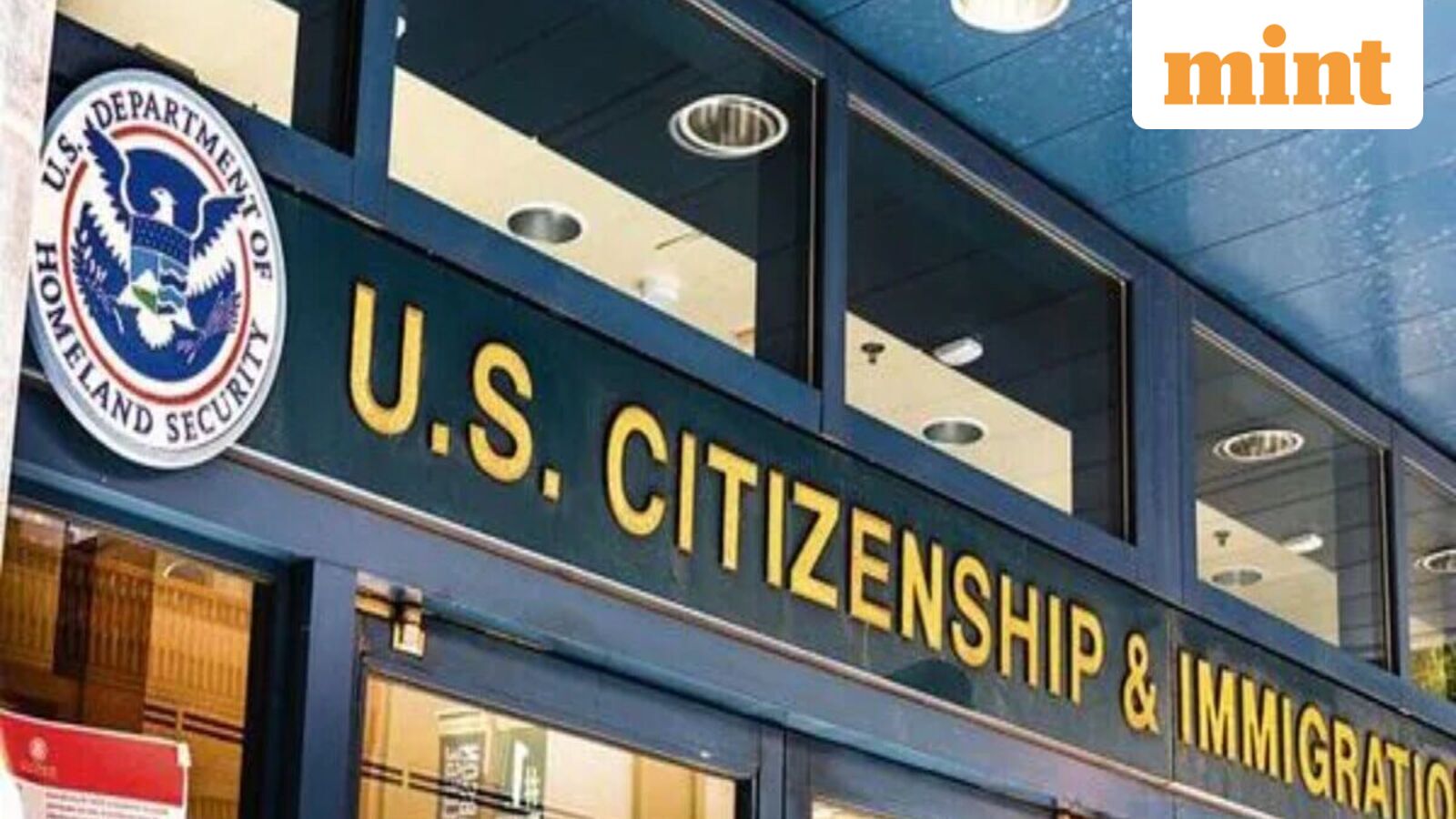
The US Citizenship and Immigration Services (USCIS) announced a policy change that requires green card applicants to submit their applications from their home countries, except in “extraordinary circumstances.” The shift effectively ends the long-standing practice of adjustment of status from within the United States, a process used by the majority of legal immigrants since the 1950s. Congresswoman Grace Meng, chair of the Congressional Asian Pacific American Caucus, called the decision “reprehensible” and said she would pursue every avenue to reverse it.
For investors, the immediate question is not political. It is practical: which publicly traded companies depend most on the talent pipeline this policy threatens? The answer cuts across technology, healthcare, and IT services – sectors that rely heavily on H-1B visa holders for engineering, research, and cost-competitive labor.
The USCIS Policy That Reshapes Immigration Risk
USCIS spokesperson Zach Kahler said that people who “provide an economic benefit or otherwise are in the national interest will likely be able to continue on their current path.” The agency did not define those exceptions clearly. Ajay Bhutoria, former White House Advisor to President Biden, told PTI Videos that “different groups will be filing lawsuits challenging this new policy.” He added: “This puts 1.2 million Indian Americans and their families in limbo after they followed every law, paid taxes and waited legally for decades.”
“This puts 1.2 million Indian Americans and their families in limbo after they followed every law, paid taxes and waited legally for decades.” – Ajay Bhutoria
David J. Bier, Director of Immigration Studies at the Cato Institute, noted in a blog post that 56% of legal immigrants since 1980 adjusted status inside the United States. He called the policy “illogical,” arguing it will drive talented people to other countries and make America less competitive for business.
The Mechanism: Adjustment of Status vs. Forced Departure
The earlier policy allowed foreign workers to change from non-immigrant to immigrant by applying for adjustment of status from within the US. The new rule forces them to leave the country during the application process. Congressman Chuy García (D-IL) described the policy as “absurd and cruel,” pointing out that it forces “thousands of LEGAL immigrants, including spouses of US citizens, to leave their homes, families, and jobs for weeks or even months.”
For a senior engineer or a lead researcher, a forced departure of two to three months creates a direct hit to productivity. For a software team with a critical release cycle, losing a key contributor for that period can delay product launches and inflate costs. This is not a theoretical risk. It is a measurable execution risk for any company that depends on foreign-born talent for R&D or project delivery.
Why Apple, Microsoft, and Infosys Face a New Overhang
Major US technology firms – Apple (AAPL), Microsoft (MSFT), Google (GOOGL), and Amazon (AMZN) – have historically relied on H-1B visas to fill engineering and AI research roles. The new rule does not block those visas. It adds a bureaucratic hurdle that may discourage top foreign talent from accepting US-based positions. Over time, this could shift the talent pool toward Canada, the UK, or India, where immigration pathways are clearer.
Congressman Greg Stanton (D-AZ) said on X that “forcing these immigrants to now leave the US before applying for citizenship will deprive us of their innovation, their tax dollars, & their contributions to our economy.” Andrew Ng, co-founder of Coursera, warned that the policy will “hurt American competitiveness in AI.”
The H-1B Dependency Factor for IT Services
IT services companies like Infosys (INFY) and Tata Consultancy Services (TCS) are even more exposed. They use H-1B visas to place engineers at US client sites. A policy that forces employees to leave the US during green card processing disrupts project continuity and raises relocation costs. These firms operate on thin margins and compete on labor cost arbitrage. Any disruption to the visa pipeline increases attrition and recruitment costs.
Healthcare is another vulnerable sector. Congressman Joaquin Castro (D-TX) noted that “nurses and doctors, teachers and engineers, mechanics and farm workers” are among the green card applicants affected. Hospital systems and biotech firms that recruit foreign-trained physicians and researchers face similar talent retention risks.
Valuation Risk for H-1B-Dependent Stocks
The simple read is that this makes legal immigration harder. The better market read is that it introduces a new layer of regulatory overhang that is not priced into current valuations. For IT services stocks, the policy adds a structural headwind to earnings. The market may begin discounting forward earnings for firms with high H-1B dependency.
Todd Schulte, president of immigration advocacy group FWD.us, called the policy “another abuse of power” and noted that the adjustment of status process “was expressly created by the Congress and has been affirmed a number of times over decades.” Legal challenges are likely to focus on whether the USCIS has the authority to bypass the statutory framework.
Confirmation Signals and Weakening Signals
Confirmation signals that the policy will hurt affected stocks:
- A surge in H-1B denial rates or a drop in new visa applications in the next quarterly data.
- Earnings calls where management explicitly cites immigration policy as a risk to talent acquisition or project delivery.
- Lawsuits that fail to block the policy, allowing it to take full effect.
Weakening signals that reduce the risk:
- A court injunction that halts the policy before implementation.
- Congressional action to codify adjustment of status, reversing the USCIS directive.
- The USCIS issuing broad exemptions for tech and healthcare workers, narrowing the policy’s impact.
Next Catalyst: Legal Challenges and Congressional Pushback
The immediate catalyst is the legal response. Multiple groups, including the American Immigration Lawyers Association and tech industry coalitions, are expected to file lawsuits in the coming weeks. A temporary restraining order could delay implementation, removing the near-term risk for affected stocks. Conversely, if courts uphold the policy, the talent pipeline disruption becomes a structural headwind.
Congresswoman Grace Meng said in a statement: “This reckless policy shows a stunning disregard for the human cost it will impose on hundreds of thousands of people each year. We will pursue every avenue to fight against this reprehensible decision and push for its reversal.”
Congressman Greg Stanton added on X: “Trump just made legal immigration harder - on purpose. America is able to attract the top researchers, doctors, & engineers because of our worker visa programmes.”
The political backlash may pressure the administration to clarify exemptions. The uncertainty itself is a negative for stocks with high H-1B exposure. Watch for earnings call mentions of talent retention and relocation costs. The first legal ruling will set the near-term direction. Until then, the risk is asymmetric for IT services and large-cap tech names that rely on foreign-born talent for competitive advantage.