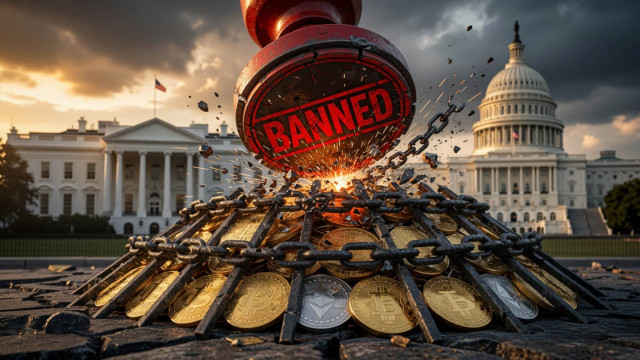
The updated CLARITY Act bans presidents and lawmakers from issuing crypto tokens, adds stablecoin rules and developer protections. Senate vote could come before August recess.
Senate Republicans released an updated version of the CLARITY Act on July 22, adding ethics restrictions that would bar the president, vice president, members of Congress and other senior federal officials from issuing or sponsoring cryptocurrencies for compensation while in office. The revised text, which follows weeks of negotiations, seeks to address one of the biggest obstacles to Democratic support for the bill.
Senator Cynthia Lummis, a Republican from Wyoming, said she is committed to reaching a deal. “Consumer protection and pro-innovation policy aren't opposites – this bill proves it,” she said in a statement.
Asset management firm Grayscale said the bill would unlock the next wave of adoption for the digital-asset industry.
Republicans are expected to need Democratic votes to reach the 60-vote threshold required to overcome procedural hurdles in the Senate. The new ethics section is the result of months of pressure from Democrats who argued that Congress should not write new rules for crypto without also restricting the ability of presidents and lawmakers to profit from businesses that could benefit from those policies.
Much of that pressure centered on President Donald Trump and his family's growing involvement in digital assets. Senator Elizabeth Warren of Massachusetts, the top Democrat on the Senate Banking Committee, has repeatedly cited Trump's crypto ventures while demanding stronger conflict-of-interest provisions.
Those concerns persisted after the Banking Committee advanced CLARITY in a 15-9 vote in May. That version moved forward without the ethics protections Warren and several other Democrats had demanded.
The proposal would prohibit the president, vice president, members of Congress, federal judges and other covered officials from issuing or sponsoring cryptocurrencies and other digital assets for compensation. Their spouses would also fall under the restriction.
Covered officials would have to sell affected holdings, place them in blind trusts they do not control, or use a combination of both approaches. Crypto sales exceeding $1,000 would have to be disclosed.
The Government Accountability Office would study whether additional gaps remain in federal ethics rules governing cryptocurrency. Enforcement would largely fall to the Justice Department, which would receive civil authority to pursue violations. The provisions would also apply to crypto intermediaries, allowing enforcement against exchanges that knowingly list digital assets issued or sponsored in violation of the rules.
Trump's acceptance of the Republican proposal this week removes one source of uncertainty. The language is unlikely to be final. Democrats have not signed off on the current wording and have raised concerns about giving the Justice Department primary enforcement authority without providing a role for state attorneys general.
While lawmakers moved toward stricter rules for public officials, the revised draft preserves protections for software developers. The Blockchain Regulatory Certainty Act framework generally shields developers and infrastructure providers from being classified as money transmitters solely because they write software or maintain decentralized networks, provided they do not control users' assets.
The protection has become an important issue for DeFi developers. The draft maintains a limit on that protection for people who knowingly facilitate illegal transactions, preserving a route for prosecutors to pursue criminal conduct.
Republicans have paired those protections with a new package aimed at answering law-enforcement concerns about crypto crime. The draft would provide additional resources for state and local investigations involving digital assets and expand access to blockchain-analysis tools. It would also establish training programs for investigators and prosecutors and create a cyber-focused center to address threats connected to foreign actors, including North Korea and Iran.
A public-private task force would coordinate government and industry responses to cryptocurrency fraud. Stablecoin issuers would face requirements to comply with valid government orders involving actions such as freezing or seizing assets.
Another dispute that threatened CLARITY earlier this year remains largely settled in the new draft. The stablecoin section keeps the compromise negotiated by Republican Senator Thom Tillis of North Carolina and Democratic Senator Angela Alsobrooks of Maryland.
Companies would be barred from paying interest merely because customers leave payment stablecoins sitting in an account. Rewards connected to qualifying activity, including transactions and certain other uses of the tokens, could continue as long as they do not function like interest paid on a traditional bank deposit.
The distinction emerged after banks warned that allowing stablecoin providers to offer deposit-like yields could pull money away from insured bank accounts, while crypto companies argued that a broad prohibition could eliminate loyalty programs.
The updated legislation also retains bankruptcy protections intended to clarify what happens to customers' digital assets when an exchange or custodian fails. Customer assets covered by the protections would remain customer property rather than automatically becoming part of the bankrupt company's estate. The distinction became a major issue after failures including Celsius and FTX.
The revised text now moves the CLARITY Act into another round of negotiations. The Senate is scheduled to begin its August state work period on Aug. 10, leaving less than three weeks for negotiators to settle outstanding issues, complete the necessary procedural steps and secure floor time.
No Senate vote on CLARITY had been scheduled as of press time. Even if the bill clears the Senate, it would still face another legislative hurdle before reaching the White House. The Senate has substantially revised the version passed by the House, meaning both chambers would need to reconcile their differences and approve identical language before the legislation could be sent to President Trump.
Drafted by a large language model from the source reporting linked above, then screened by automated publishing checks. It is not read by a journalist before publication. Some articles cite our Alpha Score. Verify prices and figures against the original source. Educational coverage, not personalized advice.