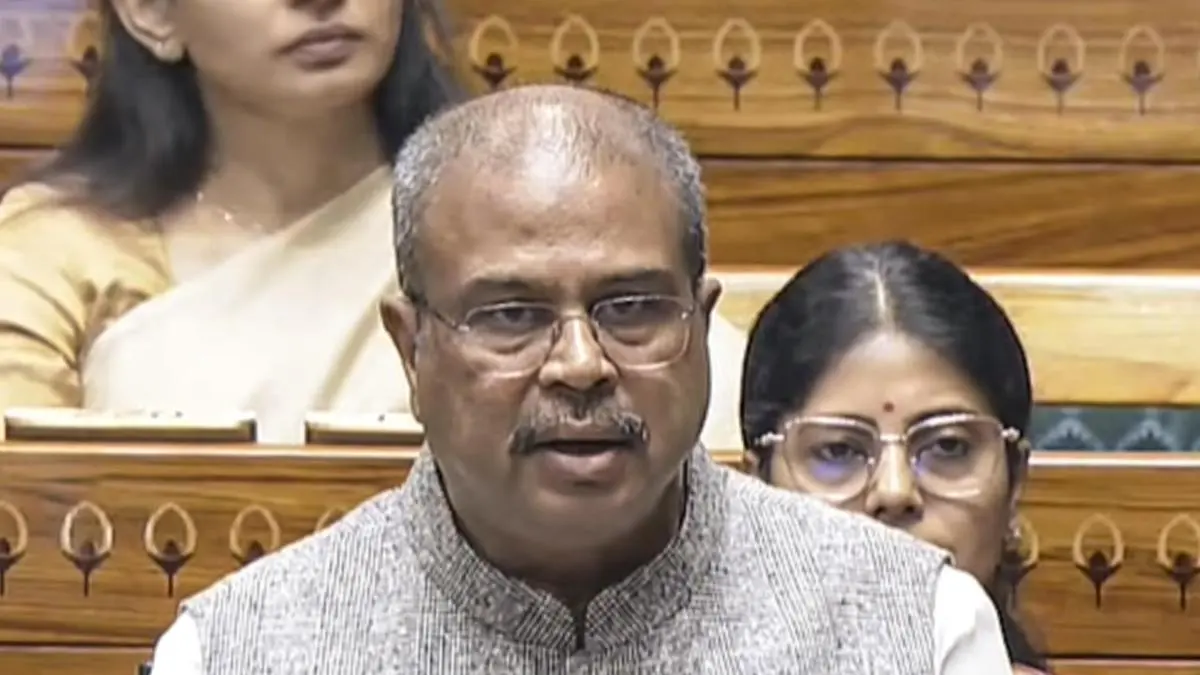
Union Education Minister Dharmendra Pradhan confirmed on Friday that the NEET-UG re-examination will be held on June 21, and that the medical entrance exam will become a computer-based test (CBT) from the 2025 cycle. The announcement follows the cancellation of the May 3 exam after allegations of question paper leaks and irregularities. For investors tracking India's education technology space, the policy pivot is a concrete catalyst: a mandatory digital shift for one of the country's highest-volume competitive exams creates a new, non-discretionary demand channel for secure testing infrastructure, online proctoring, and digital assessment platforms.
The simple read is that a re-exam and a CBT mandate restore credibility. The better market read is that the government is now structurally committed to technology-led exam security, which forces a procurement cycle that listed and unlisted ed-tech firms will compete for. The National Testing Agency (NTA) will need to scale up its digital delivery capacity rapidly. Pradhan's own acknowledgment that "CBT mode of exam is comparatively better than OMR. It is a bit protected" signals the policy direction is locked in, even as he flagged cybercrime as a persistent challenge.
The Policy Shift: From OMR to Computer-Based Testing
The immediate trigger is the cancellation of the May 3 NEET-UG after objections surfaced through the NTA grievance system about overlaps with "guess papers." Pradhan detailed a timeline that began on May 8 and culminated in the decision to cancel on May 12, with the case subsequently handed to the CBI. The re-exam on June 21 is the near-term fix. The structural change is the move to computer-based testing from the 2025 cycle.
Why the OMR Model Broke Down
The optical mark recognition (OMR) sheet-based exam created multiple leakage points: physical paper transport, storage, and the existence of a parallel "guess paper" ecosystem. Pradhan stated that "questions had gone out," confirming the integrity breach was material enough to scrap the entire sitting. The CBI probe, with the minister asserting that "no one will be spared," adds a layer of enforcement that could deter future malpractice. It does not, however, solve the physical vulnerability inherent in paper-based tests.
CBT as a Security Upgrade, Not a Panacea
Pradhan described CBT as "a bit protected" relative to OMR, a candid admission that digital delivery reduces risk without eliminating it. The minister explicitly noted that cybercrime is a "big world in itself" and that the system must be trusted. For technology providers, this creates a dual mandate: deliver secure exam delivery at scale and build cyber-resilience into the platform. The government's willingness to acknowledge the cyber threat means contract awards will likely favor firms with demonstrated encryption, remote proctoring, and audit-trail capabilities, not just basic test-taking interfaces.
Sector Read-Through: Digital Testing Infrastructure Demand
No single company was named in the minister's press conference. The market opportunity, however, is defined by the scale of NEET-UG, one of the largest single-session competitive exams in the world. A shift to CBT creates demand across three layers:
- Test delivery platforms that can handle high concurrency, offline-first modes for low-bandwidth centers, and biometric authentication.
- Content security and encryption vendors that can lock down question banks and prevent screen-capture leaks.
- Proctoring and surveillance providers offering AI-based invigilation, browser lockdown, and post-exam forensic analysis.
The Procurement Catalyst
The NTA will need to issue requests for proposal (RFPs) for CBT infrastructure well before the 2025 exam cycle. Historically, large government exam digitization contracts in India have moved through a tendering process that can take months. The June 21 re-exam, while still likely paper-based given the short timeline, will serve as a stress test for the NTA's operational capacity. Any execution gaps in the re-exam will increase the urgency for a robust digital solution, potentially accelerating the procurement timeline.
Valuation and Sentiment Impact
Indian education technology stocks have been under pressure from a post-pandemic normalization in online learning demand and a funding winter for unlisted startups. A government-mandated shift to CBT for a flagship exam provides a policy-driven demand floor that is not dependent on consumer discretionary spending. The catalyst is not a one-time event; it is a structural re-architecture of high-stakes testing that could extend to other NTA-conducted exams like JEE Main, CUET, and UGC NET if the NEET-UG transition is deemed successful. Investors will begin to price in a multi-year contract pipeline rather than a single-exam opportunity.
Practical rule: When a government cancels a marquee exam and mandates a technology shift in the same cycle, the procurement urgency is higher than in a planned upgrade. The political cost of a second failure forces speed.
Execution Risk and the CBI Probe
The minister's own words contain the risk that the market may overlook. Pradhan said, "There are challenges, however, we will have to trust the system of our country." That trust is not yet earned. The CBI investigation is ongoing, and the NTA's internal processes are under scrutiny. A CBT rollout that suffers a data breach, a server outage, or a remote proctoring failure during a live exam would be politically damaging and could delay the digital transition across other exams.
What the June 21 Re-Exam Will Reveal
The immediate catalyst for traders is not the 2025 CBT shift; it is the June 21 re-exam execution. If the NTA conducts the re-exam without fresh controversy, it will signal that the agency can manage a high-stakes event under intense public scrutiny. That outcome would de-risk the CBT transition narrative. If new irregularities emerge, the reform timeline could slip, and the government may revert to a more cautious, phased approach that limits the near-term opportunity for technology vendors.
The CBI Probe as a Wildcard
The minister's statement that "no one will be spared" suggests the investigation could implicate NTA officials or external contractors. Any finding of systemic collusion would trigger a leadership overhaul at the NTA, potentially resetting procurement priorities and delaying RFPs. A clean chit, conversely, would remove a political overhang and allow the agency to focus entirely on the CBT transition.
Decision Point for Ed-Tech Investors
The NEET-UG CBT mandate converts a recurring exam integrity crisis into a policy tailwind for digital assessment infrastructure. The trade is not on the June 21 re-exam itself; it is on the procurement cycle that must begin in the next six to nine months to meet the 2025 deadline. The key watchpoints are:
- NTA tender announcements for CBT platform development, secure browser technology, and remote proctoring.
- Partnership disclosures from listed ed-tech firms that signal they are bidding for or have secured pre-qualification for government exam contracts.
- Post-June 21 media narrative: if the re-exam is clean, the reform momentum accelerates; if it is not, the CBT timeline faces political headwinds.
For investors tracking the stock market analysis landscape, the NEET-UG policy shift is a reminder that government procurement cycles in India's education sector can create asymmetric upside for companies positioned at the intersection of testing and technology. The catalyst's mechanism is clear: a mandatory digital mandate for a high-volume exam forces demand that did not exist in the previous OMR-based system.
Bottom line for traders: The NEET-UG CBT shift is a policy catalyst that will show up in RFPs before it shows up in revenue. Track the tender pipeline, not the June 21 headlines.