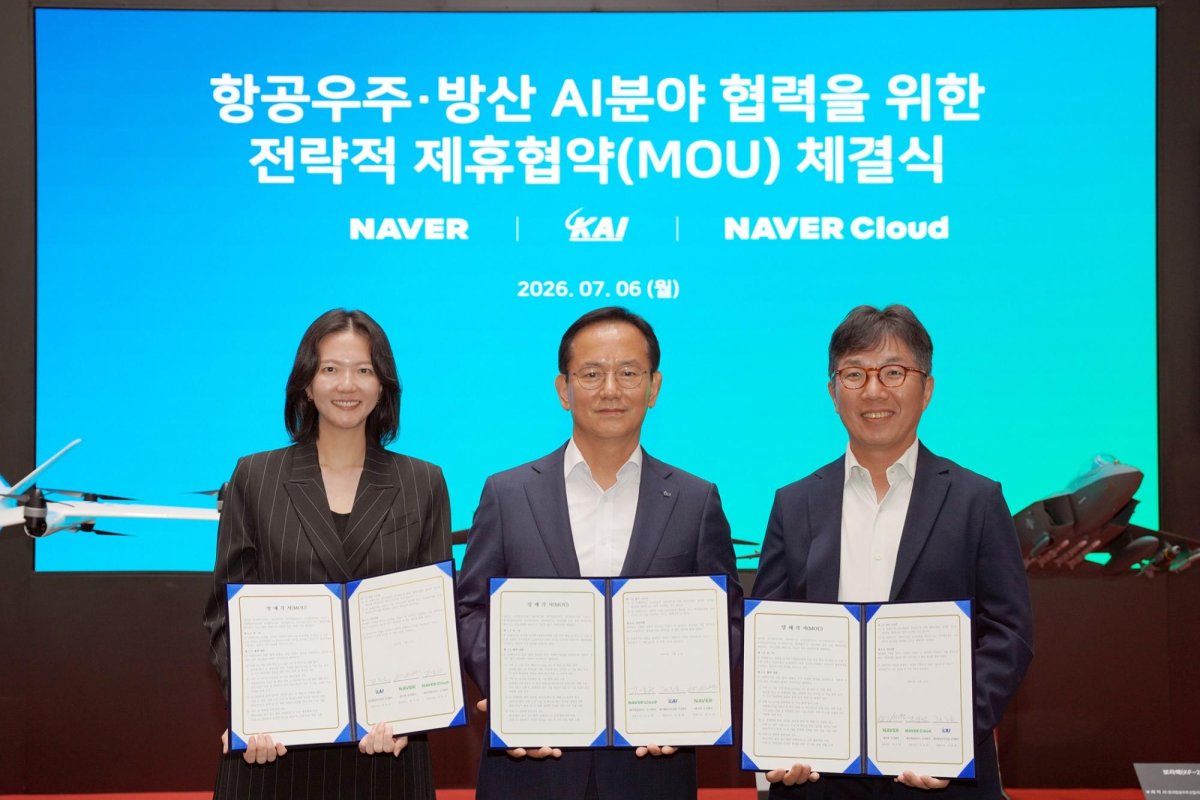
South Korea's Naver is jumping into defense AI. The company signed a memorandum of understanding with Korea Aerospace Industries (KAI) on Monday to develop artificial intelligence models for future combat systems, the two firms said Tuesday.
Naver CEO Choi Soo-yeon and KAI CEO Kim Jong-chul attended the signing at KAI's Sacheon headquarters. The deal covers a defense-specific AI foundation model, joint participation in government R&D projects, and application of AI to unmanned aircraft platforms and manned-unmanned teaming systems. KAI plans to use the technology in its next-generation air combat system.
The partnership is part of Seoul's push for greater technological self-reliance in national security. Choi called sovereign AI infrastructure "directly connected to national sovereignty." Sovereign AI here means systems built and run domestically, using Korea's language and data, with its security rules baked in.
For the sector, the readthrough is straightforward. KAI is the prime contractor for Korea's KF-21 fighter and future unmanned systems. Tying its platform to Naver's cloud and AI stack – rather than foreign providers – could reshape the defense supply chain. Smaller Korean AI firms and defense suppliers may eventually feed into this ecosystem. The companies said they plan to "expand an AI cooperation ecosystem with defense and aviation suppliers" to strengthen the country's domestic AI industry.
The defense AI market in Asia is heating up. Japan and Australia have similar sovereign AI initiatives. For Naver, this marks a significant pivot into defense after years of focusing on consumer AI, cloud, and search. For KAI, it adds an AI layer to its aerospace platforms without relying on U.S. or Chinese vendors.
Neither company disclosed financial terms or a timeline for the foundation model.