Stocks● Neutral
NATO's Eastern Flank Builds Deterrence as US Commitment Wavers
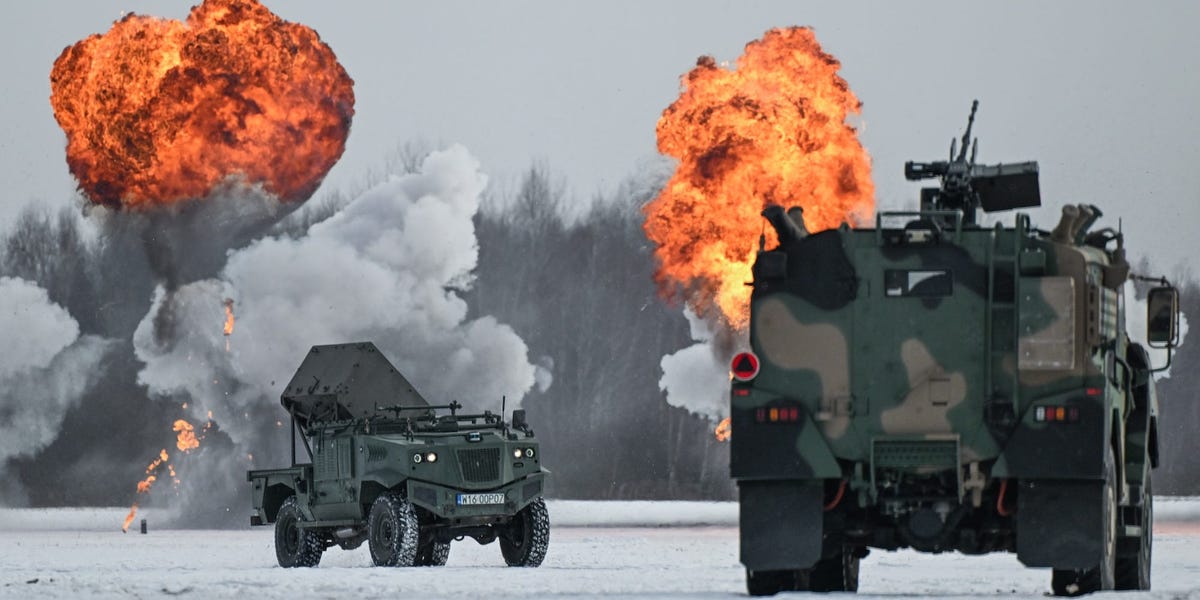
A WSJ report from Finland, Estonia, and Poland shows uneven progress in deterring Russia, with European allies preparing for a potential US pullback.
Continue with
The Wall Street Journal sent reporters to three stretches of Europe's eastern frontier and found varied strategies and uneven progress in deterring Russia. Finland, Estonia, Latvia, Lithuania, and Poland are all preparing for a potential conflict, with or without American backing.
Finland joined NATO in 2023, doubling the alliance's land border with Russia overnight. The country has spent decades preparing for this moment. It maintains a conscript army of 280,000 and stockpiles artillery shells, fuel, and medical supplies in underground bunkers carved into bedrock. On the border in North Karelia, bears and wolves still cross the frontier freely. The real threat sits farther south, where the Russian border bulges toward the Baltic states.
Estonia, Latvia, and Lithuania face a different problem. Their armies are small. Estonia fields about 7,000 active troops. Their geography is unforgiving. The Suwalki Gap, a 60-mile strip of farmland between Poland and Lithuania, is the alliance's most vulnerable point. If Russian forces seized it, the Baltic states would be cut off from the rest of NATO by land. NATO planners have war-gamed this scenario for years. The answer is not a static defense. It is a rapid reinforcement model: pre-positioned equipment and fast-moving brigades, with air power that can arrive within hours.
Poland is spending more than 4% of its GDP on defense, the highest share in NATO. Warsaw has ordered hundreds of Abrams tanks, HIMARS rocket systems, and F-35 fighter jets. The buildup is visible along the eastern border. New barracks, ammunition depots, and air-defense batteries have sprouted in what was farmland two years ago. Polish commanders say the goal is not just to hold a line. It is to make any Russian advance prohibitively costly.