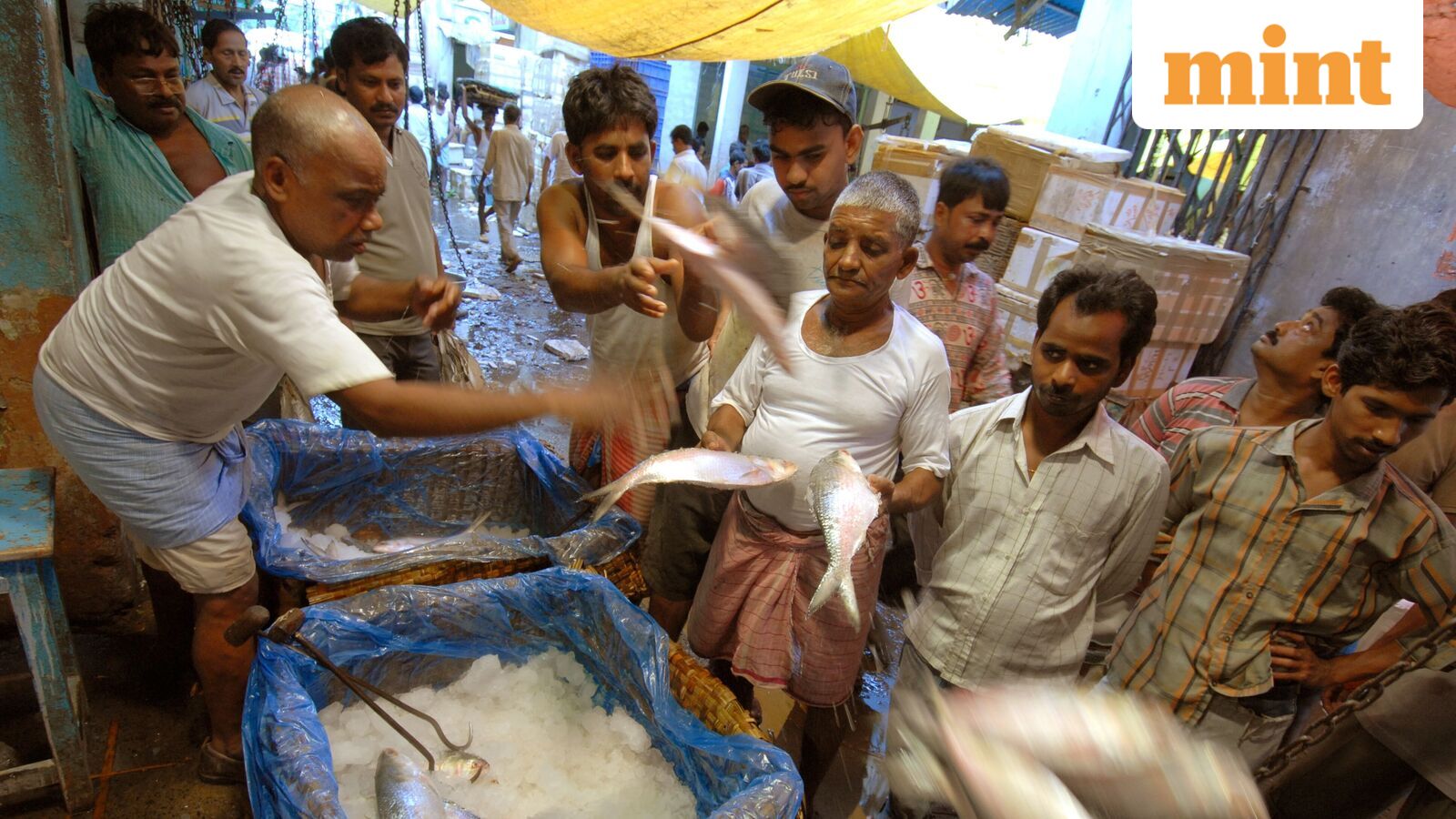
Myanmar shipped 98% of India's hilsa imports in FY26. Bangladesh's share fell to 2% as export curbs redirected supply. Strong demand persists, with fresh hilsa expected in two months.
Myanmar supplied 98% of India's hilsa imports in the 2025-26 financial year, official data show. Bangladesh, long the dominant source, accounted for just 2.2% of the 6,494 tonnes shipped. Five years earlier, Bangladesh held a 47.8% share.
Commerce ministry data trace the shift. Imports from Bangladesh fell more than 88% in value over the period, to ₹16.17 crore. Myanmar's hilsa exports to India jumped 342% to ₹459 crore. The volume picture is similar: Myanmar supplied 6,494 tonnes against just 143.8 tonnes from Bangladesh.
Bangladesh's Quota Squeeze
Bangladesh first banned hilsa exports in 2012 to control domestic prices. It later loosened the rule with annual seasonal quotas, typically around Durga Puja. Those quotas got smaller and more tightly controlled, said Harsh V. Pant of the Observer Research Foundation. Domestic prices in Bangladesh have risen because of supply shortages, making local sale more attractive than export.
Myanmar filled the gap. Its hilsa enters India duty-free under the India-ASEAN trade agreement, said Jayati Ghosh, professor at the University of Massachusetts Amherst. That price advantage, combined with Bangladesh's export restrictions, redirected sourcing. Some experts argue that Bangladeshi-origin hilsa is simply routed through Myanmar, though no direct evidence was provided.
The diplomatic backdrop also changed. Myanmar's junta chief, Min Aung Hlaing, visited New Delhi in late May, his first trip since the 2021 coup. The visit coincided with deepening trade ties. Bangladesh, on the other hand, has seen trade tensions rise after the interim government took over last year. The interim government reinstated the export ban in September 2024, then quickly replaced it with a tightly regulated quota system.
Demand for hilsa in India remains strong despite premium pricing. Wholesale prices range from ₹800 to ₹1,000 per kilogram. Even at elevated prices, buyers continue to seek good quality hilsa, especially during festivals, said Sheik Moinuddin, general manager at Kolkata-based Kamrun Trading Co. The key consumption hubs are West Bengal and Delhi, where rising incomes and regional cuisine trends have expanded the market.
Premium seafood retailers report growing interest in hilsa beyond the Bengali diaspora. The fish, once a seasonal purchase, now draws buyers across urban India, importers said.
India and Bangladesh have a bilateral trade of ₹109,226 crore in FY26, with a ₹77,709 crore surplus in India's favor. The two sides are negotiating a Comprehensive Economic Partnership Agreement. India-Myanmar trade stands at ₹17,304 crore, with Myanmar holding a ₹2,980 crore surplus. The two are working on a rupee-kyat settlement mechanism to boost trade.
Fresh hilsa supply from the Sundarbans is expected in two months, said Syed Anwar Maqsood, secretary of the West Bengal Fish Importers' Association. The next season's trade pattern will depend on whether Bangladesh eases its export quota and whether Myanmar maintains its price advantage, traders said.
Prepared with AlphaScala research tooling and grounded in primary market data: live prices, fundamentals, SEC filings, hedge-fund holdings, and insider activity. Each story is checked against AlphaScala publishing rules before release. Educational coverage, not personalized advice.