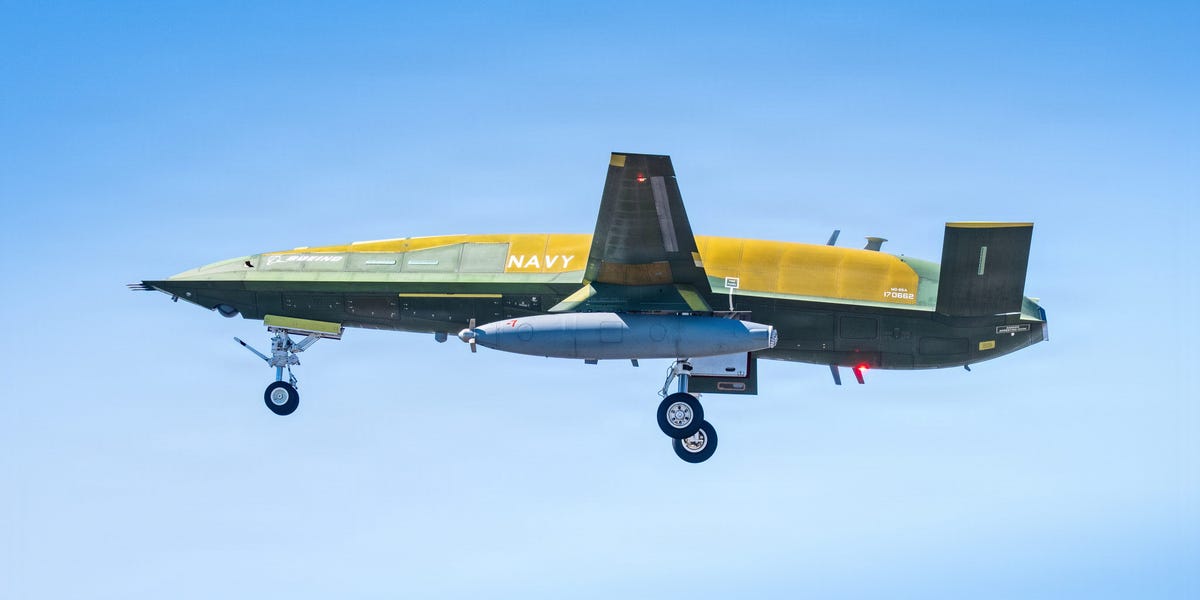
The United States Navy has initiated flight testing for the MQ-25A Stingray, a production-representative unmanned aerial vehicle designed to serve as a carrier-based refueling platform. This milestone marks a transition from development prototypes to the hardware intended for active fleet integration. By offloading the air-to-air refueling mission from crewed platforms like the F/A-18 Super Hornet, the Navy aims to reallocate existing fighter assets toward combat roles rather than logistical support.
Strategic Reallocation of Carrier Assets
The integration of the MQ-25A addresses a long-standing operational bottleneck in naval aviation. Currently, carrier strike groups rely on a portion of their fighter fleet to provide tanker support, which consumes flight hours and limits the offensive capacity of the air wing. The Stingray is engineered to extend the operational radius of carrier-based fighters, allowing for deeper strike capabilities and increased loiter time in contested environments. This shift effectively increases the utility of the existing fleet without requiring a proportional increase in the number of crewed aircraft.
Beyond the immediate refueling capability, the MQ-25A program represents a broader shift toward autonomous systems in maritime logistics. The successful flight testing of a production-representative model confirms that the platform is moving toward the deployment phase. This development is relevant for defense contractors involved in the supply chain for autonomous naval systems and those focused on the modernization of carrier air wings. The transition from testing to production will likely influence future procurement cycles for the Department of Defense as it prioritizes unmanned systems to maintain force projection.
Industrial and Sector Read-Throughs
The advancement of the MQ-25A program provides a clear indicator of the Navy's commitment to unmanned integration. For investors monitoring the defense sector, the focus now shifts to the scalability of production and the potential for the Stingray to serve as a testbed for additional autonomous roles. While the immediate impact is concentrated on refueling, the underlying airframe architecture could support future missions, including intelligence, surveillance, and reconnaissance operations.
AlphaScala currently classifies HAS (Hasbro, Inc.) as Unscored within the Consumer Cyclical sector. While Hasbro operates in a different market segment, the broader trend of industrial automation and specialized hardware development remains a focal point for stock market analysis. The defense industry's pivot toward autonomous systems often mirrors technological advancements seen in other high-tech sectors, such as the hardware developments observed in companies like NVIDIA.
The Path to Operational Capability
The next concrete marker for the MQ-25A program is the completion of carrier integration trials. These tests will determine how the drone interacts with existing flight deck operations and electromagnetic environments. Successful integration will validate the Navy's strategy to extend the reach of its carrier strike groups. Observers should monitor upcoming Department of Defense budget filings and procurement updates for details on the production cadence and the timeline for full-scale fleet deployment. These documents will provide the necessary data to assess the program's impact on long-term defense spending and the operational readiness of the carrier fleet.