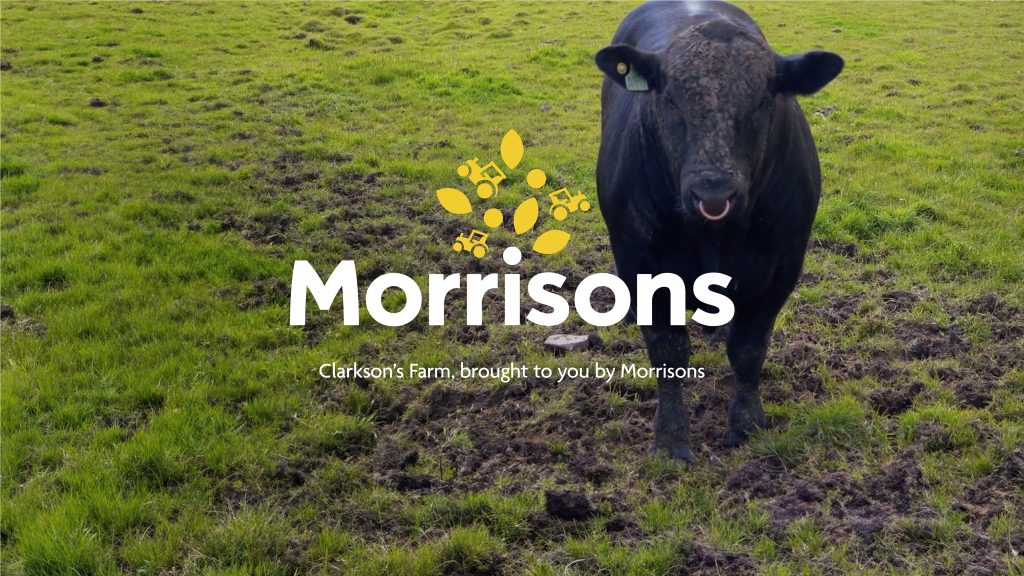
Morrisons has extended its exclusive sponsorship of Clarkson's Farm on Prime Video for a second consecutive year. The renewed deal covers the series' upcoming third season and includes two 30-second adverts plus a suite of new and returning 10-second idents that will run across the show. The retailer first took the exclusive sponsorship for season two, a move that broke from conventional supermarket TV advertising by betting on a single, high-engagement entertainment property rather than a broad reach-buy.
Morrisons doubles down on exclusive streaming bet
The sponsorship structure is narrow by design. Morrisons holds exclusive retail category rights on Clarkson's Farm, meaning no competing grocer can buy ad space in the same episodes. That exclusivity carries execution risk if the show's viewership stumbles. The initial season-two data – which the retailer has not publicly detailed – was evidently strong enough to justify a repeat. The ad formats are also short: 30-second spots and 10-second idents, a contrast to the 60-second-plus formats common in linear TV grocery advertising. That shift reflects a broader move toward attention-on-demand buying, where brands pay for proximity to a specific audience rather than gross rating points.
The sector read-through for grocery media budgets
Morrisons is not the only UK grocer recalibrating its media mix. Tesco and Sainsbury's have both expanded their retail media networks (RMNs), selling ad space on their owned platforms such as Tesco's Clubcard channels and Sainsbury's Nectar360. Sainsbury's has also invested in branded content partnerships, including a tie-up with Channel 4's The Great British Bake Off. The difference with the Morrisons–Clarkson's Farm deal is the exclusive, platform-specific nature. Rather than a broad sponsorship of a TV series across a whole channel, Morrisons is buying into a single IP on a streaming service where ad loads are lighter and viewer attention is higher per ad.
That logic aligns with the broader trend among UK grocery retailers of treating media as a profit center, not just a cost. Tesco's media arm now delivers a separate revenue stream. Morrisons, owned by CD&R, has less public financial disclosure. The sponsorship renewal signals that its marketing budget is flowing more toward targeted entertainment partnerships than mass-market TV.
Why the streaming exclusivity matters for competitors
The renewal creates a benchmark for the cost of exclusive streaming inventory in UK grocery. If Morrisons can demonstrate a measurable sales lift from the Clarkson's Farm sponsorship – particularly for its own-label and fresh ranges – other grocers will face pressure to bid for similar deals. Ocado and Waitrose have already experimented with branded content on streaming platforms, though neither has taken an exclusive series-level sponsorship. The risk for Morrisons is that a single-series sponsorship concentrates share of voice into a short window. If viewership falls short of season two, the cost per engaged viewer widens.
Next catalyst: series launch and sales lift data
Clarkson's Farm season three does not yet have a confirmed release date on Prime Video. Once announced, the launch window will be the key execution test. Morrisons will need to align in-store merchandising, social media, and the ad creative to capture the halo from the show's release. The next decision point for investors watching the UK grocery sector is whether Morrisons' approach produces a measurable sales lift for the products featured in the adverts. Competitors will be watching the same data. If the repeat sponsorship drove incremental revenue, expect more grocers to bid for exclusive streaming partnerships. If the effect is muted, the sector will stay with owned RMN channels as the primary media bet.
For broader context on how UK retailers are shifting ad spend, see our stock market analysis and the piece on Rail Investors Parse UNP Slide Deck for Capital Cycle Signal.