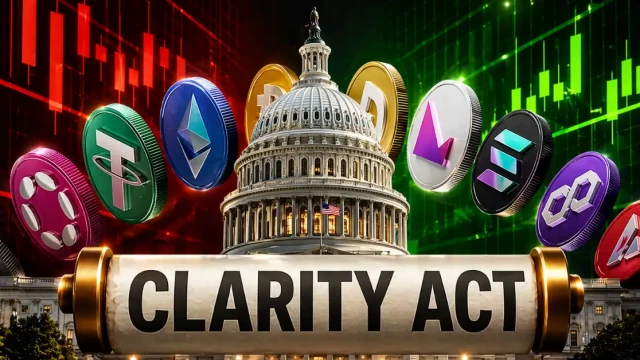
Senator Bernie Moreno expects the CLARITY Act to be signed into law before July 4, with markets pricing a 67% chance of passage as Senate markups begin in May.
Senator Bernie Moreno has set an aggressive timeline for the Digital Asset Market Clarity Act, signaling that the legislation could reach the desk of Donald Trump and be signed into law before July 4. This legislative push follows the recent passage of the GENIUS Act, which Moreno cited as evidence of a shifting momentum within the Senate. The path forward now hinges on a scheduled markup process, with Moreno confirming that the Senate is preparing to address the CLARITY Act as early as next week.
The most significant hurdle for the bill has historically been the treatment of stablecoin yields, a point of contention that previously stalled progress. Moreno noted that this specific disagreement has been resolved through a compromise brokered by Senators Tillis and Alsobrooks. By aligning these interests, the bill has cleared a major procedural bottleneck that had previously divided industry stakeholders and traditional banking institutions. This resolution is critical because it provides a unified framework for digital asset regulation that can survive the committee review process.
While the legislative path appears to be clearing, the mechanical reality of the Senate remains complex. Moreno acknowledged that the involvement of multiple committees requires the consolidation of various proposals into a single, cohesive plan. Despite these process-related frictions, the senator remains confident in a rapid approval timeline. Financial analyst Paul Barron has reinforced this outlook, suggesting that even if traditional banking interests attempt to introduce last-minute delays, the markup process is currently tracking toward a May 11 start date.
The legislative effort is being framed as a strategic necessity to prevent the migration of crypto innovation to jurisdictions outside the United States. Pro-crypto lawmakers, including Senator Cynthia Lummis, have positioned the CLARITY Act as a defensive measure for domestic competitiveness. This narrative has found support among industry leaders like Brian Armstrong, who view the bill as a necessary step toward regulatory certainty. The broader political environment, which Moreno credits to the influence of Donald Trump, has created a tailwind for these efforts that was absent in previous sessions.
Market participants are currently pricing in a 67% probability that the bill will be signed into law this year, according to data from Polymarket. This elevated confidence reflects a shift in how institutional and retail participants are viewing the regulatory landscape. For those tracking the crypto market analysis, the transition from speculative uncertainty to concrete legislative milestones represents a fundamental change in the sector's risk profile. The focus now shifts to the official announcement of the markup schedule, which will serve as the primary confirmation that the legislative timeline is holding.
Despite the optimistic outlook, the transition from committee markup to a signed law is rarely linear. The primary risk to the current timeline is the potential for procedural slowdowns as the bill moves through the various committees identified by Moreno. If the markup scheduled for May 11 is delayed, the window for a July 4 signing will compress significantly, likely forcing a reassessment of the current market pricing. Investors should note that while the political will appears to be present, the legislative process is susceptible to last-minute amendments that could alter the bill's impact on digital asset yields and institutional participation.
Ultimately, the CLARITY Act represents the most significant attempt to codify the status of digital assets in the U.S. to date. The combination of the GENIUS Act's passage and the resolution of the stablecoin yield dispute provides a clear framework for what the final legislation aims to achieve. If the bill clears the Senate markup in May, it will likely trigger a re-rating of assets that have been held back by regulatory ambiguity. Conversely, any failure to meet the May markup deadline would likely be interpreted as a sign that the legislative process remains vulnerable to the same gridlock that has hampered previous attempts at comprehensive crypto reform.
AI-drafted from named sources and checked against AlphaScala publishing rules before release. Direct quotes must match source text, low-information tables are removed, and thinner or higher-risk stories can be held for manual review.