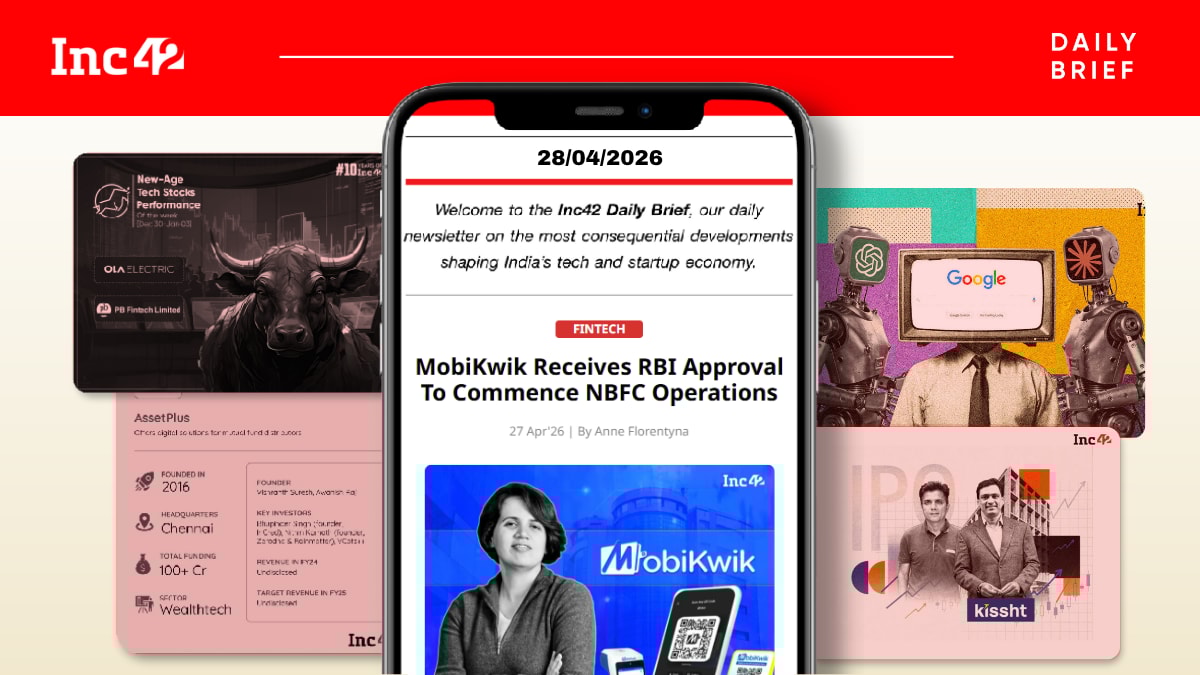
The Reserve Bank of India has granted a Non-Banking Financial Company (NBFC) license to MobiKwik, marking a structural shift in the company's operational model. By transitioning from a payment-focused platform to a licensed lender, the firm gains the regulatory authority to deploy its own balance sheet for credit disbursement. This move reduces reliance on third-party lending partners and allows for greater control over the underwriting process and interest rate margins.
Regulatory Integration and Credit Transmission
The acquisition of an NBFC license places MobiKwik under a more rigorous supervisory framework, aligning its credit activities with broader systemic mandates. As the central bank continues to tighten oversight across the financial ecosystem, such as the recent move where the RBI Extends Regulatory Perimeter to Offshore Rupee Derivatives, the bar for compliance in digital lending has risen. For MobiKwik, this transition necessitates a shift in capital allocation, as the company must now manage the liquidity risks and asset-liability mismatches inherent in direct lending.
This development is part of a wider trend in the Indian fintech sector where firms are seeking to internalize credit risk to capture the full value chain of consumer finance. By moving away from a pure-play payment gateway or wallet model, the company aims to improve its take-rate on transactions by embedding credit products directly into the user journey. The success of this strategy will depend on the firm's ability to maintain asset quality while scaling its loan book under the watchful eye of the regulator.
Impact on Fintech Capital Structures
The shift toward a full-stack model requires significant capital backing to satisfy the net-owned fund requirements and capital adequacy ratios mandated by the RBI. While the license provides the mechanism for growth, it also introduces a new layer of complexity regarding how the firm manages its cost of funds. Unlike traditional banks that benefit from low-cost retail deposits, NBFCs typically rely on wholesale funding markets, which are sensitive to shifts in the interest rate cycle and systemic liquidity conditions.
AlphaScala data currently tracks various sectors for shifts in capital efficiency and regulatory exposure. For instance, companies like HAS operate within the consumer cyclical space, where spending patterns are often influenced by the same macroeconomic levers that dictate credit availability for fintech platforms.
- Improved control over underwriting and customer data.
- Increased regulatory compliance costs and capital requirements.
- Potential for higher net interest margins compared to pure-play payment processing.
This transition sets the stage for the company's next phase of financial reporting, where the market will look for clarity on the size of the initial loan book and the provisioning policies adopted under the new regulatory regime. The firm must now demonstrate that its proprietary credit models can withstand the credit cycle without eroding the capital base. The next concrete marker for investors will be the company's updated guidance on its balance sheet expansion and the specific segments of the retail market it intends to target for its initial credit rollout.