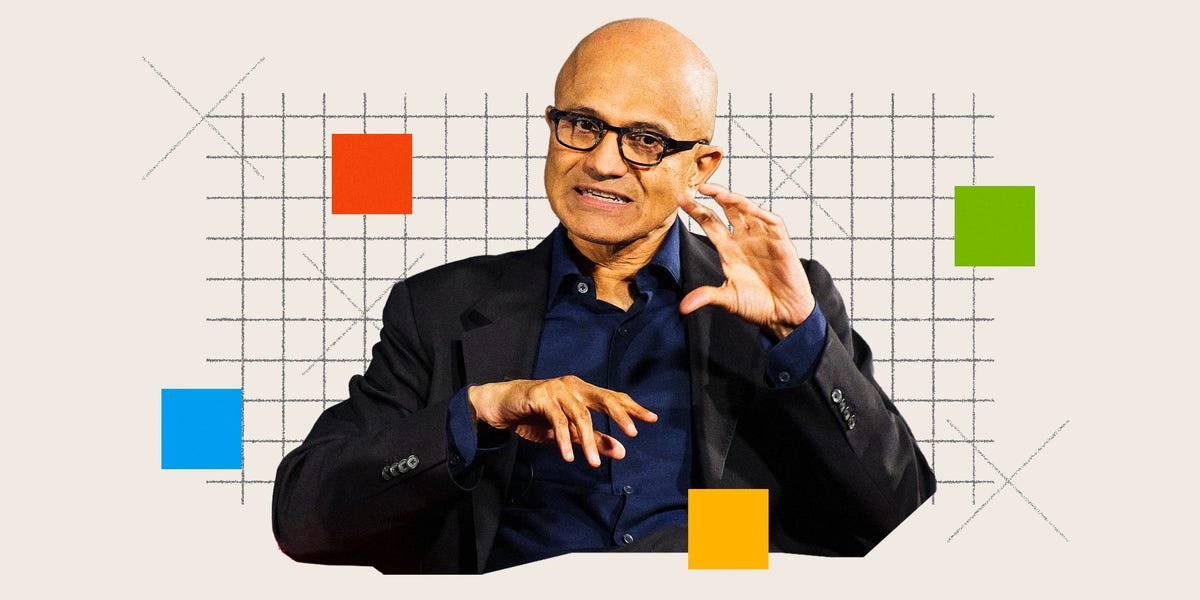
Microsoft CEO Satya Nadella has dismantled the senior leadership structure that governed the company for decades. The reorganization replaces product-line silos with flatter teams and places AI-focused executives in roles that span the entire product suite. This is the most direct assault on organizational inertia Nadella has attempted.
The old model divided Microsoft into three autonomous segments: Productivity and Business Processes, Intelligent Cloud, and More Personal Computing. Each had its own president with significant autonomy. That separation created friction when a single AI feature needed to coordinate across Office, Azure, and Windows simultaneously. Nadella's new structure collapses those divisions. Reporting lines now prioritize cross-functional speed over internal profit-and-loss metrics.
For investors, the immediate question is whether the reorganization accelerates Microsoft's AI revenue or introduces short-term execution risk. The company has embedded Copilot into Office 365 and Azure. Adoption has lagged internal projections. Flatter teams could shorten the feedback loop between product development and customer deployment.
Flatter Teams and Copilot Deployment Speed
Microsoft's new leadership model directly targets two metrics: time-to-market for AI features and the cost of internal coordination. Each layer of management removed reduces approval chains by roughly one to two weeks per decision. Across dozens of product teams, that saving compounds. If Microsoft can ship AI features faster than Google Cloud or Amazon Web Services, its competitive positioning in enterprise AI improves.
The reorganization carries risk. Senior executives who lose authority may leave, creating a talent vacuum. Integration costs for retraining managers and reallocating budgets can depress near-term margins. Nadella's tenure has been defined by cultural transformation, so the playbook is familiar. The stakes are higher now because AI capital expenditure is already ramping.
Microsoft (MSFT) currently trades at $419.09, down 0.47% on the session. The Alpha Score of 50 (Mixed) reflects the market's neutral stance as it waits for evidence that the structural change delivers measurable revenue growth. Technology sector peers such as Apple (AAPL) and NVIDIA face similar organizational challenges and have not announced comparable leadership overhauls. Microsoft is moving first.
The Next Decision Point for MSFT
Two signals will determine whether the reorganization succeeds over the next two quarters. First, the pace of new Copilot feature releases across Microsoft's product suite. A faster cadence would validate the flatter structure. Second, the departure rate among senior leadership. If key veterans exit, the transition will be more disruptive than additive.
The broader read-through for the technology sector is that organizational design is becoming a competitive advantage in AI. Companies that can fuse AI across product lines faster will capture more enterprise spend. Microsoft is betting that flatter teams are the mechanism. Whether execution matches intent will determine if this leadership shakeup becomes a template for the industry or a cautionary tale.
Nadella has the track record to earn the benefit of the doubt. In AI markets, speed is measured in months, not quarters. The next product cycle will reveal whether the new structure delivers.
For a complete look at Microsoft's current market data, visit the MSFT stock page. For broader sector context, see our stock market analysis.