Melinda French Gates on Raising Kids With Middle-Class Values
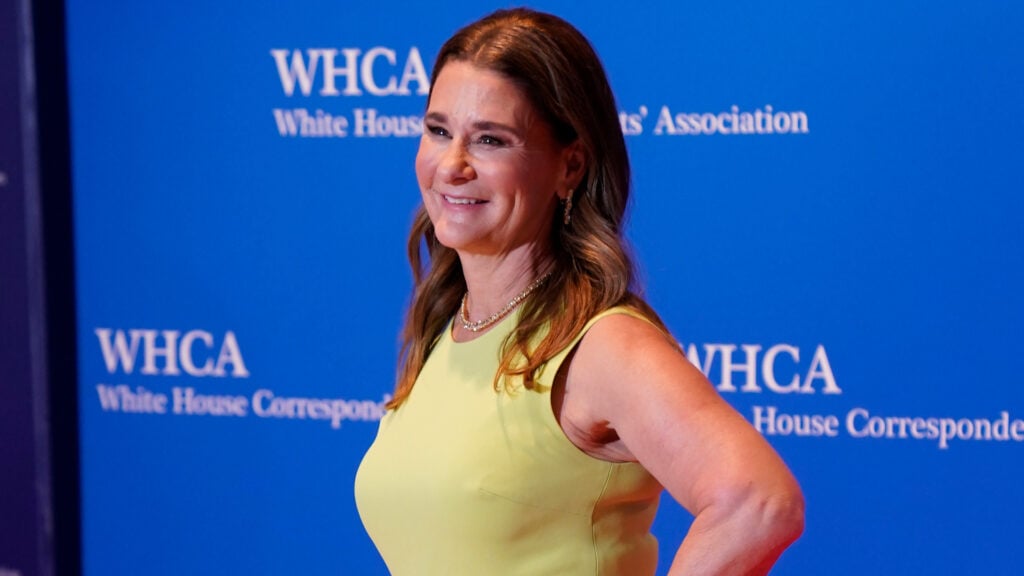
Melinda French Gates raised her three children with allowances and wish lists, not private jets. She explains why middle-class values mattered more than a $135 billion fortune.
Melinda French Gates had a view of wealth that most people never get. She saw what happens to children who grow up with too much of it.
"I had been around a lot of kids from wealth in college, and I knew how I did not want my children to turn out," she told Vogue in a joint interview with her daughters in November. "I really thought about some of the middle-class values I grew up with."
Those values came from a Dallas childhood where money had real limits. Her father was an aerospace engineer. Her mother was a homemaker. She was one of four children. An extra pair of shoes each year was a decision, not a given.
"It was much more of an upbringing like I grew up in – a very middle-class household where money dictated whether I got an extra pair of shoes each year or not," she told The New York Times in 2024. "I thought that was a good principle to have."
She carried that principle into a household that, after her marriage to Microsoft co-founder Bill Gates, had a family fortune worth roughly $135 billion. The children – Jennifer, now 30, Rory, 27, and Phoebe, 24 – received allowances. They kept wish lists. They learned that wanting something did not mean getting it.
"We absolutely did not just buy them things," she said. "They either had to buy with their allowance or put it on their wish list."
Money was only part of the calculation. Melinda also worried about identity. All three children used her maiden name, French, through elementary school. The choice became theirs later.
"I wanted the kids to be seen for who they were," she told Elle last year. "My oldest daughter went in with Gates; she felt like she was ready to take that name on. My son chose not to. He used French all the way through high school."
Even private travel came with ground rules. "We said to them from a very early age, 'You're really not allowed to tell other people how we flew on this trip back and forth. Otherwise, it will separate you from other children,'" Melinda said.
Bill Gates has made the family's position clear on the financial side. "My kids got a great upbringing and education, less than 1% of the total wealth – because I decided it wouldn't be a favor to them," he told the "Figuring Out With Raj Shamani" podcast in 2025. "It's not a dynasty. I want to give them a chance to have their own earnings and success."
The outcome is visible in the children's paths. Jennifer Gates is a married equestrian and aspiring physician. Phoebe Gates graduated from Stanford University in 2024 with a degree in human biology and has spoken candidly about the discomfort of arriving on campus carrying one of America's most famous surnames. "I feel like it's so hard when you're a freshman in college because you have no experience. You have nothing," she said on the debut episode of her "The Burnouts" podcast last year. "I came in, I was like, 'I'm so privileged, I'm a nepo baby.' I had so much insecurity around that." Rory Gates has largely stayed out of public view.
For families with substantial assets, the balancing act extends beyond parenting. Trust structures, phased inheritances, and charitable giving plans all influence how wealth affects future generations. The Gates example shows that even a billion-dollar fortune does not eliminate the core challenge: how much is enough to help children, and how much starts getting in the way.
Melinda's concern was never really about money. It was about making sure money did not become the most important thing about her children. For parents at every income level, that is a challenge that does not require a billion-dollar fortune to understand.
Drafted by a large language model from the source reporting linked above, then screened by automated publishing checks. It is not read by a journalist before publication. Some articles cite our Alpha Score. Verify prices and figures against the original source. Educational coverage, not personalized advice.