The iShares Expanded Tech-Software ETF (IGV) closed May up 21%, its best monthly performance since October 2001. This week alone the fund rose 8%, driven by blowout earnings from Snowflake (SNOW) and Okta (OKTA) that convinced some traders the so-called SaaSpocalypse is over.
That conclusion is premature. The rally is real but narrow. The broader software index is still down 3.8% for the year, trailing the Nasdaq’s 18% gain by a wide margin. The risk is that May’s surge becomes a positioning squeeze rather than a durable trend shift.
The Snowflake and Okta Catalysts: Narrow but Sharp
Snowflake’s $6 Billion Amazon Deal
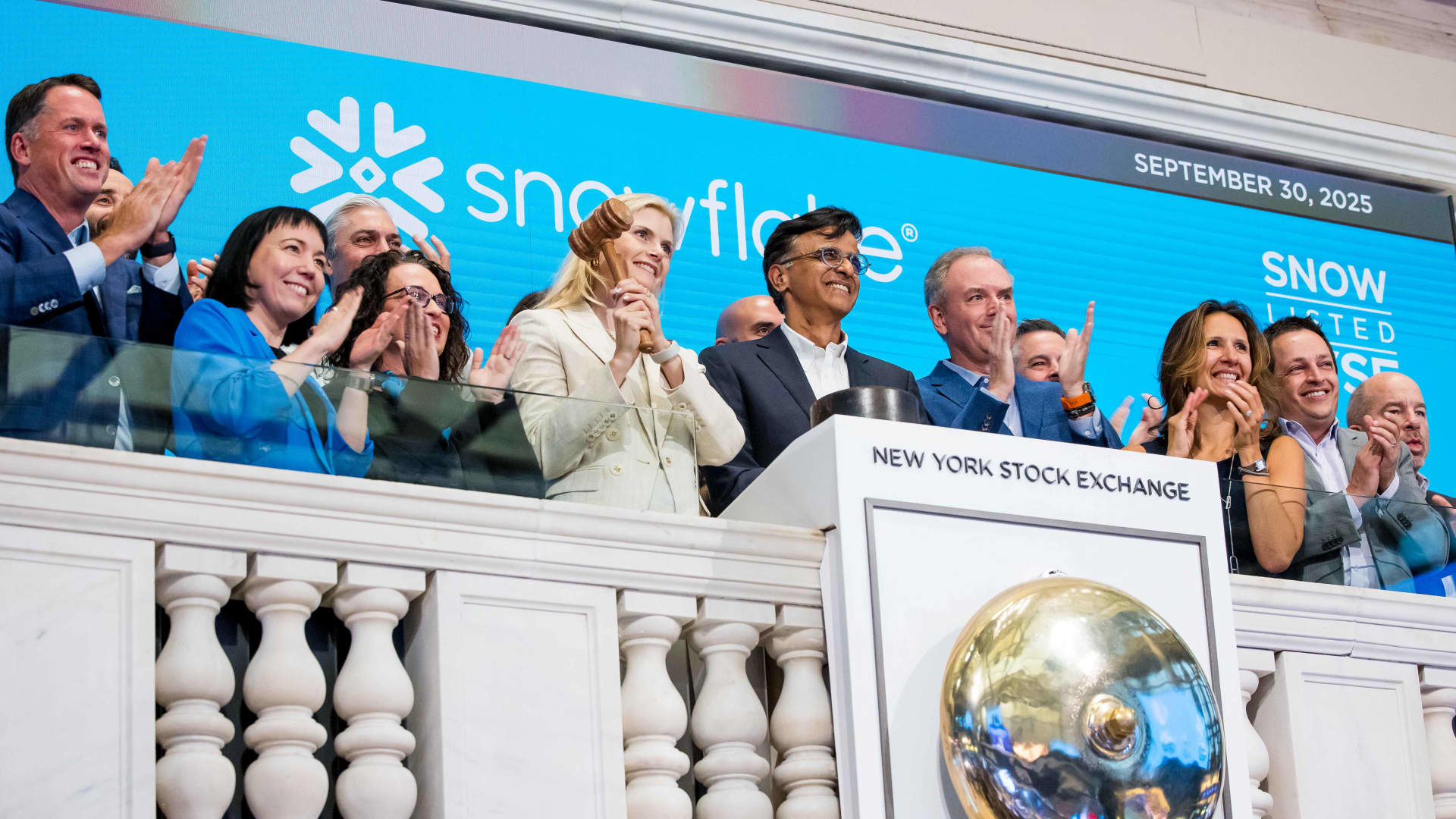
Snowflake logged its best single-day gain ever on Thursday and surged nearly 50% in the four trading days after Memorial Day. The catalyst was a $6 billion cloud and chip deal with Amazon, combined with raised guidance. CEO Sridhar Ramaswamy told analysts customers are “deploying and scaling workloads at a faster pace,” a direct signal that AI workloads are translating into real revenue.
Argus Research upgraded Snowflake to a “picks and shovels” play on generative AI, lifting its price target to $300 from $250. The stock closed Friday at $255.55, now up 17% for the year.
Okta’s Agentic AI Pivot
Okta gained a record 30% on Friday after reporting better-than-expected results. CEO Todd McKinnon framed the shift to agentic AI as a forced upgrade cycle for identity security. “AI products are going to take longer, every organization is going to build and deploy agents. It’s fundamental infrastructure that’s going to be required over the next few years,” McKinnon told CNBC.
The Sector-Wide Gap: IGV Still Lags Nasdaq by 22 Points
Atlassian climbed 26% for the week, ServiceNow surged over 20%, and Shopify, Workday, and Asana each gained at least 14%. Among the cloud-infrastructure giants, Oracle (ORCL) jumped 16% and Microsoft (MSFT) rose almost 8%.
Yet Microsoft is still down 7% for the year, the worst performance among the megacap tech names. Oracle’s year-to-date return is roughly flat. The IGV itself is negative for 2026.
| Company | Weekly Move | YTD Return |
|---|
| Snowflake | +50% | +17% |
| Okta | +30% | Not given |
| Microsoft | +8% | –7% |
| Oracle | +16% | ~flat |
| IGV ETF | +8% | –3.8% |
| Nasdaq | Not given | +18% |
The table shows that the software rally is lifting a few names far above the index, while the index itself still lags the broader market. That divergence is a warning sign for traders chasing momentum.
Risk Factors That Could Reverse May’s Rally
AI Disruption Still Looms
The “vibe coding” trend – users building apps in minutes with Anthropic, OpenAI, and others – has not gone away. It compressed software valuations over the past year because it threatens the unit economics of traditional SaaS. One strong earnings season does not reverse that structural pressure.
Valuation Resistance
Snowflake trades at over 10x forward sales. Any miss on growth would trigger a sharp re-rating. Okta’s 30% single-day gain pushes its multiples into territory that requires flawless execution.
Macro Headwinds
The Fed’s rate path remains uncertain. Software stocks are duration-sensitive; a hawkish surprise would hit high-multiple names hardest.
Microsoft’s Persistent Weakness
Microsoft is the bellwether for enterprise software. It is still down 7% for the year. If it cannot recover, the sector-wide story is broken.
What Would Confirm or Weaken the Setup
Conditions That Extend the Rally
- Broadening participation: If IGV closes the gap with the Nasdaq over the next two months, the rally has legs. That would require companies like Microsoft and Oracle to show accelerating cloud revenue, not just a bounce.
- Sustained guidance upgrades: Snowflake raised guidance. Okta beat. The next wave of software earnings – Salesforce, Adobe, Workday – needs to show similar patterns.
- AI agent adoption metrics: Okta’s McKinnon said every organization will build agents. If enterprise surveys show accelerating deployment, identity and data stocks benefit.
Conditions That Break It
- Valuation compression: A hawkish Fed or earnings miss could reset multiples for the entire sector.
- Narrow leadership: If IGV’s YTD underperformance relative to Nasdaq persists, the rally was a positioning squeeze, not a trend change.
- Microsoft’s continued decline: Below $400 per share would signal that even the largest players cannot escape AI disruption.
Proprietary AlphaScala Data
AlphaScala’s quantitative model rates Microsoft (MSFT) at 51/100 (Mixed) and Oracle (ORCL) at 50/100 (Mixed). Both scores reflect neutral sentiment with no clear edge. The model does not see a strong catalyst for either stock beyond the current momentum.
For a deeper look at how identity security fits into the AI stack, see Okta Targets $5B ARR by Pivoting to AI Agent Security. For the broader market context, visit our stock market analysis page.