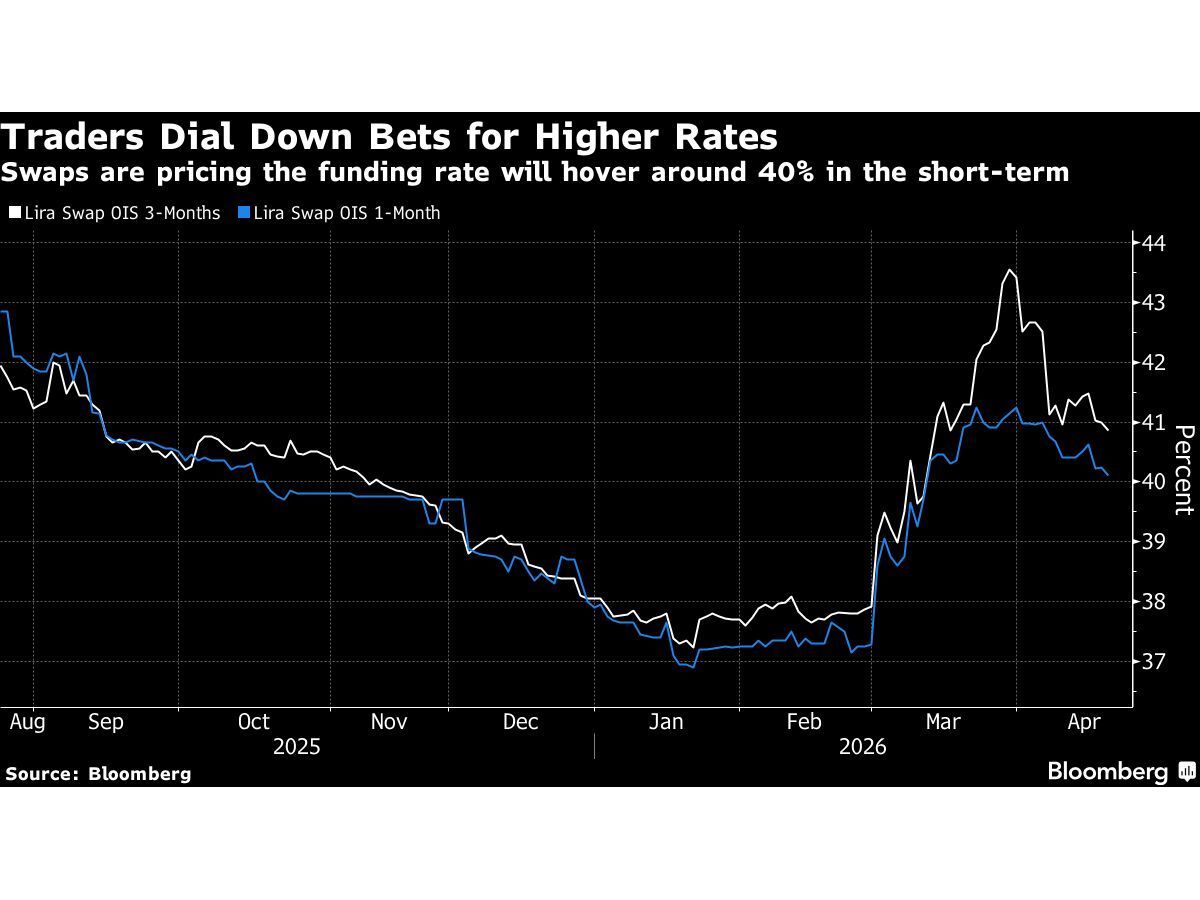
Swaps tied to the Turkish lira indicate that market participants have significantly reduced expectations for a near-term interest rate hike by the Central Bank of the Republic of Turkey. This shift follows a cooling of regional geopolitical tensions, specifically the ceasefire in the Iran conflict, which has altered the risk premium associated with the lira and local sovereign debt.
Transmission to Local Rates and Currency Stability
The reduction in implied volatility within the lira swap market suggests that the central bank now has more room to maintain its current policy stance without triggering immediate currency depreciation. When geopolitical risk premiums compress, the necessity for a defensive rate hike to protect the lira diminishes. This creates a window for policymakers to assess the impact of previous tightening cycles on domestic inflation without the immediate pressure of capital flight.
For the broader fixed income landscape, this pause signals a transition from emergency-style monetary intervention toward a period of observation. If the central bank opts to hold rates steady, the focus will shift to the real interest rate differential and whether the current yield environment remains sufficient to attract foreign capital inflows. The stability of the lira is the primary transmission mechanism here; if the currency remains range-bound, the central bank can avoid further tightening that would otherwise exacerbate domestic credit constraints.
Cross-Asset Read-Throughs and Global Linkages
Geopolitical de-escalation in the Middle East has broader implications for emerging market assets, particularly those sensitive to energy import costs and external financing requirements. As the risk of supply chain disruptions recedes, the inflationary impulse from energy prices becomes more predictable, allowing central banks to anchor their policy decisions on core domestic data rather than exogenous shocks.
This environment often leads to a recalibration of capital allocation across regional markets. As investors reassess the risk-reward profile of Turkish assets, the focus turns to the sustainability of the current account balance and the central bank's ability to manage liquidity without aggressive rate adjustments. For a deeper look at how shifting capital flows are impacting emerging markets, see our recent analysis on Capital Allocation Shifts in India’s Fixed Income Landscape.
AlphaScala data currently tracks various sectors for shifts in valuation and risk sentiment. For instance, Realty Income Corporation (O stock page) holds an Alpha Score of 65/100, while Agilent Technologies, Inc. (A stock page) maintains an Alpha Score of 55/100, both reflecting current sector-specific moderate ratings.
The next concrete marker for the Turkish market will be the official central bank policy meeting announcement. This event will confirm whether the signaling from the swap markets aligns with the committee's forward guidance on inflation targets and the necessity of maintaining a restrictive policy bias. Any deviation from the expected hold would likely trigger a sharp repricing in short-term lira forwards and a reassessment of the central bank's commitment to its current inflation-targeting framework.