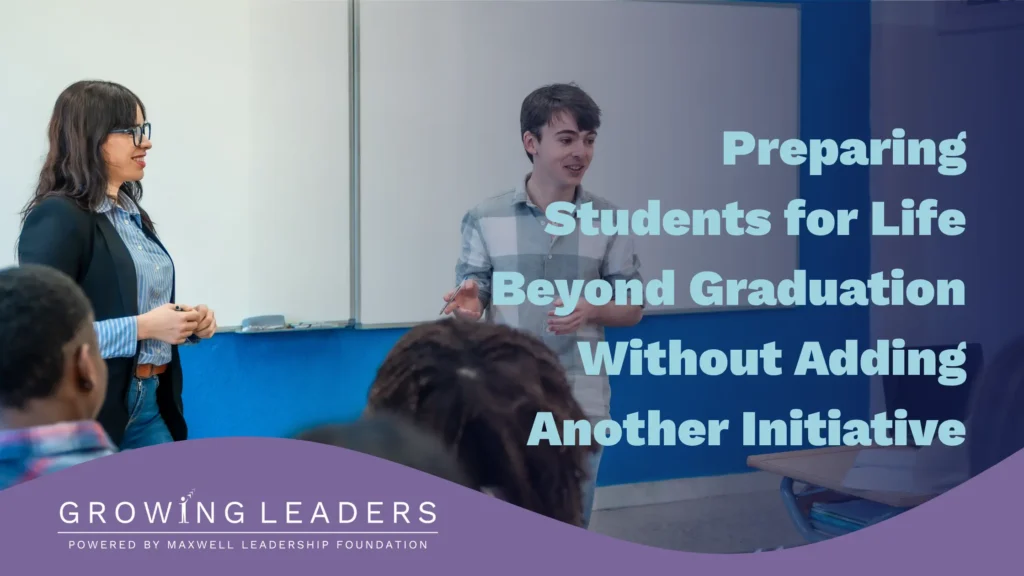
Schools are integrating life readiness into existing instruction rather than buying new standalone programs. The shift rewards flexible curriculum providers like Growing Leaders and pressures traditional assessment models.
School districts are rejecting standalone life-skills programs in favor of integrating readiness training into existing instruction. The shift comes from a hard constraint: teachers have no capacity for new initiatives.
Teachers manage curriculum, testing, behavior, and parent communication. Administrators handle staffing gaps and accountability metrics. The typical response to "prepare students for life after graduation" has been: with what time? Growing Leaders, an Atlanta-based curriculum provider, argues the solution is not another program but a reframing of current lessons. Its blog post on the topic has circulated among district administrators, surfacing a tension they know firsthand.
Curriculum providers that offer embeddable leadership and life-skills content are positioned to benefit. Growing Leaders sells short reflection prompts, discussion guides, and peer-feedback frameworks designed to take five minutes per class rather than a separate period. The company frames its products as refinements to existing instruction, not add-ons. That positioning aligns with the budget reality most districts face.
Traditional assessment companies face a subtler risk. If districts shift from measuring life readiness through separate tests toward what the source calls "observable growth," the standardized assessment model loses relevance. Administrators in the Growing Leaders post explicitly reject another large-scale assessment. They favor classroom tone and student ownership as metrics instead.
Time is the most protected resource in education. No teacher can absorb another full program without something else being cut. Integration beats addition. The source lists concrete micro-adjustments: short reflection prompts inside existing projects, rotating classroom responsibilities, students leading discussion sections. Each takes minutes. Each builds a life skill the source names: decision-making, resilience, communication, self-leadership.
Staff fatigue is another hurdle. Educators have seen programs come and go. The framing matters. Present life preparation as a clarifier of purpose, not a launch. Professional development should focus on small, actionable strategies teachers can implement immediately. When educators see that life preparation improves academic performance rather than competing with it, buy-in rises.
Programs have timelines. Culture has consistency. Students learn ownership, communication, and resilience not through one lesson but through repetition across many moments. That requires intentionality, not a new binder.
The next test case is procurement season. School districts that adopt this integrated model will spend less on standalone curriculum purchases and more on subscription or embedded tools. Procurement patterns at large districts like Los Angeles Unified or New York City DOE will signal whether the trend has legs. If their RFP language shifts from "life skills program" to "integrated readiness content," the model is winning.
Graduation is not the finish line, the source writes. It is a launching point. Students will work in environments requiring adaptability, emotional intelligence, teamwork, and initiative. Companies that sell readiness as an overlay, not an integration, will find that message harder to sell next year.
Prepared with AlphaScala research tooling and grounded in primary market data: live prices, fundamentals, SEC filings, hedge-fund holdings, and insider activity. Each story is checked against AlphaScala publishing rules before release. Educational coverage, not personalized advice.