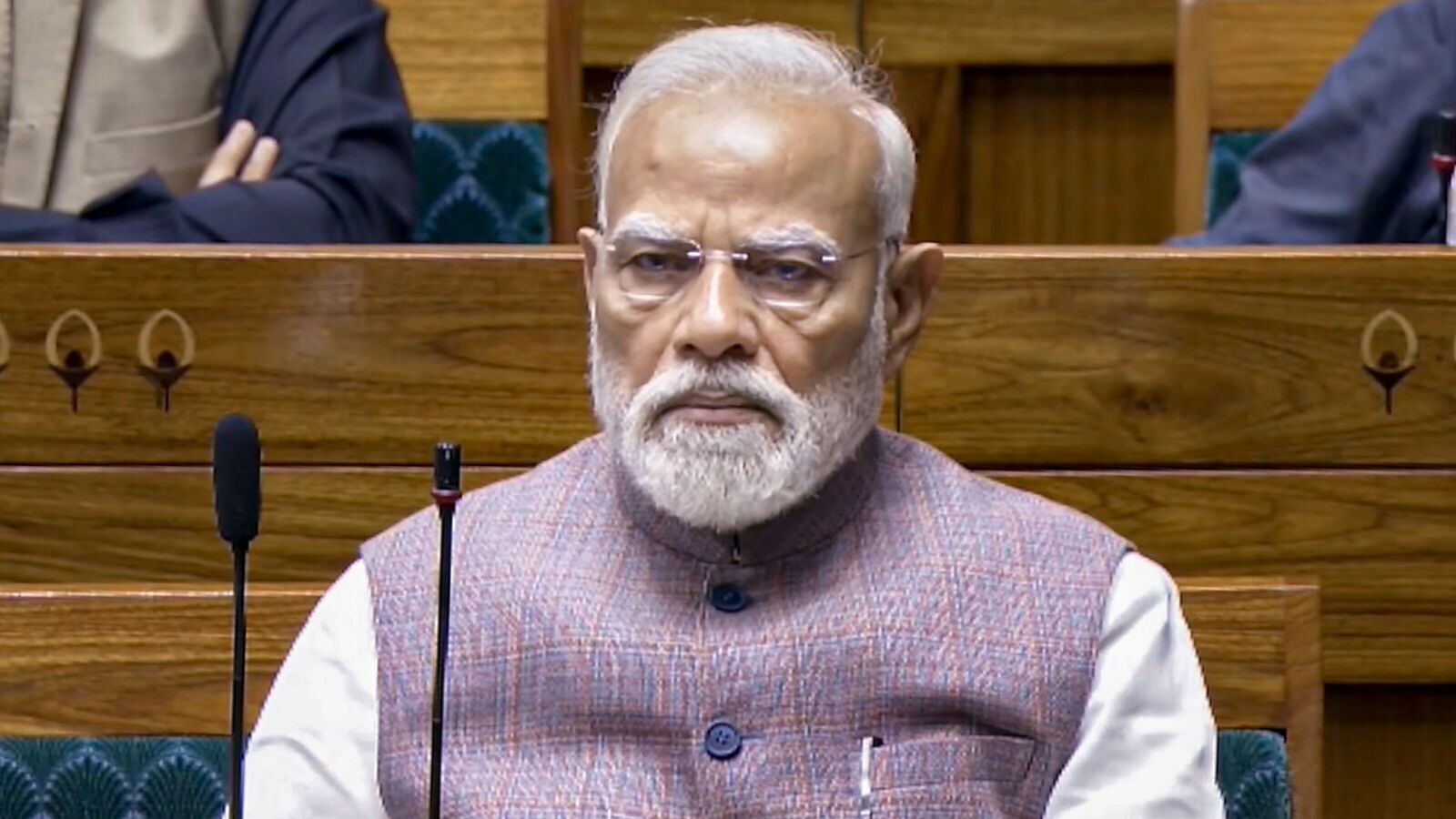
Prime Minister Narendra Modi is scheduled to address the nation tonight at 8:30 PM following the failure of the women's reservation bill to secure passage in the Lok Sabha. This legislative setback marks a significant shift in the current parliamentary narrative, as the administration faces immediate pressure to clarify its policy trajectory after the bill failed to clear the lower house. The address is expected to serve as a platform for the government to frame its position on the stalled legislation and manage the resulting political fallout.
Legislative Impasse and Policy Direction
The inability to pass the women's reservation bill creates a vacuum in the government's stated social agenda. Investors and political observers are now looking for signals regarding whether the administration will attempt to reintroduce the bill in a modified form or pivot toward alternative legislative priorities. The failure to secure a majority for this specific measure suggests a fractured consensus within the house, which could complicate the passage of other pending economic or structural reforms in the near term.
Market participants often view legislative gridlock as a precursor to broader policy uncertainty. When high-profile social legislation fails, it frequently forces a reallocation of political capital. The Prime Minister's address will likely focus on the reasons behind the defeat and the administration's commitment to its core platform. Stability in the legislative environment remains a key requirement for long-term capital allocation, and tonight's speech will be scrutinized for any indication of a shift in the government's legislative strategy or its willingness to compromise with opposition factions.
Sectoral Read-through and Economic Stability
While the bill is social in nature, the broader implications for the stock market analysis involve the government's ability to maintain a cohesive legislative agenda. A failure to pass significant bills can lead to perceptions of weakened executive control, which may influence sentiment in sectors sensitive to government policy, such as infrastructure, banking, and energy. The market will be watching for any mention of economic stimulus or regulatory updates that could offset the current political friction.
AlphaScala data currently reflects a mixed outlook for several major entities, including Philip Morris International Inc. (PM stock page) with an Alpha Score of 52/100, ON Semiconductor Corporation (ON stock page) at 40/100, and Amer Sports, Inc. (AS stock page) at 47/100. These scores indicate that broader market conditions remain sensitive to both internal company performance and external macroeconomic pressures. The political climate in the coming days will serve as a secondary variable for these sectors as they navigate the current legislative environment.
The next concrete marker for the market will be the government's subsequent filing or announcement regarding the rescheduling of the bill or the introduction of alternative legislative measures. Any sign of a prolonged standoff could lead to increased volatility in domestic indices as the market recalibrates its expectations for the remainder of the parliamentary session. Observers should monitor the official transcript of the address for specific timelines on future legislative attempts.