Macro● Neutral
Why the 1973 War Powers Act Faces Renewed Legislative Scrutiny
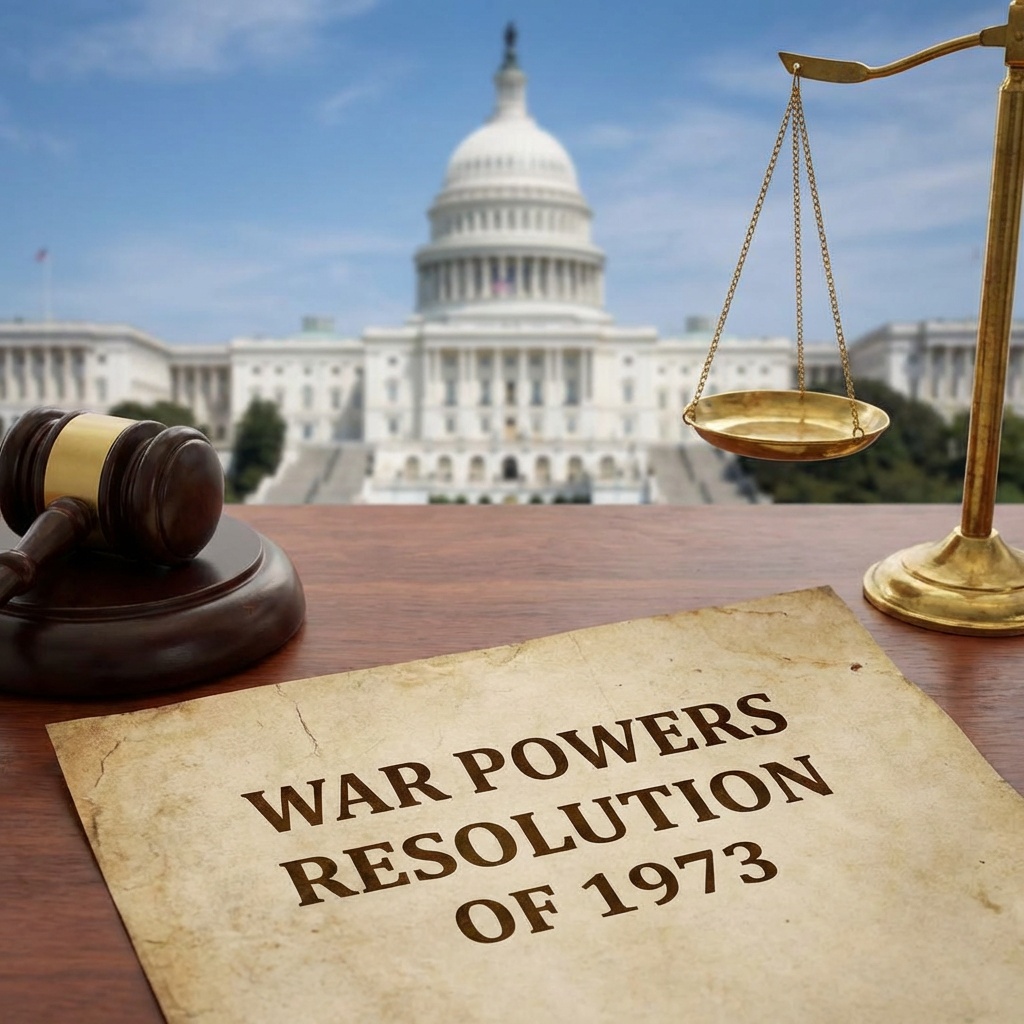
The 60 to 90-day limit on military engagements is under fire as lawmakers seek to modernize oversight, potentially reducing market volatility from conflicts.
Continue with
A Constitutional Tug-of-War
The War Powers Resolution of 1973—often referred to as the War Powers Act—stands today as one of the most contentious pieces of legislation in the American legal framework. Born out of the disillusionment surrounding the Vietnam War, the act was intended to reassert Congress’s constitutional authority over the deployment of the U.S. Armed Forces. However, over five decades later, the statute remains a focal point of debate, with critics arguing that it has become an ineffective mechanism in an era of rapid, asymmetrical, and globalized conflict.
At its core, the 1973 resolution sought to check the executive branch’s ability to commit the nation to armed conflict without a formal declaration of war or specific statutory authorization. By requiring the President to notify Congress within 48 hours of committing troops to foreign territories and mandating that such involvement be terminated within 60 to 90 days unless Congress grants an extension, the legislation established a theoretical "kill switch" for military engagements. Yet, in practice, the act has frequently been bypassed or treated as a mere notification formality, leading to persistent calls for legislative reform.
The Erosion of Congressional Oversight
The primary frustration among legal scholars and lawmakers stems from the perceived obsolescence of the act’s enforcement mechanisms. Executive branches across both parties have historically argued that the resolution is an unconstitutional infringement on the President’s role as Commander-in-Chief. This constitutional tension has created a "grey zone" where military interventions—ranging from drone strikes to regional peacekeeping missions—are initiated without the explicit, sustained congressional buy-in that the 1973 authors envisioned.
For those advocating for a revision, the goal is not necessarily to strip the executive of its agility, but to modernize the definitions of "hostilities" to account for modern warfare. The original text was drafted in an age of conventional ground wars; it is ill-equipped to handle cyber warfare, remote drone operations, or the involvement of private military contractors, all of which often occur in the shadows of traditional military engagement.