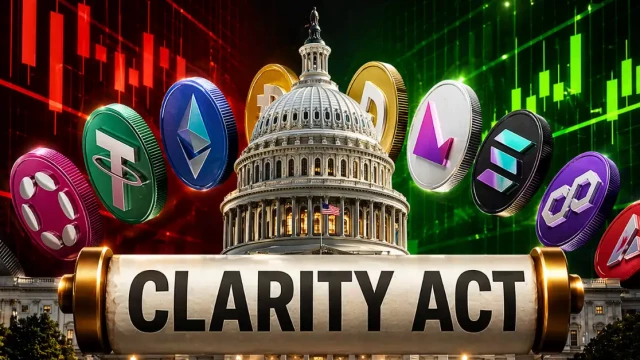
The CLARITY Act has reached a critical juncture in the legislative calendar as lawmakers move toward a potential vote in May 2026. This bill represents the most significant attempt to establish a comprehensive regulatory framework for digital assets within the United States. The legislative process now faces a condensed timeline that will determine whether the proposal moves to the floor or remains stalled in committee.
Legislative Hurdles and Committee Progress
The path to passage requires navigating a series of procedural votes and committee reviews that have historically slowed digital asset legislation. Proponents of the bill argue that a clear regulatory structure is necessary to provide institutional certainty, while critics remain focused on the jurisdictional boundaries between existing financial regulators. The outcome in May depends on the ability of sponsors to reconcile these competing interests before the current session concludes.
Market participants are monitoring the legislative schedule for signs of a floor vote. The transition from committee discussion to a formal vote is the primary indicator of whether the bill has secured the necessary bipartisan support. If the bill fails to clear these hurdles in May, the window for legislative action narrows significantly, potentially pushing the issue into the next cycle.
Market Impact and Institutional Positioning
The uncertainty surrounding the CLARITY Act influences how firms approach long-term capital allocation in the digital asset space. Institutional entities often adjust their risk exposure based on the likelihood of regulatory clarity, as the current environment remains fragmented across state and federal jurisdictions. A successful vote would provide a baseline for compliance, while a rejection or further delay would likely maintain the status quo of enforcement-led regulation.
- Legislative milestones for May 2026 include committee markup sessions and final floor scheduling.
- Regulatory clarity remains the primary driver for institutional participation in the broader crypto market analysis.
- The bill seeks to define the legal status of digital assets to reduce ambiguity for exchanges and issuers.
AlphaScala currently maintains a Mixed outlook on Bloom Energy Corp (BE) with an Alpha Score of 46/100. You can track further updates on the BE stock page for related industrial sector movements. As the industry watches for the outcome of the CLARITY Act, the focus remains on whether the legislative language can survive the amendment process without losing its core provisions. The next concrete marker for this development is the publication of the finalized committee report, which will signal the specific scope of the assets covered under the proposed regulatory regime.