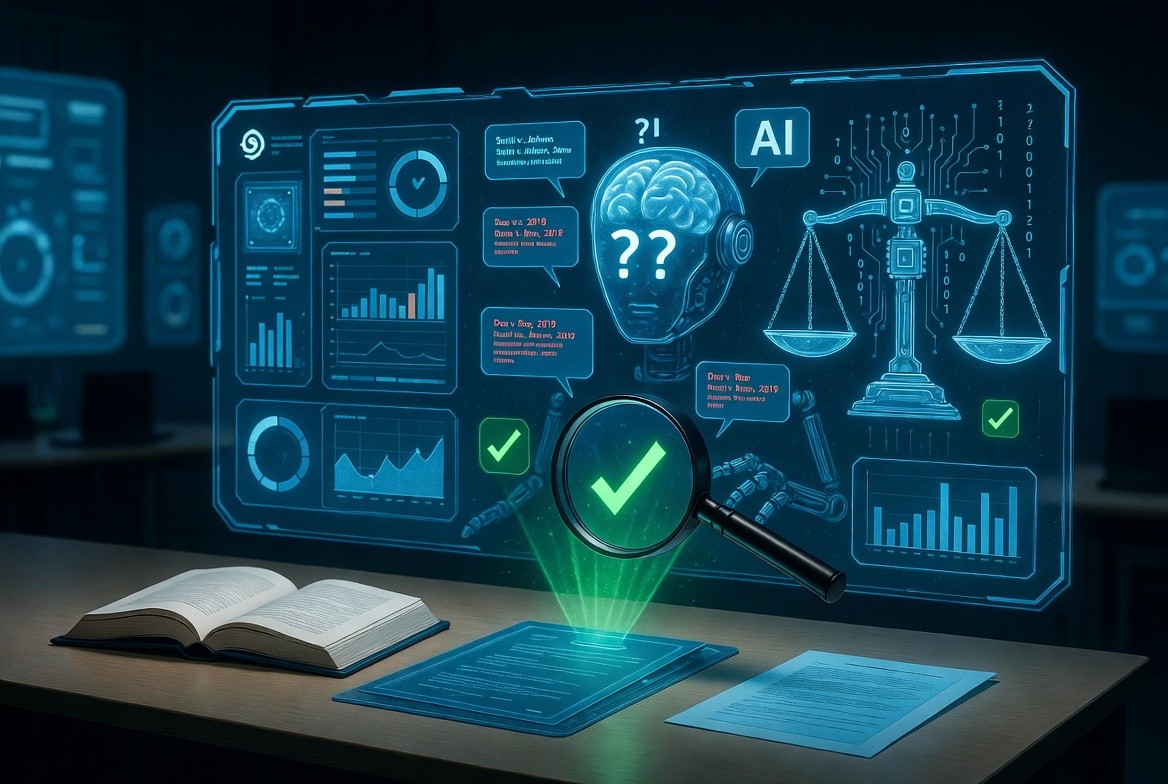
A legal tech startup is betting that the fastest way to sell software to law firms is to make them look less foolish in front of a judge.
BrentWorks Inc., based in Los Angeles, launched CiteSentinel on Thursday. The tool scans legal documents for fabricated or misstated case citations, statutes, and other authorities before they reach a judge. The product is among the first to target a specific problem that has embarrassed dozens of law firms since generative AI drafting tools became common: the confident, authoritative-sounding citation to a case that does not exist.
Courts have sanctioned attorneys for submitting briefs with invented citations. In one widely cited 2023 case, a federal judge fined a law firm $5,000 after its lawyers submitted a brief citing six nonexistent cases, all generated by ChatGPT. The sanctions followed a pattern that has repeated across federal and state courts: an AI tool produces a plausible-looking legal citation, the lawyer files it without checking, and the opposing side or the court itself discovers the error.
CiteSentinel does not draft documents. It checks them. The tool compares every citation in a document against a database of real case law, statutes, and legal authorities. It flags citations that are fabricated, misstated, or inaccurately referenced. Attorneys can scan their own filings, a colleague's draft, or an adversary's submission.
"The legal profession is learning, in very public ways, that AI doesn't just make mistakes, it confidently lies to your face," said Brent Britton, BrentWorks co-founder and a veteran technology attorney and MIT-trained engineer. "CiteSentinel is about restoring trust. It lets lawyers move fast with the irresistible efficiencies of generative AI while still filing documents reciting authorities they can stand behind."
Britton is licensed in California, New York, and Florida. He has written a book on intellectual property law and has overseen billions of dollars in aggregate deal flow, according to the company. His co-founder, Brent N. Hunter, applied neural networks to finance in 1993 and has since led technology transformation programs for GE, Wells Fargo, Disney, and Warner Bros. Discovery.
The problem CiteSentinel addresses is not limited to lawyers who use AI drafting tools themselves. Opposing counsel may have used AI. Co-counsel may have. Contract attorneys and paralegals almost certainly have access to it. When a brief containing fabricated citations reaches the court, the question of who drafted it quickly becomes secondary to the question of whose name is on it.
Senior lawyers cannot personally verify every citation in every document produced by everyone under their supervision. CiteSentinel can. The cost is modest compared to a single sanctions proceeding or the reputational damage that comes with a public rebuke from a judge, the company said.
Unlike traditional legal research platforms that focus on finding more information, CiteSentinel focuses on confirming that the law cited in a document is real. Attorneys who review opposing counsel's filings with the tool gain an additional advantage: the ability to identify and challenge citations to authorities that simply do not exist.
BrentWorks plans to release additional products in the series. CiteSentinel is the first.