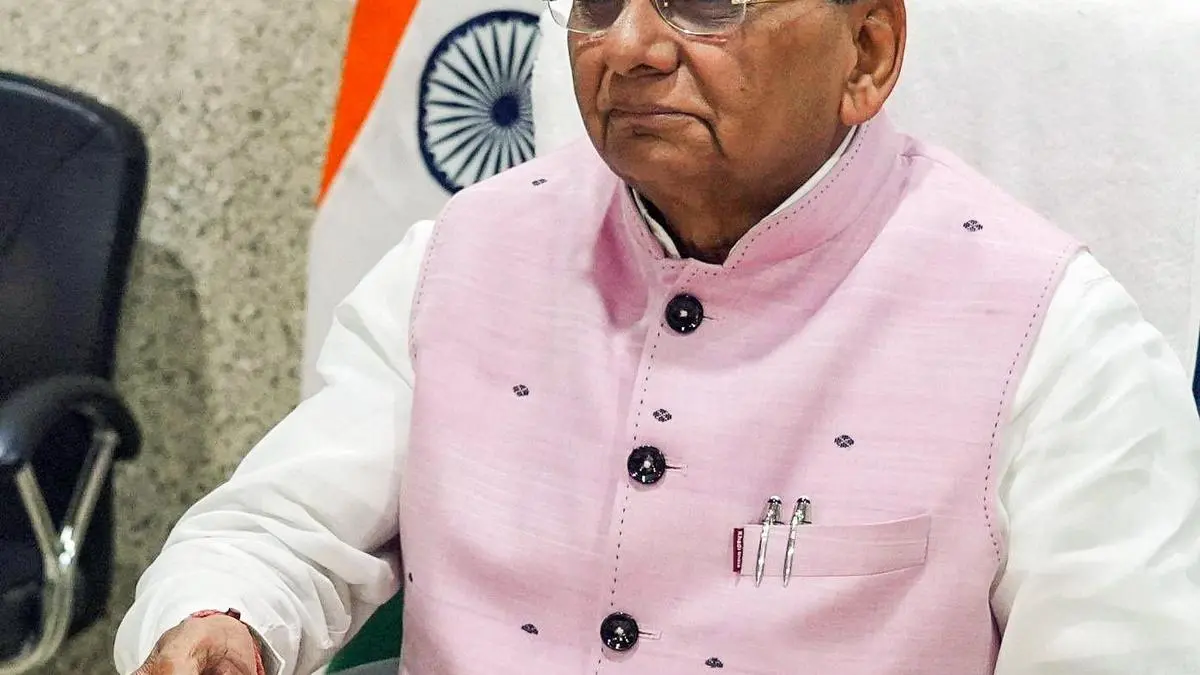
Ladakh's Union Territory administration approved a production-linked incentive for Pashmina herders and set up an ₹8-crore revolving fund. The decisions came from the first meeting of the Ladakh Pashmina Development Board, chaired by Lieutenant Governor Vinai Kumar Saxena.
The 25% production-based incentive under the Livestock Development Incentive Programme will be paid on top of the government procurement price for raw Pashmina. Officials said the structure is meant to make goat rearing profitable enough to keep nomadic herders in the trade.
The revolving fund addresses a chronic cash-flow problem. Under the new payment mechanism, the All Changthang Pashmina Growers' Cooperative Marketing Society will pay 50% of the procurement cost upfront, with the balance due within two months. Herders previously waited eight to ten months for full payment, the administration said.
Of the production incentive, 60% is earmarked for livestock improvement and scientific breeding, 20% for modern combing equipment and infrastructure, and the remaining 20% for household or personal use.
The board set a target to double Ladakh's Pashmina goat population from roughly two lakh to four lakh over three years. It also aims to raise average yield per goat from about 200 grams to 350 grams through breeding and better combing tools.
Ladakh's Pashmina is considered among the world's finest natural fibres, the industry has struggled with thin margins, slow payments, and limited herd improvement. The PLI and revolving fund are the administration's attempt to fix the economics at the herder level before pushing for volume growth.
The incentive structure targets the weakest link in the supply chain. Herders face a long gap between delivering raw fibre and receiving payment. The 50% upfront payment from ACPGCMS cuts that delay by months. The remaining 20% of the incentive earmarked for household use gives herders discretionary cash, which could improve retention in a trade where younger generations often migrate to urban jobs.
For the downstream market, the yield target matters more than the population target. Doubling the goat count to four lakh without raising per-animal output would roughly double raw Pashmina supply. Raising average yield to 350 grams per goat, a 75% increase, would push total output much higher. That could pressure raw Pashmina prices in the short term, the administration's own targets imply a supply surge.
The 20% allocation for modern combing equipment addresses a quality bottleneck. Traditional hand-combing produces shorter fibres that fetch lower prices in international markets. Mechanised combing preserves fibre length, which improves spinning quality and final fabric value. If the equipment rollout works, Ladakh's Pashmina could command a premium over competing cashmere from Mongolia or China.
The board's next meeting will review procurement data and incentive disbursement. Herders typically shear goats in spring, so the first test of the payment mechanism will come in the April-June 2025 season.