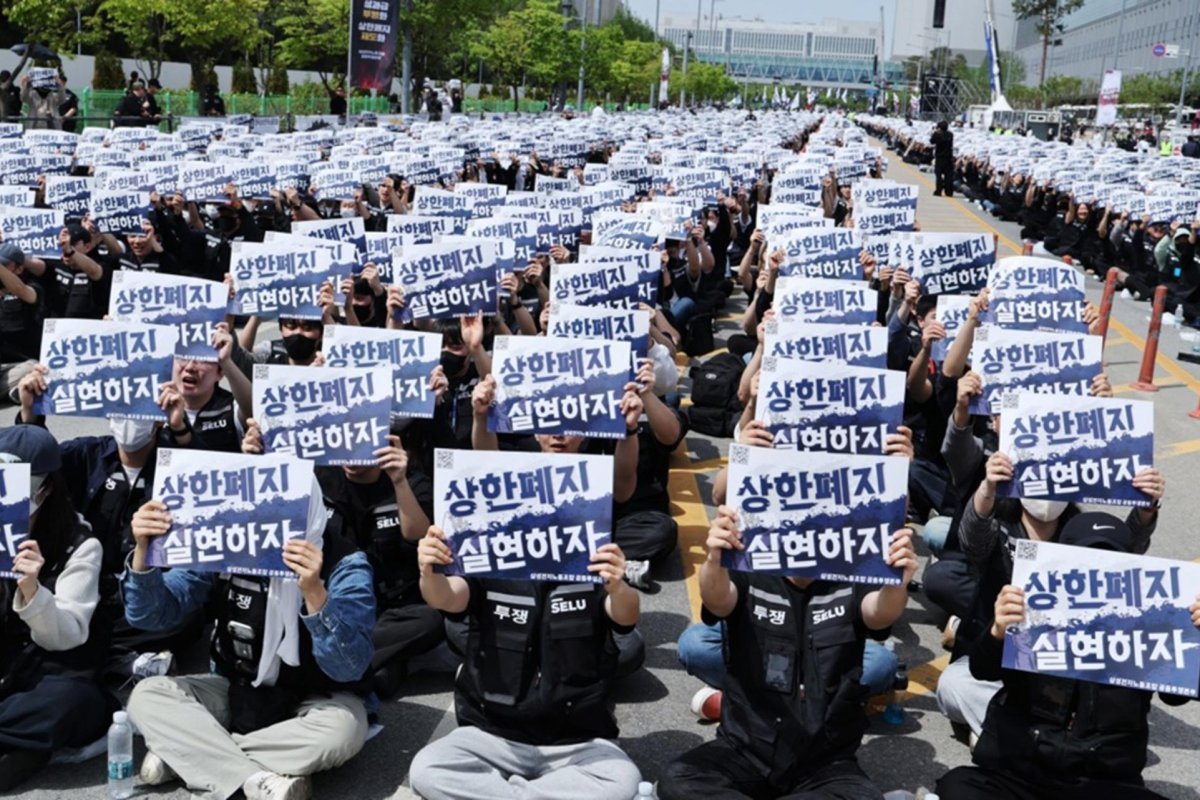
Escalating labor disputes within South Korea’s industrial sector have shifted the narrative for global technology supply chains. Unionized workers at major semiconductor manufacturing facilities have begun public protests, specifically targeting wage structures and operational limits. These actions introduce a new layer of volatility for companies that rely on South Korean production hubs for high-end memory and processing components.
Operational Risks to Semiconductor Output
The core of the current tension involves demands to remove caps on wage increases and improve working conditions at key manufacturing sites. For firms like Samsung Electronics, these protests represent a departure from historical labor relations that previously favored stability. Any sustained disruption to production schedules at these facilities creates a ripple effect, as the global market for advanced chips remains tightly coupled with South Korean output capacity.
Investors are now evaluating the potential for these labor actions to translate into higher operating costs or, in a worst-case scenario, intermittent factory shutdowns. The semiconductor sector, which is already navigating complex geopolitical trade environments, now faces internal pressure that could limit the ability to meet production targets. This situation mirrors broader challenges seen in Recursion Pharmaceuticals Faces Scaling Hurdles in AI-Driven Drug Discovery, where operational bottlenecks threaten to derail high-growth timelines.
Sector Read-Through and Valuation Impacts
The uncertainty surrounding labor stability in South Korea forces a recalibration of risk premiums for the broader technology sector. If labor costs rise significantly, the margin compression could be substantial, particularly for companies that have already committed to aggressive capital expenditure programs. The market is currently assessing whether these protests are isolated events or the beginning of a structural shift in how South Korean industrial giants manage their workforce.
AlphaScala data currently tracks KeyCorp (KEY) with an Alpha Score of 68/100, reflecting a moderate outlook within the Financials sector, which often serves as a proxy for broader economic sentiment when industrial supply chains face stress. You can find more detailed information on the KEY stock page.
The Path to Resolution
The next concrete marker for this narrative will be the outcome of formal negotiations between union leadership and corporate management. Observers should monitor for specific agreements regarding wage adjustments or changes to shift structures, as these will indicate whether the risk of supply chain disruption is receding or intensifying. A failure to reach a consensus in the coming weeks would likely signal a prolonged period of instability, forcing downstream manufacturers to seek alternative supply sources or adjust their inventory strategies to account for potential shortages.
This labor volatility adds a layer of complexity to the stock market analysis for the remainder of the quarter. The ability of South Korean firms to maintain output levels despite these internal pressures will be the primary determinant of whether this remains a localized industrial dispute or evolves into a systemic supply chain crisis.