Payrolls rose 57k in June, but labor force fell to 169.36M, the lowest since Jan 2025. Unemployment dropped to 4.19%. The immigration crackdown is reshaping supply.
Nonfarm payrolls rose by 57,000 in June, the Bureau of Labor Statistics reported. Revisions to the prior two months subtracted a combined 74,000 jobs. The six-month average gain ticked up to 88,000, the highest in two years.
The labor force dropped to 169.36 million, the lowest since January 2025. The number of unemployed fell to 7.09 million. The unemployment rate edged down to 4.19%, the lowest since June 2025.
The key dynamic is supply. The crackdown on illegal immigration and tighter legal immigration rules have curtailed the supply of cheap labor. Even as job growth remains tepid, the declining labor force has kept unemployment low. The prime-age labor force participation rate slipped to 83.3% in June from 83.9% in May. The three-month average declined to 83.7%, still near Dotcom Bubble highs.
Average hourly earnings rose 0.35% month-over-month, 3.52% year-over-year. Inflation has been accelerating and reached 4.2% in May, exceeding wage growth. That erodes real purchasing power and keeps the Fed on alert.
The tight labor market, despite weak hiring, gives the Fed little reason to cut rates. Inflation running above wage growth suggests persistent price pressures. The Fed is likely to hold rates higher for longer. That keeps bond yields elevated, supports the dollar, and pressures growth stocks.
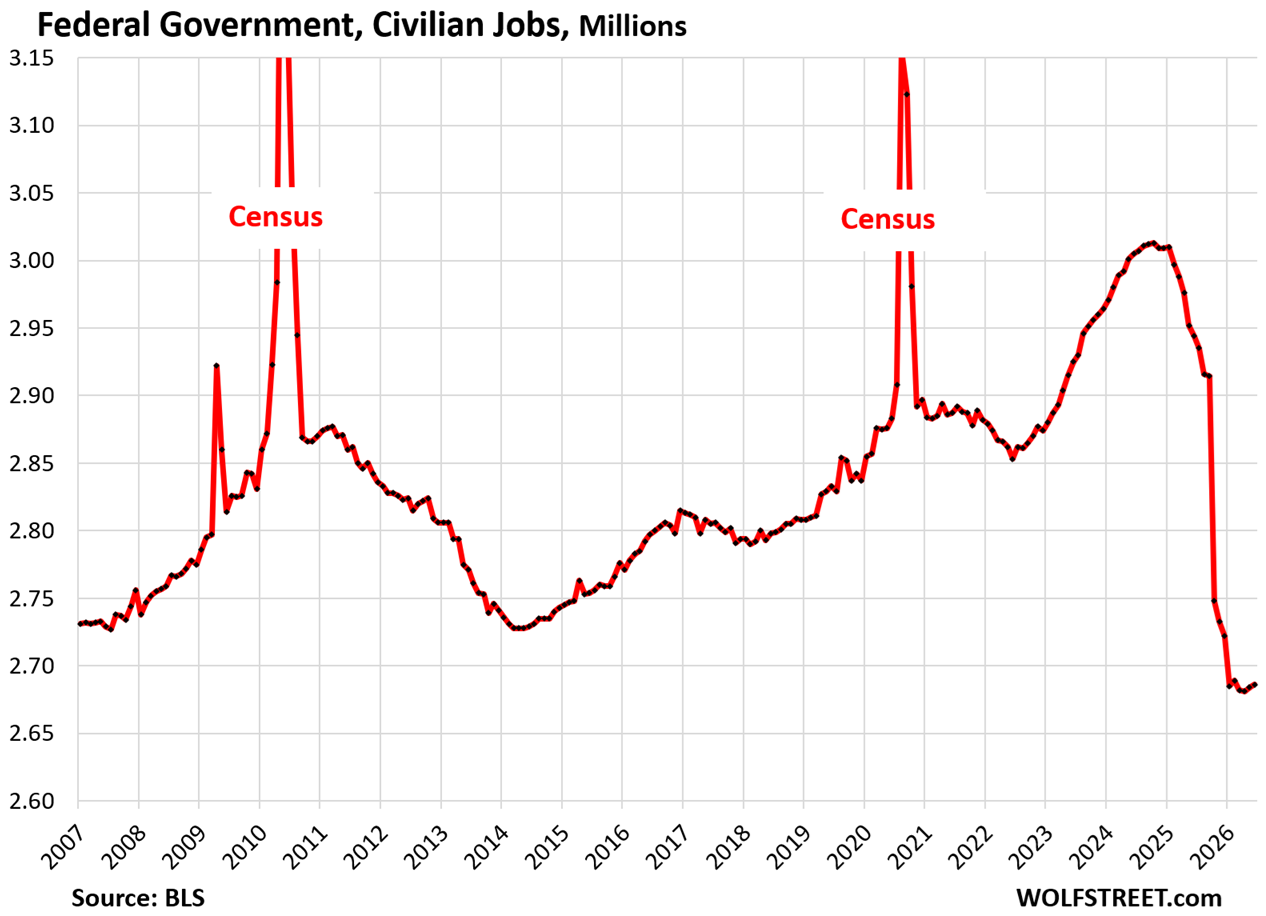
Industry data show a mixed picture. Professional and business services plus information, a proxy for tech employment, have seen modest gains. Healthcare continues to add jobs. Leisure and hospitality remain below pre-pandemic peaks. Construction has been volatile. Manufacturing is flat, driven by automation. Retail trade continues to shrink under ecommerce pressure. Financial activities declined, driven by the real estate downturn. Federal government employment shrank by 324,000 since January. State and local governments also shed jobs.
The next CPI report is scheduled for July 16. The Fed's next rate decision is July 30. Both will test whether the labor market tightness translates into sustained inflation or begins to ease.
Prepared with AlphaScala editorial tooling from the source reporting linked above. Indexable analysis may include a cited Alpha Score value. Publishing checks screen each story before release. Educational coverage, not personalized advice.