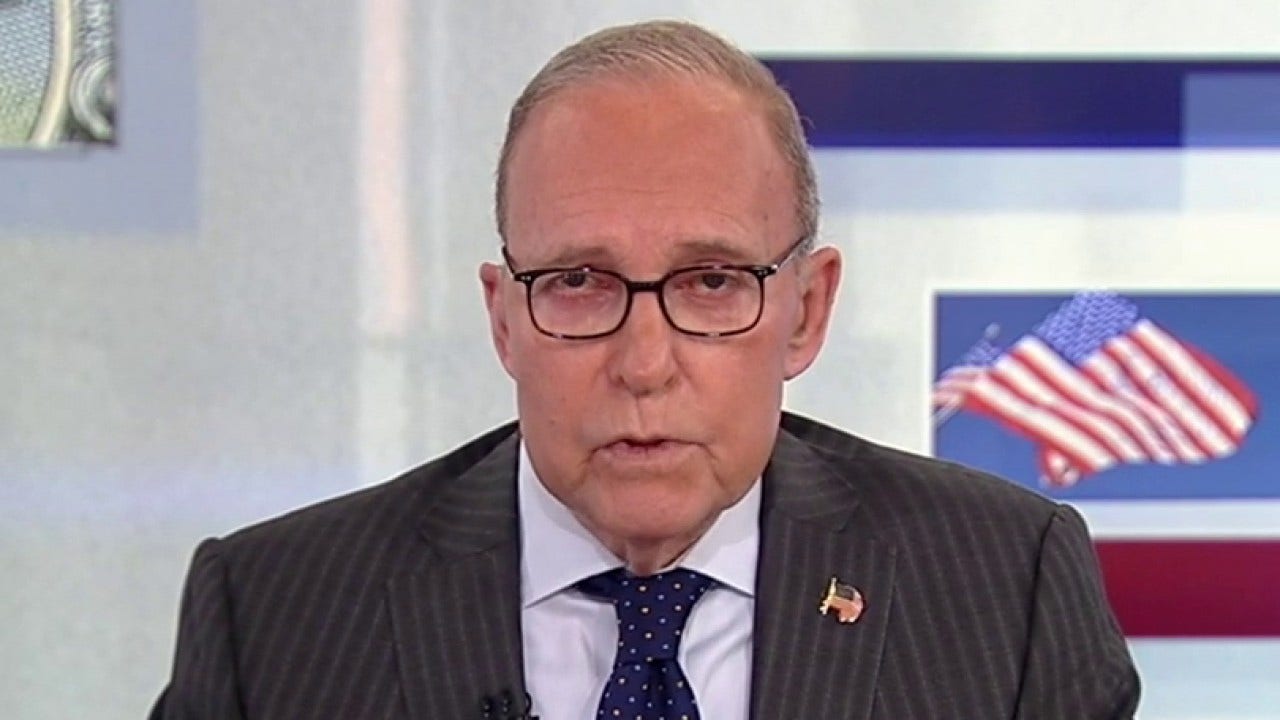
The Art of the Political Pivot
In a recent commentary, former National Economic Council Director Larry Kudlow has characterized Donald Trump’s latest political maneuvers as a masterful display of strategic agility, effectively outmaneuvering Democratic opposition. Kudlow, a prominent voice in conservative economic circles, suggests that the former president’s ability to control the narrative continues to frustrate his political rivals, framing the current landscape as a recurring cycle of Democratic underestimation.
Kudlow’s thesis rests on the premise that what critics often label as chaos is, in fact, a calculated effort by Trump to force his opponents into reactionary positions. By consistently shifting the focus of the national conversation, Trump maintains a level of political momentum that, according to Kudlow, leaves Democratic leadership consistently playing catch-up.
Contextualizing the Narrative
To understand the significance of Kudlow’s assessment, one must look at the broader political friction that has defined the post-presidential era of Donald Trump. The "defeatist" label applied by Kudlow to the Democratic strategy refers to a perceived reliance on institutional roadblocks rather than proactive policy counters. Kudlow argues that by focusing on legal and structural hurdles, the Democratic establishment has failed to address the populist appeal that serves as the bedrock of the Trump base.
Historically, this dynamic mirrors the early stages of the 2016 and 2020 election cycles, where political analysts often anticipated a decline in Trump’s influence, only to see it solidified by the very opposition strategies intended to marginalize him. Kudlow suggests that the current cycle is no different, with Democratic attempts to isolate the former president inadvertently serving to amplify his message to core voters.
Market Implications and Political Risk
For traders and institutional investors, the political climate remains a critical variable in assessing long-term risk. Political instability—or the perception thereof—often manifests in market volatility. When high-profile figures like Kudlow highlight the effectiveness of Trump’s political tactics, institutional participants often recalibrate their outlook on policy predictability.
If Trump’s ability to outwit his opposition translates into an increased probability of a return to the executive branch, market participants must consider the potential for rapid shifts in trade policy, tax structures, and regulatory environments. Investors generally favor stability; however, the "Trump trade" historically thrives on market-moving announcements and deregulation. The ongoing political tug-of-war is not merely an exercise in rhetoric; it is a signal of potential future shifts in fiscal priorities that could impact everything from corporate tax rates to energy sector dominance.
Analysis: What Traders Should Watch
As the political landscape intensifies, analysts are keeping a close eye on polling data alongside legislative maneuvering. The key for market participants is to look past the partisan rhetoric and focus on the policy implications of the current power struggle.
- Policy Continuity vs. Disruption: How does the current Democratic strategy impact the legislative gridlock in Washington? Gridlock is often viewed favorably by markets as it prevents radical shifts, but it also delays necessary fiscal adjustments.
- The Populist Variable: If Kudlow’s assessment holds true and Trump retains his political efficacy, market models may need to adjust for the prospect of a return to "America First" economic policies, which could include renewed tariff threats or aggressive trade negotiations.
- Institutional Response: The reaction of the administrative state and the judiciary to these political maneuvers remains a wildcard. Any escalation in conflict between the executive branch and regulatory bodies could trigger localized volatility in specific sectors like energy, technology, and defense.
As we move toward the next major election milestones, the focus for the investment community will remain on whether the "defeatist" narrative described by Kudlow leads to a genuine shift in voter sentiment, or if it merely highlights a deeper, more entrenched political divide that will continue to shape the U.S. economic trajectory for years to come.