KOSPI Drops 2.4% as US Strikes Iran, Won Strengthens
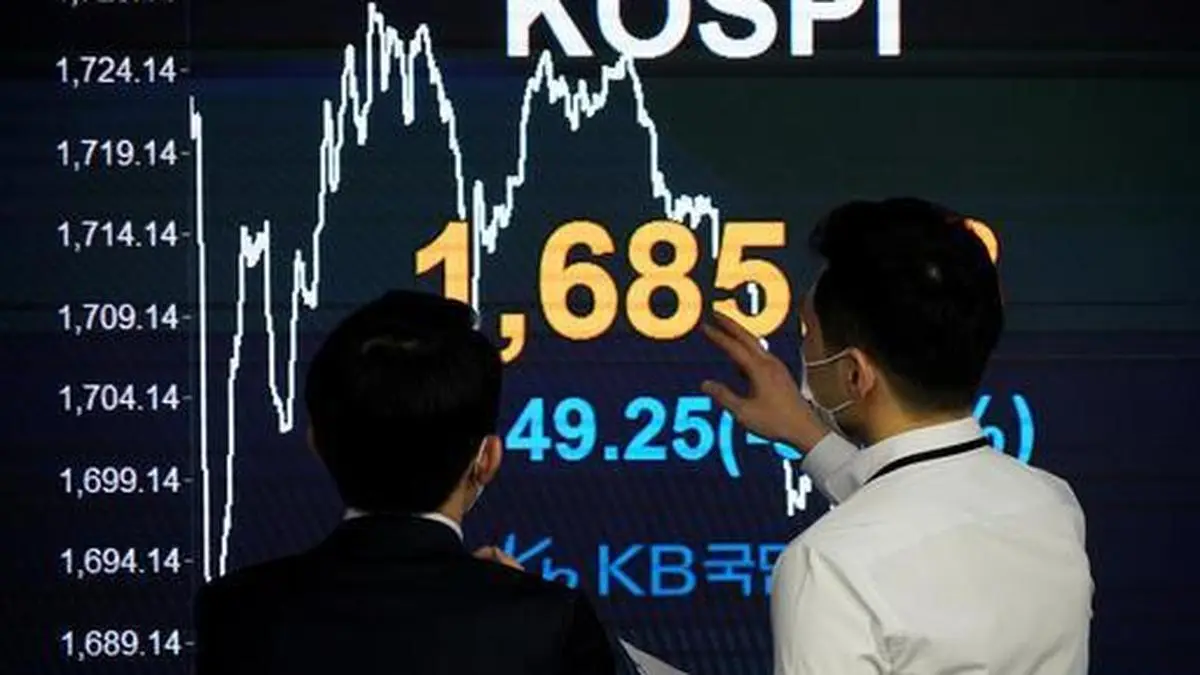
KOSPI drops 2.4% after US strikes Iran. Samsung Electronics falls 4.35%, SK Hynix loses 3.70%. Won strengthens 0.88% as BOK inspects currency market. Next support at 7,800.
South Korean shares fell more than 2% on Wednesday after the United States launched strikes against Iran. President Donald Trump said Tehran shot down a US Apache helicopter in the Strait of Hormuz. The move deepened doubts about a potential peace deal and strained a fragile ceasefire.
The benchmark KOSPI lost 194.09 points, or 2.40%, to settle at 7,902.84 as of 01:38 GMT. Foreigners sold a net 1.9 trillion won ($1.25 billion) of shares. The sell-off was broad, with 431 decliners against 443 advancers among 919 traded issues.
Semiconductor and Auto Stocks Lead Losses
Index heavyweight Samsung Electronics dropped 4.35%. Peer SK Hynix lost 3.70%. Both chipmakers are sensitive to global demand and trade flows through the Strait of Hormuz, a key transit route for oil and petrochemicals.
Hyundai Motor fell 2.50%, and sister automaker Kia Corp slipped 0.24%. LG Energy Solution, a battery maker, slid 0.76%. Samsung BioLogics declined 0.46%. POSCO Holdings bucked the trend, adding 0.55%.
Why Chipmakers and Automakers Are Most Exposed
South Korea's export-driven economy relies on the Strait of Hormuz for crude oil imports. A prolonged conflict would raise input costs for refiners, petrochemical firms, and manufacturers. Chipmakers like Samsung Electronics and SK Hynix face higher energy costs and potential supply chain delays. Automakers Hyundai and Kia depend on stable oil prices for production and consumer demand.
The finance ministry said the finance minister agreed with other top economic policymakers to closely monitor risks around increased volatility in financial markets and its impact on various sectors. The ministry also noted that the central bank and financial watchdog began on-site inspections Wednesday for "disturbing behaviour" in the currency market.
Won Strengthens as BOK Steps In
The won strengthened 0.88% against the dollar, trading at 1,519.4 per dollar on the onshore settlement platform. That compares with the previous close of 1,532.7. A stronger won typically hurts export-oriented stocks. The move here was driven by safe-haven flows and official intervention.
How the Currency Market Inspection Works
The on-site inspections target "disturbing behaviour" in the currency market. The finance ministry did not specify what triggered the probe. The BOK and financial watchdog are examining trading patterns and positions. This signals that authorities are prepared to intervene if the won moves too far in either direction.
For traders, the won's strength creates a headwind for exporters. A stronger won reduces the value of overseas earnings when converted back to local currency. Samsung Electronics, SK Hynix, and Hyundai Motor all report in won. A 1% appreciation in the won can shave 1-2% off operating profits for these firms, depending on their hedging strategies.
Bond Yields Rise on Risk-Off Flows
Three-year Korean treasury bond yields rose 1.5 basis points to 3.920%. The benchmark 10-year yield climbed 3.0 basis points to 4.302%. June futures on three-year treasury bonds were unchanged at 103.01.
The yield curve steepened slightly. Investors moved out of equities and into short-dated bonds. Longer-dated paper sold off on inflation concerns tied to potential oil supply disruptions.
What the Yield Move Tells Us
The 10-year yield rising faster than the 3-year yield suggests the market is pricing higher inflation expectations. South Korea imports nearly all its crude oil. A sustained spike in oil prices would push up consumer prices and force the BOK to keep rates higher for longer. That would weigh on growth-sensitive sectors like autos and semiconductors.
The unchanged three-year futures price indicates that short-term rate expectations have not shifted. The BOK is unlikely to cut rates soon if inflation risks rise. The next BOK meeting is scheduled for May 23. Markets will watch for any hawkish signals.
Next Decision Point: Ceasefire or Further Strikes
The immediate catalyst is the US-Iran military exchange. Trump's claim that Iran shot down an Apache helicopter has not been independently confirmed. Iran has not commented. The Strait of Hormuz remains open. Any escalation could disrupt oil flows and hit South Korea's energy-dependent economy.
For now, the market is pricing a higher geopolitical risk premium. The KOSPI's next support level is around 7,800, the low from early March. A ceasefire announcement would likely trigger a relief rally. Another round of strikes could push the index below 7,800. The won's direction will depend on whether the BOK intervenes more aggressively or lets the currency find its own level.
For broader context on how geopolitical shocks transmit through global markets, see our market analysis.
Drafted by a large language model from the source reporting linked above, then screened by automated publishing checks. It is not read by a journalist before publication. Some articles cite our Alpha Score. Verify prices and figures against the original source. Educational coverage, not personalized advice.