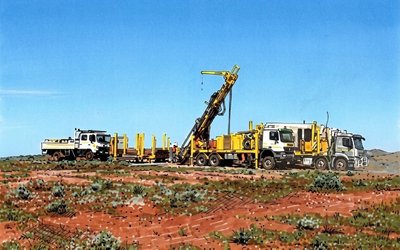
Kingfisher Mining is initiating a second-stage drilling campaign at its Copper Blow project in New South Wales. This operational push follows the finalization of a 10-year processing agreement with Broken Hill Mines, which provides a defined pathway for ore treatment once extraction begins. The primary objective of this phase is to secure sufficient geological data to support the company's first maiden resource estimate for the site.
Operational Integration and Processing Capacity
The strategic value of the Copper Blow project hinges on the proximity to existing infrastructure. By securing a long-term processing arrangement with Broken Hill Mines, Kingfisher avoids the capital-intensive requirement of constructing a standalone processing facility. This arrangement allows the company to focus its current capital expenditure on exploration and resource definition rather than infrastructure development. The drilling campaign is designed to delineate the extent of the copper-gold mineralization, which will determine the throughput requirements and potential economic viability of the project under the existing processing framework.
Exploration Objectives and Resource Delineation
The upcoming drilling program targets specific zones identified during initial exploration phases. The goal is to convert inferred mineral occurrences into a formal resource estimate that meets industry reporting standards. This transition is a critical milestone for the project as it moves from a speculative exploration asset toward a potential development candidate. The company intends to use the data gathered from this second stage to refine its geological model and assess the continuity of the copper-gold veins across the tenement.
Market Context and Sector Alignment
Copper remains a focal point for investors tracking commodities analysis due to its essential role in industrial electrification and infrastructure projects. While global supply chains face ongoing pressures, junior miners are increasingly prioritizing projects that offer clear access to processing facilities to mitigate operational risk. The ability to leverage existing regional infrastructure is often a decisive factor in the speed at which a project can move from the drill bit to production.
AlphaScala data reflects a varied landscape for technology and industrial-linked equities. ON Semiconductor Corporation (ON stock page) currently holds an Alpha Score of 45/100, while ASE Technology Holding Co., Ltd. (ASX stock page) maintains a score of 70/100. Agilent Technologies, Inc. (A stock page) sits at 55/100. These scores highlight the broader sector sensitivity to supply chain efficiency and raw material availability.
The next concrete marker for Kingfisher Mining will be the release of assay results from this drilling campaign. These results will serve as the primary input for the maiden resource estimate and will provide the first quantitative assessment of the project's scale. Investors should monitor subsequent company filings for updates on the drilling timeline and the eventual publication of the resource report, which will dictate the next phase of project feasibility studies.