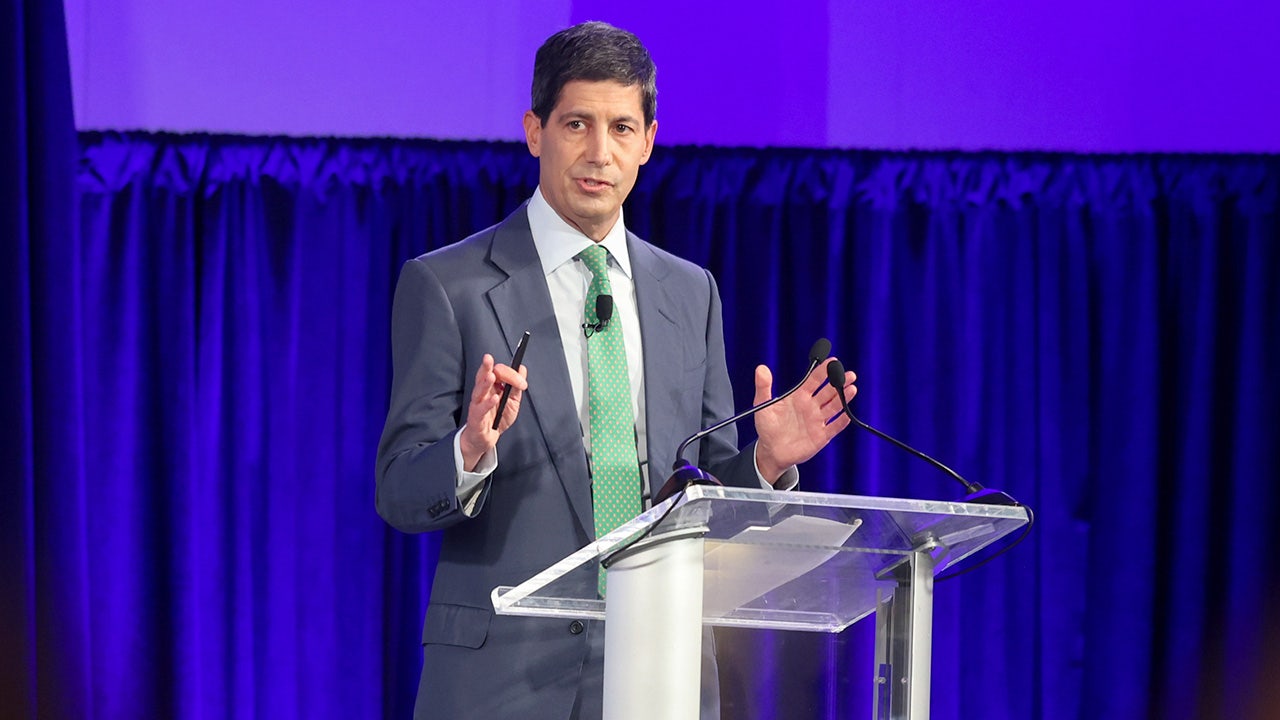
Kevin Warsh Nomination Signals Potential Shift in Federal Reserve Inflation Framework

Kevin Warsh's upcoming Senate testimony on his Federal Reserve chairmanship nomination is forcing a reassessment of the central bank's inflation framework and the predictability of future monetary policy.
Alpha Score of 45 reflects weak overall profile with strong momentum, poor value, poor quality, weak sentiment.
Alpha Score of 55 reflects moderate overall profile with moderate momentum, moderate value, moderate quality. Based on 3 of 4 signals — score is capped at 90 until remaining data ingests.
Alpha Score of 47 reflects weak overall profile with moderate momentum, poor value, moderate quality. Based on 3 of 4 signals — score is capped at 90 until remaining data ingests.
Alpha Score of 57 reflects moderate overall profile with moderate momentum, moderate value, moderate quality, moderate sentiment.
The nomination of Kevin Warsh for the Federal Reserve chairmanship introduces a critical inflection point for monetary policy expectations. As the Senate Banking Committee prepares for testimony, the primary focus rests on how a potential leadership change might alter the central bank's approach to its dual mandate. Warsh has historically expressed skepticism regarding the rigid application of inflation targeting, suggesting that the current framework may lack the necessary flexibility to address structural economic shifts.
Reassessing the Inflation Mandate
Market participants are evaluating whether a Warsh-led Federal Reserve would prioritize a more discretionary approach to interest rate policy. The current consensus relies on a predictable reaction function tied to specific inflation prints and employment data. A departure from this model toward a more idiosyncratic policy style would likely increase volatility in short-term rates. Investors are specifically looking for clarity on whether the nominee would maintain the existing two percent inflation target or seek a broader range that accounts for supply-side constraints.
If the Federal Reserve moves away from its current transparency-heavy communication strategy, the transmission mechanism for monetary policy could become less efficient. Bond yields often react to the predictability of the central bank's path. A shift in leadership philosophy risks decoupling long-term inflation expectations from the current policy rate, forcing a repricing of the yield curve. The market is currently pricing in a specific path for future rate cuts, which remains sensitive to any signal that the Fed might tolerate higher inflation for longer periods.
Transmission to Asset Classes
Equity markets and the dollar remain tethered to the Federal Reserve's terminal rate projections. A nominee who signals a preference for tighter control over the money supply could strengthen the dollar, creating headwinds for multinational earnings. Conversely, if the testimony suggests a willingness to prioritize growth over strict inflation adherence, the resulting liquidity environment could support risk assets despite higher nominal yields.
AlphaScala data currently reflects a cautious environment for industrial and technology sectors as they navigate these policy uncertainties. For instance, ON stock page holds an Alpha Score of 45/100, while BE stock page sits at 46/100, both reflecting a mixed outlook as capital expenditure plans remain sensitive to the cost of borrowing. These scores highlight how individual companies are positioned within a broader market analysis that is increasingly wary of policy-induced volatility.
The upcoming testimony serves as the primary marker for institutional positioning. Beyond the immediate rhetoric on inflation, the committee will likely probe the nominee's stance on the Fed's balance sheet normalization process. Any deviation from the current quantitative tightening trajectory would represent a significant change in liquidity conditions. The ultimate decision point for the market will be the confirmation hearing's impact on the Federal Open Market Committee's internal consensus, which dictates the pace of future policy adjustments.
AI-drafted from named sources and checked against AlphaScala publishing rules before release. Direct quotes must match source text, low-information tables are removed, and thinner or higher-risk stories can be held for manual review.