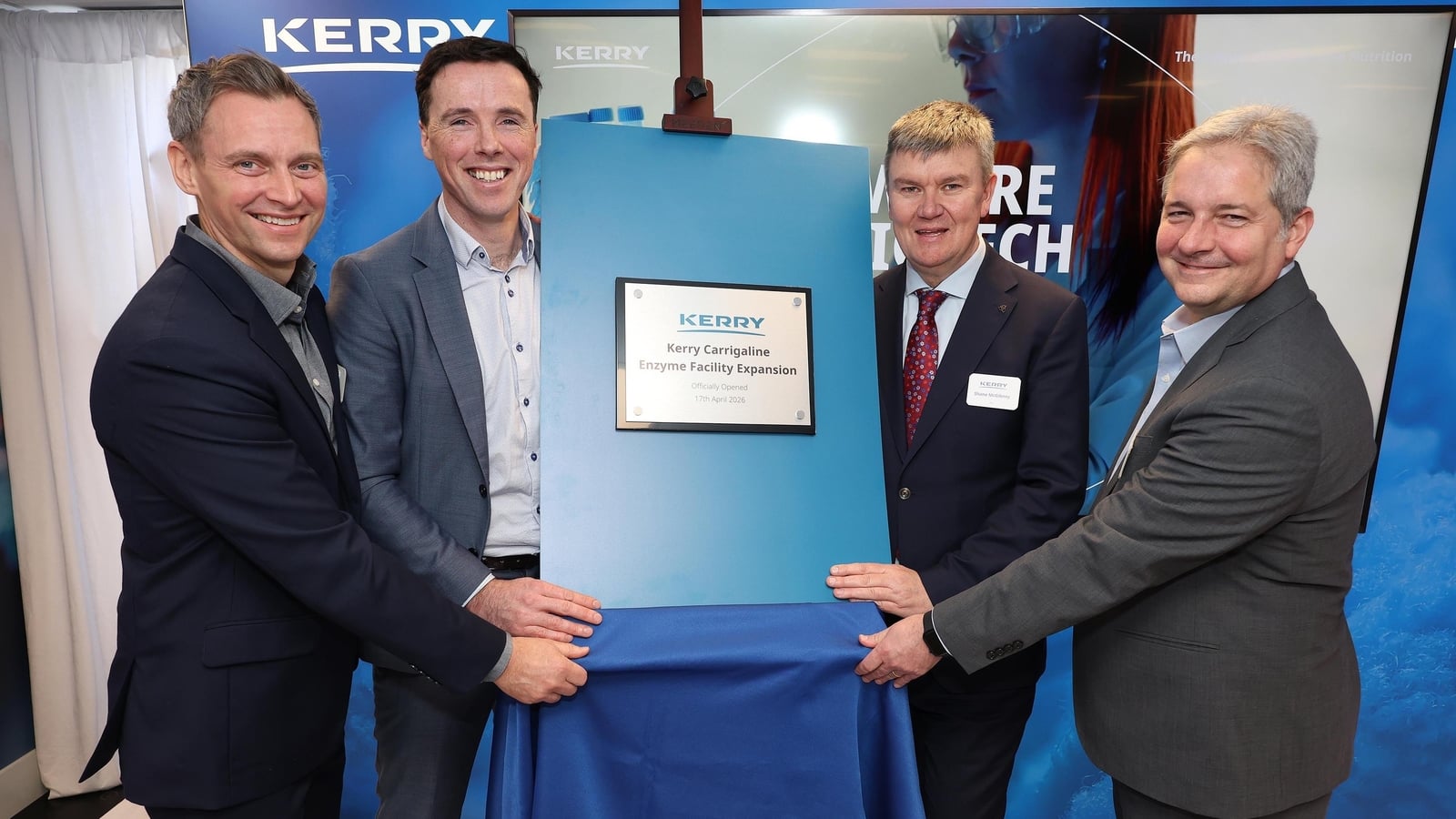
Kerry Group has officially opened its expanded biotechnology manufacturing hub in Carrigaline, Co Cork, marking a strategic increase in the production capacity of lactase enzymes. This facility upgrade shifts the company toward a higher industrial scale, focusing on the synthesis of enzymes essential for the global food technology sector. By scaling production in Ireland, the firm is positioning its supply chain to meet rising demand for specialized food ingredients that require precise biochemical processing.
Industrial Scaling and Supply Chain Integration
The expansion of the Carrigaline site represents a transition from pilot-level production to high-volume industrial output. Lactase enzymes are critical components in the dairy and alternative-protein markets, where the removal of lactose or the modification of sugar profiles is a primary value driver. By concentrating this production capacity in a single hub, Kerry Group aims to streamline its operational efficiency and reduce reliance on fragmented manufacturing processes. This move aligns with broader trends in macroeconomic indicators and the shift in consumer discretionary spending, as food manufacturers increasingly prioritize ingredient stability and cost-effective enzyme sourcing to manage margin compression.
Market Impact and Production Dynamics
The increased output of lactase enzymes serves as a bellwether for the broader food technology sector. As industrial-scale biotech becomes a standard requirement for global food ingredient suppliers, the ability to maintain consistent quality at higher volumes becomes a competitive advantage. This facility expansion allows the company to address the supply-side constraints that have historically limited the rapid adoption of specialized dairy-free or low-lactose products.
For the broader market, the investment highlights a shift in how food technology firms approach capital expenditure. Rather than diversifying into new product categories, the focus has moved toward deepening existing capabilities to capture higher market share within the ingredient supply chain. This strategy mitigates risks associated with product innovation cycles by doubling down on the foundational biochemical components that remain in constant demand across global food markets.
Operational Outlook
The facility in Cork is now the primary node for the company's enzyme production strategy. The integration of this expanded capacity will be monitored through the company's upcoming production volume reports and quarterly margin assessments. The next concrete marker for this expansion will be the impact on the firm's cost-of-goods-sold metrics as the facility reaches full operational capacity. Investors will look for evidence of improved operating leverage as the increased output begins to flow into global distribution channels. This development follows a period of heightened focus on UK executive sentiment shifts toward labor contraction via AI integration, suggesting that industrial sectors are increasingly looking to automate and scale core manufacturing processes to offset inflationary pressures in labor and raw materials.