The data center buildout faces a new risk. Not power supply or chip shortages. Organized, preemptive opposition.
In Douglas County, Kansas, a group of residents is organizing before any developer has filed an application. The goal is to make the county so unwelcoming that no one tries.
Nancy Thellman, a former county commissioner who lives on a farm, helps lead the Data Center Watchdogs. The group meets in a Lawrence library. They took cues from organizers in De Soto, Kansas, where a 2.9 million-square-foot Beale Infrastructure project is under construction. “If you don’t have an active application filed in your community yet, you probably will, so get ready for it now,” Thellman said.
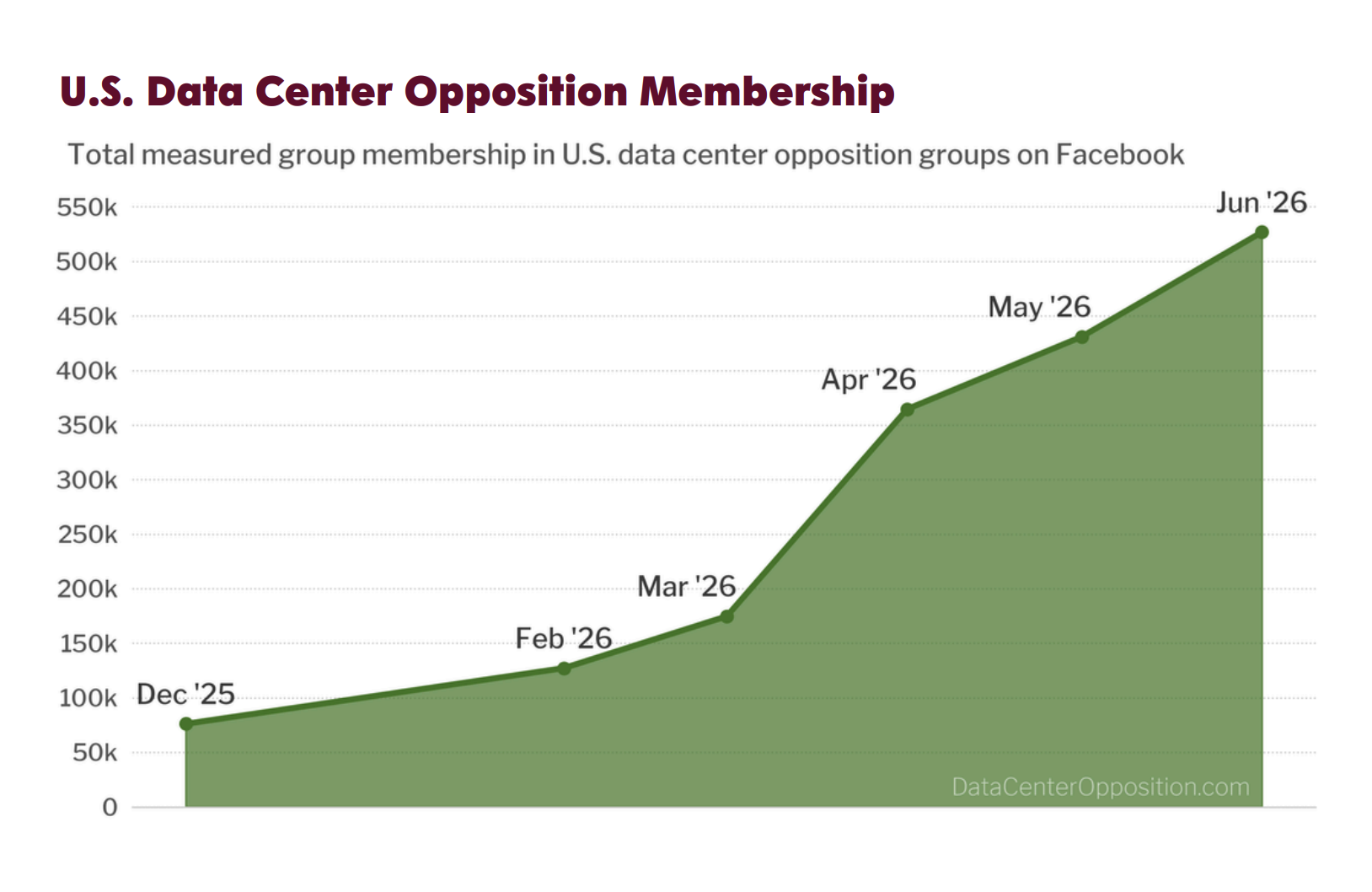
The opposition is networked. Dally Holloway’s “Say NO to data centers” Facebook group has 175,000 members. She produces guidebooks and pocketbooks for communities facing proposals. The Tonganoxie group, fighting Cloverleaf Infrastructure’s 1,000-acre Project Bluestem, raised money to hire a lawyer after reading one of her guides. “We learn from each other,” said Jim Karleskint, a former Kansas House member leading the Tonganoxie fight. At least 430 local Facebook groups with over 525,000 members now track data center proposals across the US, according to the Data Center Opposition Report.
Kansas made itself a target. Senate Bill 98, passed in 2025, offers a 20-year state and local tax exemption for certain data center projects. The state now has six active proposals, according to Cleanview. The county has a 515-megawatt coal plant and the Kansas River. “We have just about everything a data developer could want,” Thellman said.
The economic stakes are high. Goldman Sachs Group Inc. GS stock page, which forecasts global power demand from data centers will jump 50% by 2027, scored 51 on AlphaScala's Alpha Score, a mixed signal. The Trump administration signed an executive order to ease federal regulatory burdens. Research from Georgia Tech found that when a data center opens in a county, residents see an estimated 3.5% increase in employment and a 2% increase in household income. “One of the main benefits is just straight up tax revenue,” said Daniel Yue, the study’s lead author.
The community costs are driving the pushback. Thellman’s group worries about farmland loss and water consumption. The noise from cooling systems is a specific concern. A University of Michigan study found noise pollution can affect bird behavior and reproduction. Jim Karleskint said the noise from Project Bluestem could disturb nearby schools and nursing homes. “The tone noise from this data center would hurt the people in ways that we can only imagine,” he said.
The legislative response is accelerating. Lawrence approved a two-year moratorium on large-scale data centers last week. Leavenworth County passed a 90-day moratorium in May. Thellman’s group is pushing for a statewide moratorium, similar to the one New York Governor Kathy Hochul imposed, and a repeal of SB 98. “Maybe they thought they were doing their states a favor with this kind of aggressive economic development attitude on data centers,” Thellman said. “It just really was shortsighted.”
Developers are making their case. De Soto mayor Rick Walker said the Beale project is expected to generate more than $300 million in municipal revenue over 25 years. A Beale Infrastructure spokesperson said the project will generate thousands of construction jobs and about 50 full-time roles per phase, with an average salary above $75,000. Cloverleaf’s chief development officer, Aaron Bilyeu, pointed to Project Bluestem’s website, which says it is “expected to create more than 1,200 construction and permanent jobs over the next three years.” Microsoft Corp. MSFT stock page, which operates data center academies and partners with community colleges near its hubs, scored 61 on AlphaScala's Alpha Score, a moderate reading.
The November governor’s race in Kansas could shift the policy landscape. Holloway’s group wants candidates to sign a pledge committing to community input before approving large projects. The watchdogs in Douglas County acknowledge they may not stop every project. Thellman said they continue to keep in touch with groups across the country. “I know more about other communities across the nation than I ever thought I would, and I feel like I’m bonded with them at the heart and at the pocketbook.”