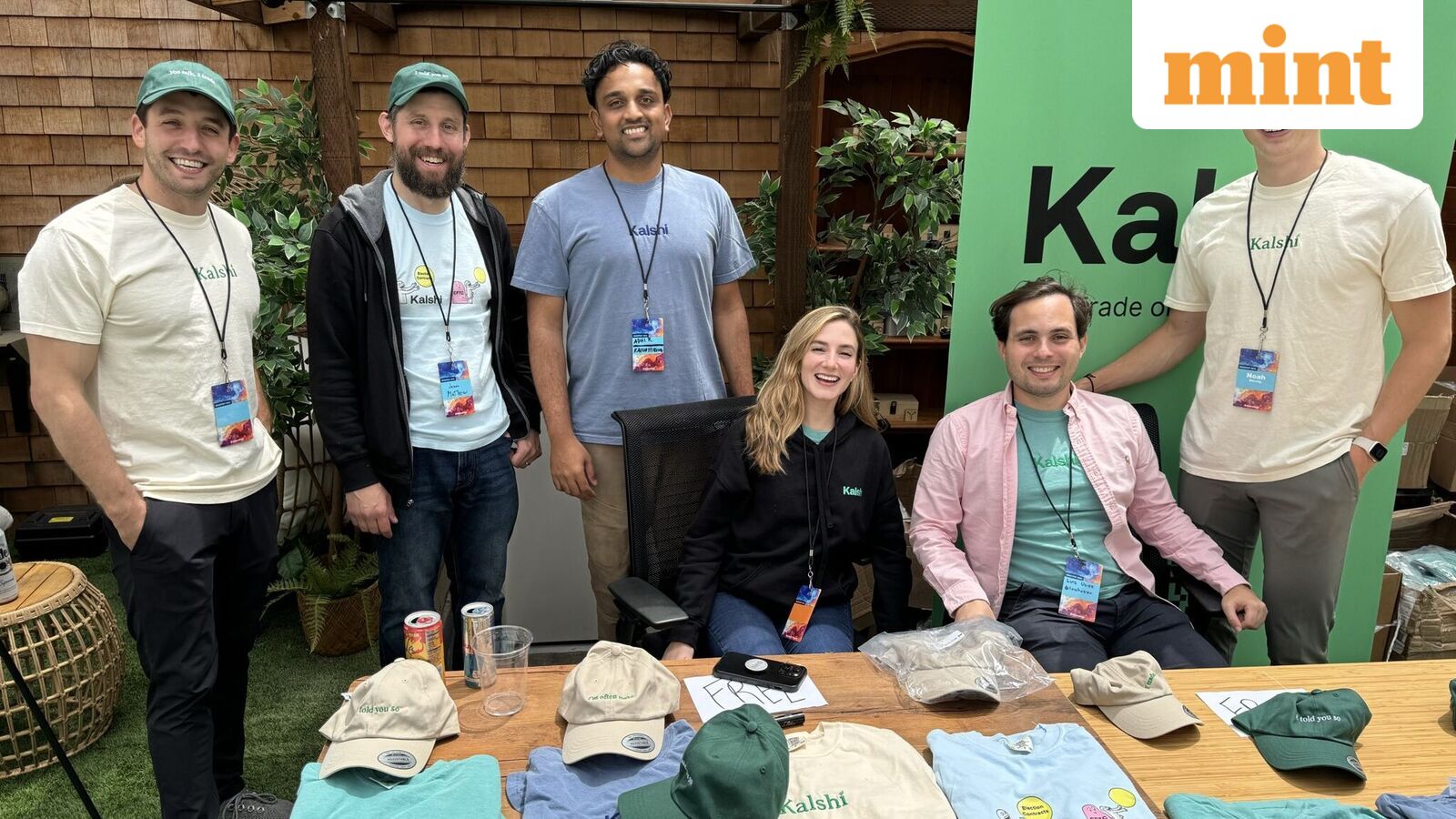
Kalshi COO Luana Lopes Lara built a $22B prediction marketplace from a 2018 water-cooler bet on Kylie Jenner's pregnancy. Now she faces regulatory battles in 19 states.
Kalshi Inc. co-founder Luana Lopes Lara traces the idea for her $22 billion prediction marketplace to a 2018 water-cooler moment: whether Kylie Jenner was pregnant.
Lopes Lara was interning at Five Rings, a New York trading firm. The internet buzzed with speculation about the reality TV star. She asked fellow interns what they thought. None had heard of Jenner.
“I was the only person that was like, ‘Oh my god, I think she’s pregnant. Look at these things on Instagram,’” Lopes Lara said in an interview from Kalshi’s Manhattan office. “I was like, ‘I want to make a bet with you on this.’”
Jenner was pregnant. The moment stuck with Lopes Lara – not the gossip, the idea that millions of people form strong opinions on uncertain outcomes with nowhere to put their conviction.
Later that year, she started Kalshi with MIT classmate Tarek Mansour. At 30, she is one of the world’s youngest female self-made billionaires, with a net worth of $2.6 billion, according to the Bloomberg Billionaires Index.
As chief operating officer, Lopes Lara oversees engineering, market listings and liquidity partners. She interviews most new hires. Kalshi has grown at a tremendous pace as prediction markets gained popularity. It has also faced serious political and regulatory backlash.
Kalshi was valued at $22 billion in its latest funding round, double what investors pegged the company at in December. It employs 150 people, up from 35 a year ago.
Controversies have piled up. Critics say allowing bets on certain events – international trade deals, who will run for office, Super Bowl attendees – opens opportunities for insiders to benefit. Others point to ethical issues of trading on topics such as war or death, neither of which are explicitly allowed on Kalshi.
In February, as war broke out in Iran, a Kalshi market tracking the odds of Ali Khamenei being ousted as Supreme Leader began to jump. He had been killed in the bombing. Instead of resolving the market to “Yes,” Kalshi froze it. His death technically made the contract invalid. Polymarket faced accusations of facilitating insider trading.
“It’s always very stressful to read these things,” Lopes Lara said. “That’s where we really failed. We didn’t fail on market design, we didn’t fail on the rules. We failed in making it crystal clear to people.”
Kalshi reimbursed all fees and net losses from the Khamenei market to the tune of $2.2 million.
Sports wagers accounted for around 80% of Kalshi’s event-contract trading volume in recent days when including combination bets, according to a company spokesperson. Kalshi handled a record $17.9 billion in overall notional trading volume last month, according to user-compiled data from Dune Analytics.
“What was once limited to a handful of locations is now available in almost every corner of the country – often right on a cellphone,” Republican Senator Marsha Blackburn of Tennessee said at a May 20 Senate hearing about Kalshi’s industry.
Lopes Lara grew up in Brazil and trained as a ballerina before pursuing her business career. Back then, she would measure her food intake down to one-quarter of a strawberry, she once told Bloomberg Radio. These days her diet is far less restrictive: a steak bowl from Chipotle with rice, cheese, no beans, and chips crunched up and sprinkled on top.
She ordered it regularly when Kalshi was fighting with the Commodity Futures Trading Commission during the Biden administration. The CFTC had challenged Kalshi over whether it could offer contracts tied to congressional races, leading the company to sue the watchdog in 2023. Kalshi won its case just in time for the 2024 election.
The Trump White House has been kinder. Kalshi has still faced legal skirmishes in at least 19 states that have contested its right to offer sports bets. In Arizona, it resulted in criminal charges against the company.
“If it needs to go to the Supreme Court, it can go to the Supreme Court,” Lopes Lara said at a company event in March. “We’re very, very confident that we’re correct and there’s no problem with that.”
Lopes Lara is planning her wedding celebration in Iceland next year. She has a golden retriever named Lola. Her daily schedule: wake up at 5:45 a.m., spend an hour at the gym, then work from Kalshi’s office in New York’s Meatpacking District until 10 or 11 p.m.
Colleagues say her uniform there is casual: often Kalshi-branded gear, sometimes a T-shirt for history buffs from a website called Echos of Antiquity, and sneakers. She rarely wears makeup and said she doesn’t own a designer purse.
The office is sprinkled with inside jokes. There is a framed photo of actors Eddie Murphy and Dan Aykroyd from the 1983 movie “Trading Places,” referencing a more recent rule that bans insider trading. Elsewhere is an image of a “South Park” episode that portrays prediction markets as corrupt.
A clip from outside Madison Square Garden that recently went viral during NBA Finals – with a fan saying, “My mayor Muslim. My bagels Jewish. My Christian Dior. Knicks in four!” – was spoken into a Kalshi-branded microphone. Kalshi recently inked a multi-year deal with the arena. Jenner’s current boyfriend, actor Timothée Chalamet, is a devoted Knicks fan who just signed his own advertising deal with Kalshi.
“My role in the company is to push for us to go for things, to go fast, take what we can and grow as much as we can,” Lopes Lara said.
Lopes Lara launched Kalshi alongside Mansour, the company’s chief executive officer, as part of a Silicon Valley hackathon. The two met while earning engineering degrees at Massachusetts Institute of Technology.
“She sat in the front row of every class,” said Peter Kempthorne, who taught statistics to them both. “With many students at MIT, they may not be engaged in the lectures, she was totally engaged in trying to learn as much as she could.”
Later, she and Mansour forged deeper ties at internships together, including at Five Rings and then Citadel, where the hedge fund offered a two-hour training session on prediction markets.
“We saw all aspects and sides of prediction markets that we liked,” Lopes Lara said. “That was just one of the reasons we decided to say, ‘let’s drop our extremely high-paying jobs and we’ll try to do this thing.’”
While Mansour is usually the public face of Kalshi – meeting with investors, appearing on TV or hobnobbing with policymakers – it’s Lopes Lara who’s running the company behind the scenes. She spends a lot of time with markets staff going over the bets Kalshi chooses to list and how to make the operation more efficient.
Kalshi has more than 500 templates for wagers that have already been worked through by that team. They reflect the exchange’s own forecasts for everything that could possibly happen in the world. The company uses an internally developed artificial-intelligence model to aggregate the day’s top news, analyze competitors and make other recommendations.
“We think about markets almost like a factory,” Lopes Lara said. She plans to hire another 50 people by year-end, noting that “nowadays with AI, every engineer is like five.”
Kalshi’s next big upgrade will be margin trading, something it expects to unveil later this year. That, combined with its new block-trading effort, is squarely aimed at big-money traders who work in hedge funds, corporations or other professional entities.
Its effort to grow overseas is trickier. Kalshi’s first international effort centered on Brazil through a partnership with local brokerage XP Inc. announced in March. The next month, Brazil’s government moved to ban access to prediction markets sites over illegal-gambling concerns.
Lopes Lara meets with Kalshi’s legal team every week to examine strategies and outcomes. Kalshi will never apply for a gambling license, she said, even if that would allow access to key markets where it’s currently restricted, like the UK and parts of Europe.
“We want to have one core exchange and clearinghouse that concentrates all the liquidity,” she said.
Donald Trump Jr. is an adviser to the company. Lopes Lara stressed that the president’s son is not involved in any regulatory discussions. There is also Jay-Z, the businessman musician, who is an adviser and an investor through MarcyPen, the venture capital firm he co-founded. His ties to Kalshi haven’t been previously reported.
When Jay-Z visited the company’s offices earlier this year, staff asked him for advice about Kalshi’s markets related to music, Lopes Lara said.
While she can’t trade on Kalshi herself due to company rules, Lopes Lara sometimes imagines how she would. In planning an outdoor wedding, for example, one of her immediate thoughts was to create a market for whether it would rain that day.
“We can plan all these things outside, it starts raining, you move it inside and you’ve spent all this cost for the outside,” she said. “As prediction markets become more mainstream and people accept them and understand them, we’re going to see a lot more of those use cases.”
Prepared with AlphaScala editorial tooling from the source reporting linked above. Indexable analysis may include a cited Alpha Score value. Publishing checks screen each story before release. Educational coverage, not personalized advice.