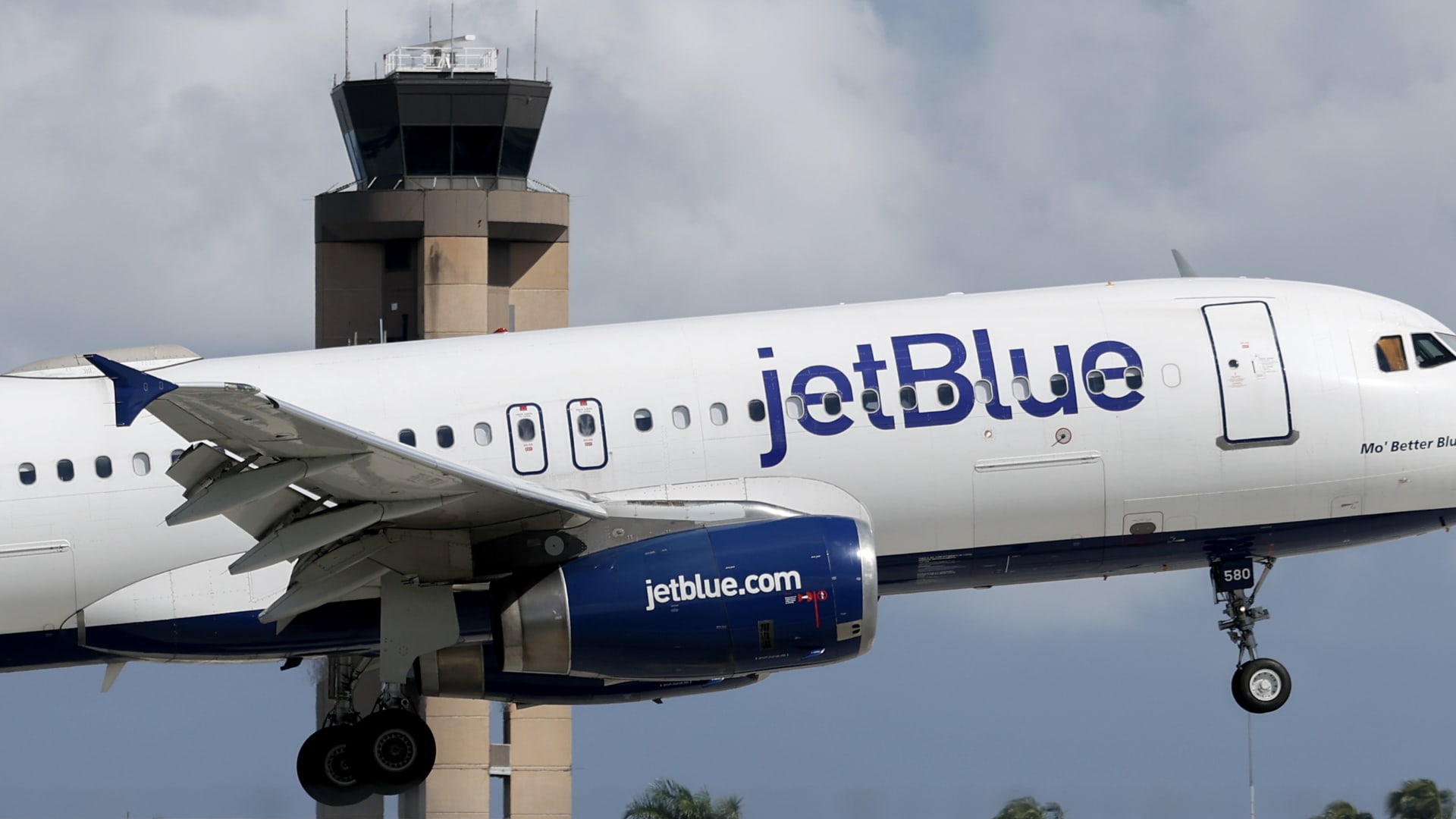
JetBlue Airways already runs the busiest airline operation at Fort Lauderdale-Hollywood International Airport. Now it wants to make that dominance stick.
Spirit Airlines, the discounter that used to hold the No. 1 slot at the airport, collapsed on May 2. JetBlue moved within hours, laying out flights to fill the void. By June, JetBlue controlled 36% of Fort Lauderdale's capacity for 2026, up from 24% a year earlier, according to Cirium. The carrier now averages 106 scheduled flights a day, compared with 68 a year ago. From May to June alone it added 5% more capacity while larger rivals pulled back for the Florida offseason.
President Marty St. George called Fort Lauderdale a "star" for the airline. The plan calls for about 150 daily flights during peak winter months, St. George said, a number that would match JetBlue's hub at Boston Logan. The carrier also wants more international destinations from Fort Lauderdale and a heavier push into premium travel. JetBlue is scouting locations for its third airport lounge, after New York's Kennedy and Boston. He acknowledged the real estate challenge but said airport officials are equally motivated.
"It is unclear right now where we would put a lounge," St. George said. "Given the size of our operation and the number of premium customers going in and out of Fort Lauderdale, I think a lot of sense, we just have to find the right location."
The growth arrives at a moment when JetBlue is revamping its network and rolling out a domestic first-class cabin after two years without a profitable quarter. The carrier raised its full-year revenue forecast on June 1, citing strong demand. St. George said he feels "very, very bullish about how customers have responded."
The biggest competitive threat sits 26 miles south. Miami International Airport, an American Airlines hub, dwarfs Fort Lauderdale in both size and Latin America connectivity. American announced a record 100 destinations to the Caribbean, Mexico and Latin America from the U.S., with 77 of them leaving from Miami, including new flights to Maracaibo, Venezuela, and Cap‑Haïtien, Haiti.
JetBlue recently introduced Fort Lauderdale‑to‑Caracas service. American resumed flights to Venezuela in January after a multiyear hiatus. The two carriers are now racing for the same Latin America leisure and visiting‑friends‑and‑relatives traffic.
St. George said JetBlue is not trying to poach every Miami customer. "There's a good number of customers for whom Miami is the right airport, who will never leave Miami, and we're not planning on converting those customers." But he argued that as Fort Lauderdale broadens its route map, the airport's utility will rise.
The near‑term risk for JetBlue's plan revolves around gate availability. Some of the additional gates JetBlue wants are still tied up in Spirit's bankruptcy proceedings. The timing of their release will determine how fast JetBlue can ramp up its Fort Lauderdale schedule. Quick court approval would accelerate the trajectory. Delays could push some capacity additions into 2026 or later.
For competitors, the stakes are clear. JetBlue is building a Fort Lauderdale fortress while American fortifies Miami. The two airports draw from overlapping leisure pools and Latin America traffic. JetBlue's lounge and premium push could appeal to higher‑spending customers who prefer a less chaotic airport. American is not standing still. Its record Latin America schedule creates a deep moat on the Miami side.
JetBlue's AAL stock page carries an Alpha Score of 68 out of 100, a moderate rating in the current airline recovery cycle. Stock market analysis for the sector shows capacity shifts like this one are closely watched by investors.
The confirming data points for JetBlue's thesis will come from load factors on the new Fort Lauderdale routes, average fares, and the timing of a return to quarterly profit. The weakening signals would be a slow gate release, a price war with American on overlapping Latin America routes, or a sudden drop in leisure demand. St. George's revenue forecast already reflects the initial momentum from Spirit's exit. The next few quarters will show whether Fort Lauderdale can pull enough incremental traffic to justify the investment.