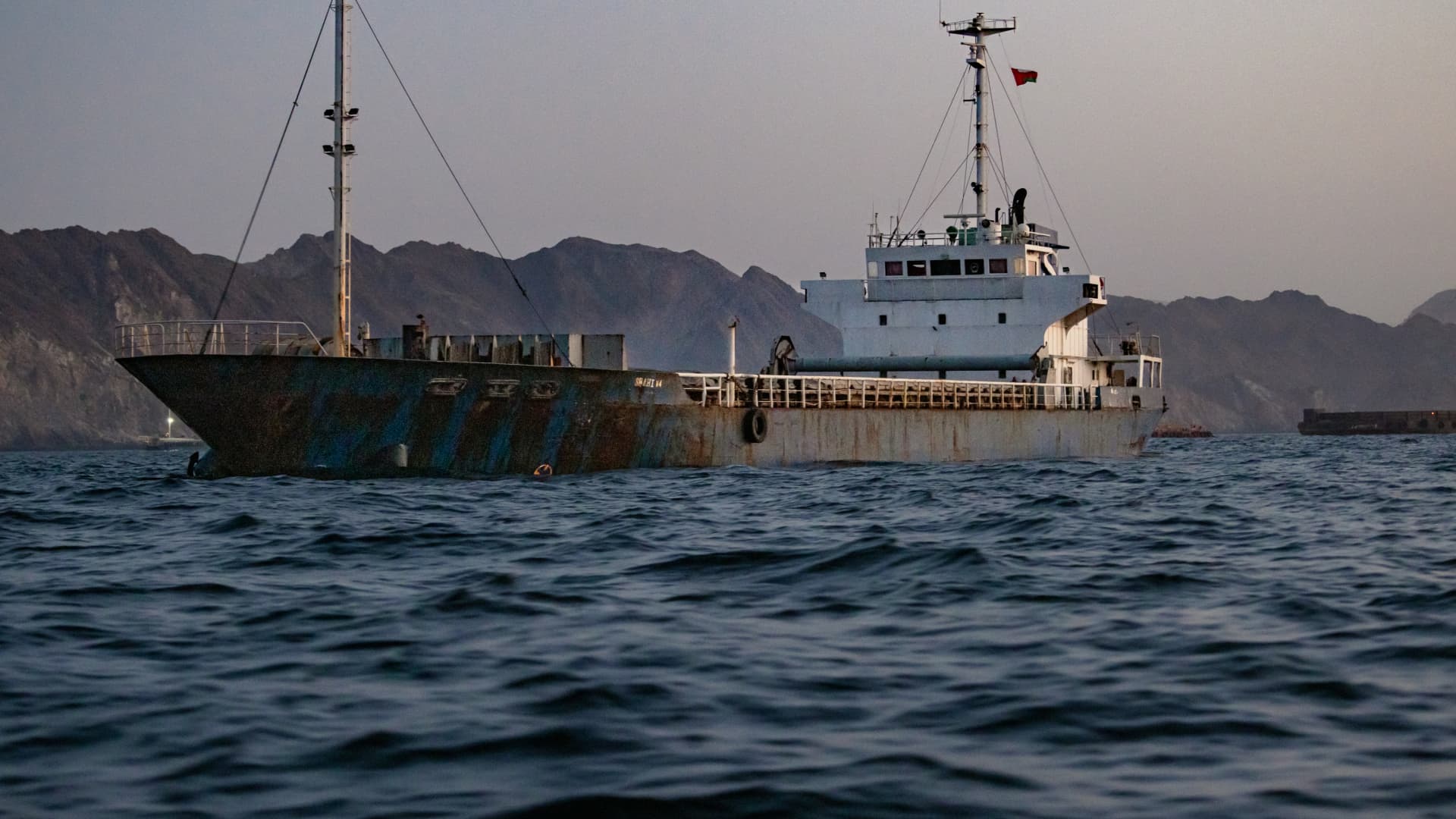
Iran's Islamic Revolutionary Guard Corps warned shipowners Wednesday that any new transit route through the Strait of Hormuz established without Tehran's approval is "unacceptable and dangerous," threatening actions against vessels that ignore its instructions.
The IRGC Navy said only the shipping routes designated by Iran are permitted, and coordination with Iranian forces via a designated communication channel is mandatory, Iranian local media reported. "Navigation outside these routes is highly dangerous and prohibited, and we warn all vessels to strictly avoid any movement outside the designated corridors," the IRGC Navy said.
The warning came days after a key naval information group proposed alternative southern corridors, asking shipowners to consider transiting along Omani territorial waters with transponder signals on. That group said the southern route had been confirmed clear of mines.
Traffic data showed a tentative recovery. Transits tripled to 93 last weekend compared with the prior comparable period, according to ship-tracking firm MarineTraffic. That is still far below pre-war levels when more than 100 ships passed through the strait each day. Tuesday saw 31 verified crossings by commercial and energy-laden vessels, MarineTraffic said. "Operators are still moving cautiously rather than returning to fully normal traffic patterns," the firm said Thursday.
Analysts have warned that even after a formal end to the conflict, any Iranian operational control could suppress long-term oil flows. Helima Croft, head of global commodity strategy at RBC Capital Markets, told clients in a Thursday note that any end to the conflict that leaves Iran exercising operational control and influence over the Strait will result in appreciably lower flows through the waterway. She said oil tanker traffic before the war might represent the high point for transits for the foreseeable future.
The U.S. Treasury sanctioned Iran's Persian Gulf Strait Authority in May, describing it as an attempt to extort global maritime trade. Treasury Secretary Scott Bessent warned Washington would not tolerate a tolling system on Hormuz and said the agency would target any involved actors. The new IRGC warning reinforces the uncertainty facing shipowners despite last week's U.S.-Iran memorandum of understanding to reopen the energy artery.