US forces launched strikes against Iranian targets overnight, President Trump said Monday, after an attack on three cargo vessels in the Strait of Hormuz. Trump declared the temporary truce with Iran "over" in a statement, reversing a period of relative calm that had held since January.
Brent crude jumped 3.8% to $78.40 a barrel in early Asian trading, the biggest single-session gain since early March. West Texas Intermediate rose 4.1% to $74.90. The strait handles roughly a fifth of the world's seaborne oil.
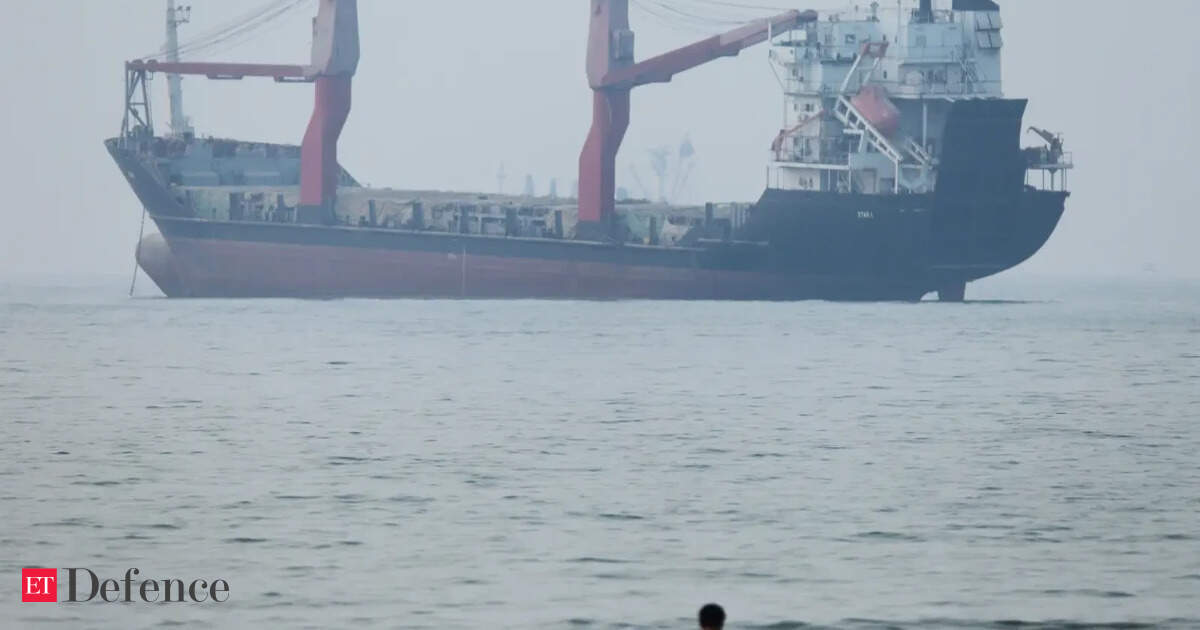
The attacks on the vessels occurred Saturday night in international waters about 30 nautical miles from the Iranian coast. Two tankers and a container ship were struck by what appeared to be Iranian-made drones, the US Navy's Fifth Fleet said. All three ships were flagged to different nations; none reported casualties. The attacks on commercial shipping are the first such incidents in the strait since 2019. The US Navy has increased its patrols in the area, the Fifth Fleet said.
Iran's Foreign Ministry denied involvement and called the US strikes "a reckless escalation." The ministry said it would refer the matter to the United Nations Security Council. Iran's state news agency IRNA confirmed the strikes hit military installations. It said civilian infrastructure was not affected. Explosions and power outages were reported from Iran's southern coastline near Bandar Abbas, a major port and refining hub.
The temporary truce, brokered by Oman, had held since January. It paused a series of tit-for-tat strikes that followed months of rising tensions over Iran's nuclear program and its support for proxy forces in Yemen and Syria.
Shipping companies began rerouting vessels away from the strait Monday morning. Maersk said it would divert all its ships around the Cape of Good Hope until further notice, adding roughly 10 days to transit times between the Persian Gulf and European ports. The diversion is expected to push freight rates higher.
Insurance premiums for vessels transiting the strait jumped to 0.5% of hull value from 0.15% before the attacks, brokers said. War-risk underwriters have not yet issued a formal exclusion zone. Several said they were monitoring the situation hourly.
The US strikes mark the most direct military engagement between the two countries since the 2020 killing of Qasem Soleimani. Analysts at Eurasia Group said the risk of a broader conflict had risen to its highest level in five years. They noted neither side appeared to seek a full-scale war.
Oil markets are now pricing in a sustained risk premium. The backwardation in Brent's front-month contract, a measure of near-term supply tightness, widened to $1.20 a barrel from $0.60 on Friday. Options markets showed elevated demand for out-of-the-money calls betting on Brent above $90. The jump in crude prices adds to a rally that has seen Brent gain roughly 12% this year. The risk premium is now the highest since early 2022, traders said.
The Strait of Hormuz is the world's most important oil chokepoint. Iran has threatened to close it in the past. It has never done so. A closure would cut off about 17 million barrels per day of crude and refined products, roughly 17% of global consumption. Saudi Arabia and the UAE have spare production capacity that could offset some of the loss. Analysts said a prolonged disruption would test the limits of that buffer. The US has released no emergency stockpiles yet.
Trump said additional strikes were possible if Iran continued what he called "hostile acts against commercial shipping." He did not specify a threshold for further action.
The 2019 attacks on tankers in the strait led to a temporary spike in oil prices and a US military buildup. The current escalation is more direct, with US forces striking Iranian soil.
The UN Security Council is expected to hold an emergency session Tuesday at Iran's request.