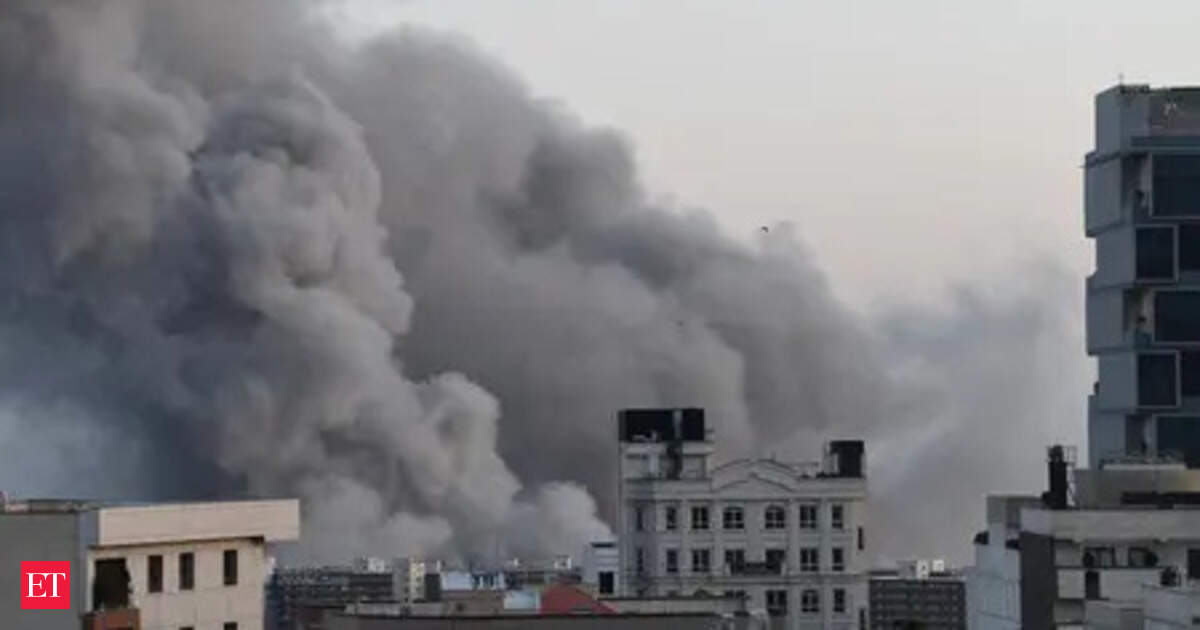
The Islamic Revolutionary Guard Corps struck US military assets in Bahrain for a second day on Thursday and declared the Strait of Hormuz closed to all vessels. Any ship attempting passage would be fired upon, the Guards said in a statement carried by state-run IRNA. US Central Command denied the closure and said commercial ships continued to transit the waterway. It also denied Iranian claims of striking two tankers in the strait.
Those denials do not erase the risk premium that just hit crude and shipping markets. The Strait of Hormuz carries roughly 20% of the world's oil supply. Even a temporary threat of closure pushes tanker rates higher as insurers raise war-risk premiums. Traders typically price in a few dollars per barrel for a confirmed blockade. Here the threat is unconfirmed, so the move in crude could be smaller – but the asymmetry favors upside until the denial is backed by visible traffic data.
Oil Supply Risk Through the Strait
The key question for oil markets is whether CENTCOM's denial holds. If a single tanker is stopped or fired upon, the market will treat the strait as de facto closed. That would force ships to take the longer route around the Cape of Good Hope, adding two weeks to delivery times and raising freight costs. The 22-country warning to Iran – which included the United States and several European nations – signals diplomatic pressure, not a military guarantee. The gap between the official line and the IRGC's stated actions is where risk lives.
For oil producers and refiners, the immediate exposure is to spot crude prices and tanker availability. ExxonMobil and Chevron have refineries in Asia that rely on Middle East crude. A closure raises their feedstock costs. For tanker operators like Frontline or Teekay, rates soar during blockades, even short-lived ones. Defense contractors like Lockheed Martin and Raytheon are beneficiaries of sustained operational tempo – precision munitions are being expended, and replenishment orders follow.
Defense Stocks in Focus
CENTCOM said the US strikes were carried out by Marine Corps, Air Force, and Navy assets using precision munitions. Iran said the attacks destroyed two water reservoirs and damaged a telecommunications tower. CNN reported that components of a US-made GBU-39 series guided munition were found at a damaged reservoir site. That is a specific weapon system produced by Boeing and several suppliers. Any prolonged campaign will require restocking, which flows through defense supply chains.
Iran's Fars News Agency, citing a military source, warned of a "crushing and decisive response" and said new American interests would be targeted if Washington took further action. President Donald Trump told Fox News he had spoken directly with Iranian officials who asked him to stop the strikes. He said the bombing would stop shortly and that Israel was not involved in the current round. That statement creates a potential near-term ceiling on the conflict if both sides treat it as a de-escalation signal.
Twenty-two countries, including the United States and several European nations, warned Iran in a joint statement to stop attacking people "on our soil." They said attempts to kill, kidnap, harass, intimidate or otherwise attack people on their territory undermines national sovereignty. "These actions must stop immediately."