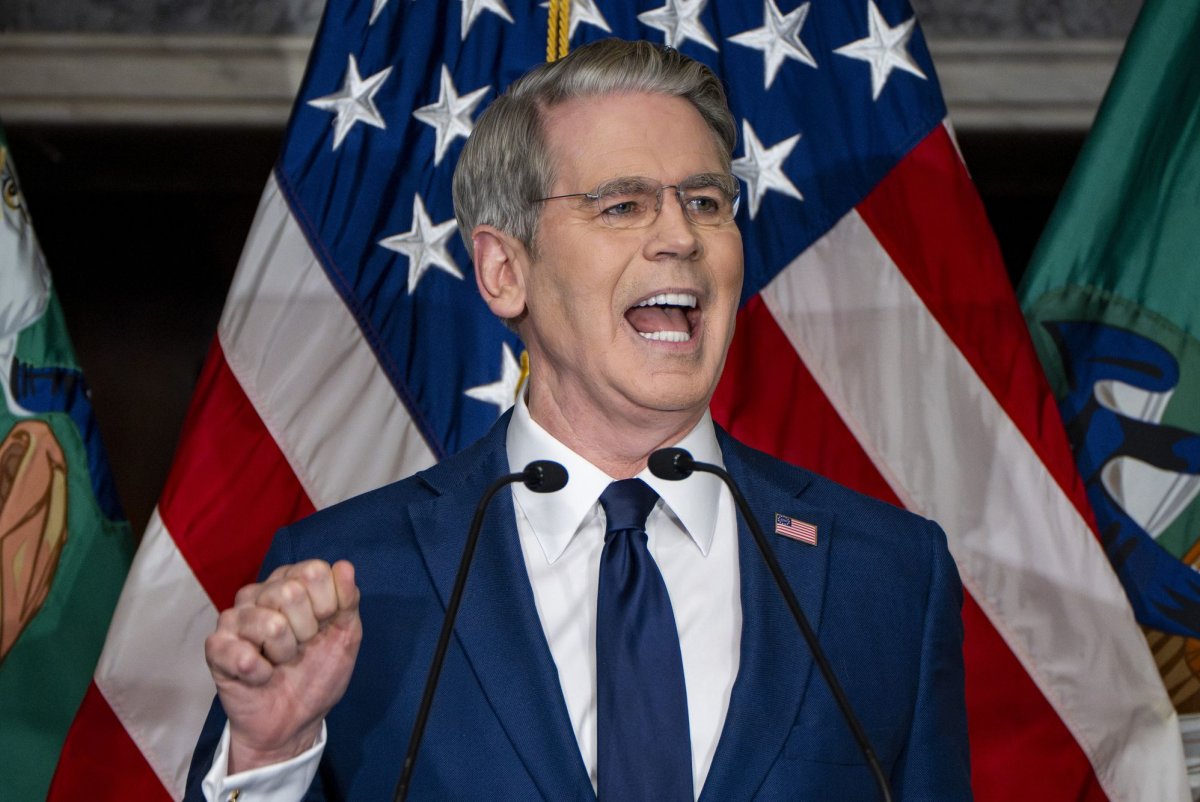
The U.S. Treasury Department launched a new sanctions campaign against Iran on Monday, labeling the push "Economic D-Day" and expanding the reach of secondary penalties on foreign entities. Treasury Secretary Scott Bessent said the goal is to cut off every financial channel that the Iranian regime uses to sustain itself.
"In the Second World War, D-Day marked the historic beginning of a campaign with our allies to target and drive the enemy out of its positions, including those in third countries," Bessent said in a statement. "Today, in that same spirit, we are launching an economic onslaught against Iran's financial connections around the globe. Our objective is to sever every economic lifeline that sustains this tyrannical regime until Tehran stands alone."
The Treasury designated nearly 60 entities, individuals and vessels. It suspended several general licenses that had eased restrictions on certain transactions with Iran. The department also widened the categories of conduct that can trigger secondary sanctions, meaning foreign companies and individuals risk losing access to the U.S. financial system if they do business with Iran.
The immediate market signal came from the rial. Iran's national currency fell to a record low of 2 million to the dollar on Monday, hours after the announcement. Existing U.S. sanctions have already targeted Iran's oil trade, though enforcement has been uneven. Bessent told reporters the new measures are meant to tighten that enforcement.
The economic pressure is feeding into political strains inside Iran. Mohammad Bagher Ghalibaf, speaker of Iran's parliament and chief negotiator, said last week in Baghdad that the struggling economy poses a national security risk.
The new sanctions add a layer of geopolitical risk in the Middle East that could affect crude oil shipping costs and insurance markets. The Treasury did not specify a timeline for further actions. Bessent said the campaign will continue until the regime changes its behavior.