Crypto▲ Bullish
Iran Nuclear Pledge: Crypto De-Escalation Still Conditional
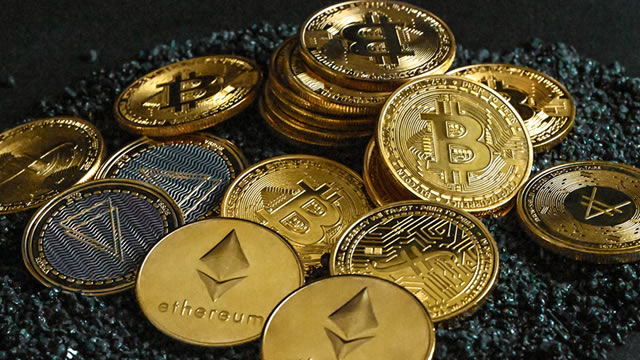
Trump claims Iran agreed to halt nuclear weapons pursuit. Without an inspection regime or stockpile resolution, crypto traders who saw $595M liquidations need proof.
Continue with
President Donald Trump claimed on May 6, 2026 that Iran has agreed not to develop or acquire nuclear weapons. The statement, if it holds, would mark a dramatic pivot from the military confrontation that shook global markets in June 2025. The claim lacks the institutional framework that gave the 2015 Joint Comprehensive Plan of Action (JCPOA) its credibility: no formal treaty, no announced IAEA inspection regime, and no resolution on Iran's remaining enriched uranium stockpile.
The simple read is straightforward: a major geopolitical risk fades, risk assets rally, and crypto traders pile into longs. The skeptical read deserves equal airtime. Iran has made nuclear commitments before. The JCPOA itself was supposed to resolve this exact issue, and it collapsed when political winds shifted in Washington in 2018. The current claim rests on a single verbal guarantee without enforcement mechanisms. For traders who watched $595 million in crypto liquidations when US jets hit Iranian nuclear facilities last June, the lesson is clear: treat the pledge as conditional, not permanent.
Trump's Verbal Guarantee and the JCPOA Precedent
Trump made the assertion on May 6, 2026, framing it as a crucial guarantee from Tehran. He also floated the possibility of meeting directly with Supreme Leader Ayatollah Ali Khamenei to discuss Iran's nuclear future. The announcement follows the US withdrawal from the JCPOA in 2018, which removed the diplomatic guardrails that had constrained Tehran's enrichment activities. Iran responded by ramping up its nuclear program.
The 2018 Withdrawal and Enrichment Ramp-Up
The 2015 JCPOA limited Iran's enrichment to 3.67% purity and capped its stockpile at 300 kg. After the US withdrawal, Iran exceeded both limits. The 2025 airstrikes destroyed physical infrastructure, including the Fordow and Natanz enrichment facilities and sites near Isfahan. Trump described the damage as "monumental," claiming the strikes had "obliterated" Iran's nuclear enrichment capabilities. The current diplomatic track reportedly involves discussions about what to do with Iran's remaining stockpile of enriched uranium, which officials have referred to as "nuclear dust" – the residual material left after the strikes degraded Iran's primary facilities.
The JCPOA precedent is instructive. The deal required months of negotiations, multiple signatories, and a formal inspection regime. The current claim has none of those. Any breakdown in talks over the stockpile issue could reignite tensions quickly.
June 2025 Airstrikes: $595 Million in Crypto Liquidations
When US jets hit Iranian nuclear sites on June 21-22, 2025, liquidations surpassed $595 million as leveraged positions across the market got wiped out. Bitcoin experienced sharp volatility, dropping from $72,000 to $65,000 within hours before recovering. The market reclaimed levels above $70,000 as traders began pricing in the possibility that the strikes might actually reduce long-term geopolitical risk rather than increase it.
The Liquidation Cascade
The June 2025 event followed a pattern typical of geopolitical shocks: a sudden spike in volatility triggered stop-loss cascades across leveraged long positions. Binance, Bybit, and OKX saw the heaviest liquidations. The market recovered within days as dip buyers stepped in. The episode demonstrated how quickly a geopolitical headline can drain liquidity from crypto derivatives markets.
Current Positioning Risk
Open interest in Bitcoin futures has risen since the airstrikes, with funding rates turning positive again in early 2026. A sudden reversal of the de-escalation narrative could trigger another liquidation cascade. Traders holding leveraged longs should monitor the Bitcoin funding rate and the aggregate open interest on major exchanges. A spike in funding rates above 0.1% per eight hours would signal overcrowding.
Bitcoin (BTC) remains the most liquid crypto asset for geopolitical hedging. Ethereum (ETH) saw a similar pattern during the airstrikes but with higher relative volatility. Altcoins with lower liquidity, such as Solana (SOL) and Cardano (ADA), experienced deeper drawdowns and slower recoveries.