Iran launched two missiles at the UAE late last week. Both fell into the sea. The strike is the latest sign that the regional conflict is rerouting energy flows. Qatari LNG is partly offline after Iranian attacks. Asian buyers are hunting for cargoes. That means much of the LNG Europe expected from the Middle East may go east instead.
European natural gas storage is already running thin. Germany’s Federal Network Agency shows current storage levels near the bottom of the five-year rolling average. The blue line on its chart – storage from October through September – sits below last year’s orange line. If Europe gets a cold winter, those inventories will drain fast. Germany would face cuts in gas use or dangerously low storage heading into 2026.
The continent’s energy policy has made things worse. Several countries shut zero-carbon nuclear plants and natural gas facilities. Climate risk dominated those decisions. Mild winters the last few years masked the consequences. That luck may have run out.
Europe has agreed to end imports of Russian LNG by fall 2026, starting a phase-out this year. Record volumes are still coming in. The gap between policy and reality is wide. U.S. exporters Cheniere and Venture Global would seem to benefit. Market chatter suggests many cargoes are heading for Asia instead, according to the CNBC Power Insider newsletter. European buyers will have to compete.
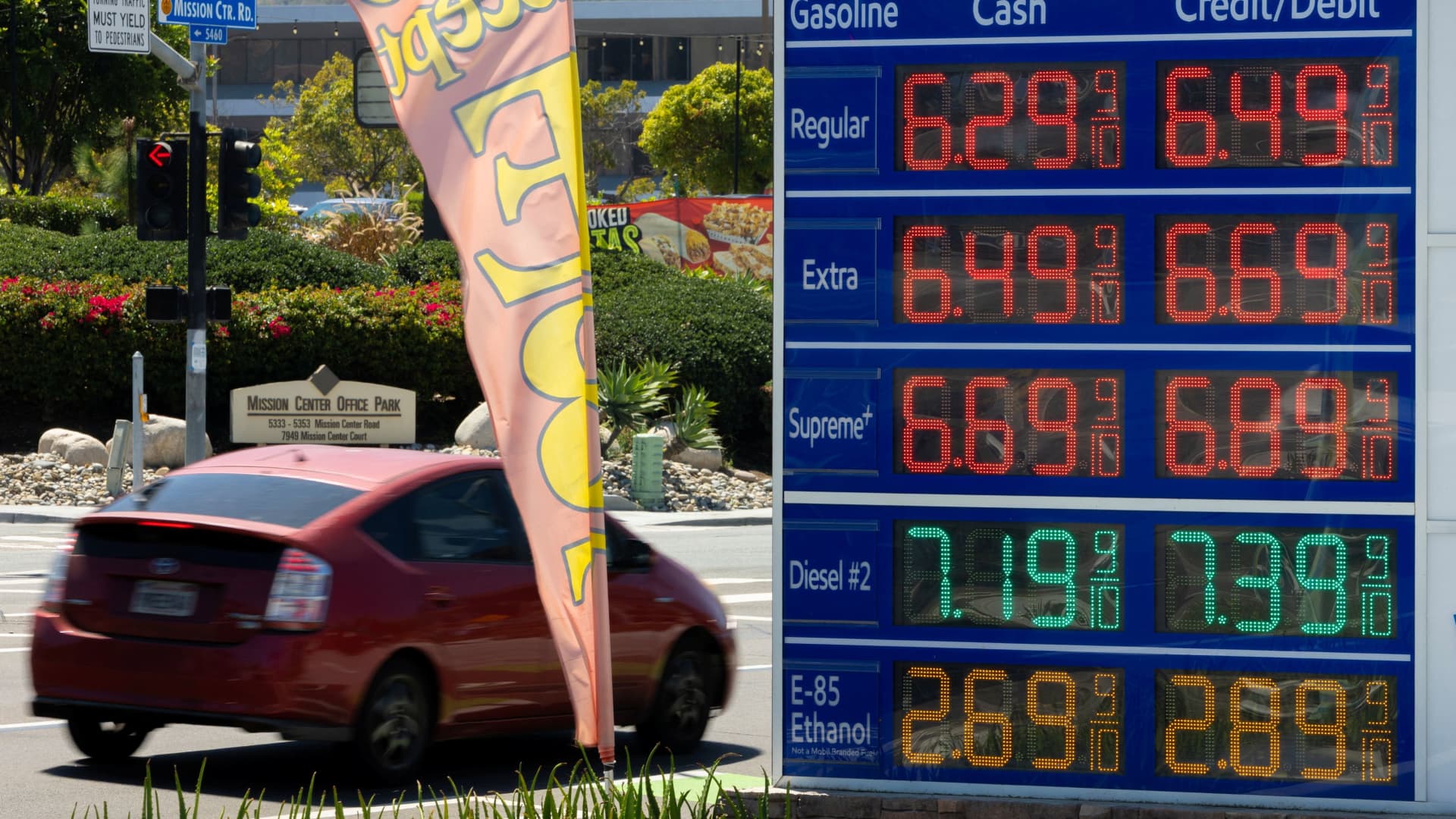
Diesel fuel prices are climbing. AAA pegs the national average at about $5.47 a gallon. That is approaching the nominal record of $5.81 set in June 2022. In parts of California, diesel costs $7 a gallon. Piper Sandler notes diesel and jet-fuel inventories fell by half a million barrels last week. Normally they start to flatten or rise ahead of fall. The Iran conflict and Russia’s war on Ukraine are taking refining capacity offline globally.
California’s fuel problem goes back years. The state has the highest gasoline taxes in the country – over 70 cents a gallon. More importantly, it has lost two refineries in the past year. A chronic shortage of refining capacity means imports are needed to meet demand. Most of those imported fuels come by ship.
Three companies want to change that. Phillips 66, Kinder Morgan and H.F. Sinclair have proposed the Western Gateway pipeline. The project would connect existing lines around Los Angeles and parts of the Midwest. It could also serve Arizona, which relies on California for much of its gasoline imports, according to CNBC. If built – the earliest completion is 2029 – it would lower fuel prices for millions of California drivers.
Hedge funds are already betting on energy infrastructure. The 15 most-owned energy stocks by big hedge funds include pipeline player Williams as the top holding. Chevron came second. Then Energy Transfer, Devon Energy, Antero Resources and Expand Energy, according to filings compiled by CNBC Pro. The data is for the most recent quarter and may have changed since.
Williams is pushing into AI and data centers by connecting natural gas directly to power sources. Devon Energy is also on the list. AlphaScala’s proprietary scoring gives Devon a score of 61 out of 100, labeled Moderate. Kinder Morgan and Phillips 66, both involved in the California pipeline, also carry Moderate scores of 58 and 67 respectively. The infrastructure build – from pipelines to power – is where the biggest flows are going.
Some smaller hedge fund picks include Solaris Energy Infrastructure, ProPetro Holding and Golar LNG. Solaris is 65% below its analyst target of $95.52, according to CNBC Pro. The company builds mobile electric solutions and AI power infrastructure. ProPetro, a Midland-based fracking and power generation firm, is 43% below its consensus target.
Targa Resources, another pipeline player on the hedge fund list, just announced a 20-year development deal with ExxonMobil. Targa will help Exxon expand its Permian Basin footprint in Texas.
The Iran missile volley at the UAE, Europe’s gas storage squeeze, and a planned California pipeline all point to the same constraint: energy infrastructure. LNG terminals, pipelines, refining capacity – every layer of the supply chain is stretched. Heating season in Europe and any further escalation in the Middle East will test that directly.