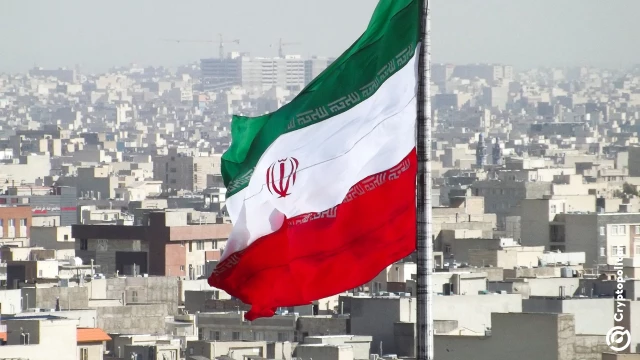
Iran delivered its response to a U.S. ceasefire proposal through Pakistani mediators, injecting a fresh binary catalyst into oil and crypto markets. The proposal, a 14-point memorandum delivered last week, aims to reopen the Strait of Hormuz and establish a framework for further negotiations on Iran's nuclear program. The contents of Tehran's reply remain undisclosed, but the diplomatic channel itself is now the dominant variable for assets that have been trading on Middle East risk premiums since February.
The Strait of Hormuz and the Oil-Fed-Crypto Chain
The simple market read is linear: a ceasefire that reopens the Strait of Hormuz lowers oil prices, cools inflation, lets the Federal Reserve cut rates, and lifts risk assets including Bitcoin. That chain is directionally correct, but it misses the timing, the fragility of the current truce, and the fact that markets have already priced some de-escalation premium since the April 8 ceasefire was declared.
The better read starts with the mechanism. Roughly 20% of global oil transits the Strait of Hormuz. Even the threat of disruption adds a supply-risk bid to crude. That bid flows into headline inflation, which keeps the Fed in a higher-for-longer posture. When oil stabilizes or falls, inflation expectations ease, rate-cut bets get pulled forward, and liquidity conditions improve for duration-sensitive and speculative assets. Crypto sits at the far end of that liquidity chain.
But the ceasefire declared on April 8 remains nominally in effect, and it has already been strained. The UAE and Kuwait both intercepted drones that entered their airspace. A drone strike caused a fire aboard a ship near Qatar's coast. Another attack targeted a camp used by an Iranian Kurdish rebel group near Erbil in northern Iraq. These incidents, reported by The Guardian, mean the market is not pricing a clean peace; it is pricing a messy, contested pause. A formal Iranian acceptance of a framework would therefore remove a tail risk that is still partially embedded in crude and, by extension, in rate expectations.
Slimmon's Six-Month Clock
Andrew Slimmon, head of Applied Equity Advisors at Morgan Stanley Investment Management, gave a concrete timeline that turns the geopolitical story into a tradable rate-cut window. "If that's in the next couple weeks, then it could be by the end of this year," Slimmon told Business Insider, referring to potential Fed rate cuts. He elaborated that the Fed typically cuts roughly six months after a conflict concludes, meaning cuts could arrive by late 2026 if a deal is reached in the coming weeks.
That six-month lag is the mechanism that matters. It suggests the market is not yet discounting a near-term policy pivot. Fed funds futures still reflect elevated rates on the back of stronger-than-expected U.S. economic data. If Iran's response moves the process forward, the repricing of the rate path would compress into a shorter window, creating a convex move in rate-sensitive assets. For crypto, which has shown a high beta to liquidity expectations, that repricing is the real trade, not the ceasefire headline itself.
Morgan Stanley (Alpha Score 63/100, Moderate) sits in the Financials sector, and its equity advisors are flagging a policy pivot that could lift risk assets. The firm's own stock has been rangebound, but the macro call from its investment management arm carries weight because it ties a specific geopolitical catalyst to a specific Fed reaction function.
Bitcoin's Macro Sensitivity in Practice
Bitcoin has increasingly traded like a macro-sensitive risk asset, and the historical pattern supports the liquidity-channel argument. During the 2023 U.S. regional banking crisis, Bitcoin climbed more than 35% in a month as traders anticipated easier financial conditions. In contrast, Bitcoin lost more than 60% during 2022 as inflation and aggressive rate hikes hit speculative markets worldwide. Research from crypto analytics firms such as Kaiko has also shown Bitcoin maintaining a relatively strong correlation with the Nasdaq during major macro-driven market swings.
The on-chain flow pattern reinforces this. Traders tend to rotate into stablecoins during periods of uncertainty, then move back into Bitcoin and other volatile assets after conditions stabilize. That behavior creates a coiled-spring effect: liquidity sits on the sidelines in dollar-pegged instruments, ready to redeploy when the macro signal clears. A credible Iran ceasefire that lowers oil and pulls forward rate cuts would be precisely the kind of signal that triggers that redeployment.
This does not mean Bitcoin is a pure macro play. Network-specific catalysts, ETF flows, and regulatory developments matter. But when a geopolitical event has a direct line to the Fed's reaction function, the macro overlay dominates. The current situation is one of those moments.
What Would Reduce the Risk
The risk to crypto markets diminishes if several conditions align. First, Iran's response must contain enough substance to move negotiations forward, not just a procedural acknowledgment. Second, the Strait of Hormuz must show concrete signs of reopening, with commercial traffic normalizing and the risk premium coming out of crude. Third, oil prices need to sustain a move below the levels that keep inflation expectations elevated, giving the Fed cover to signal a shift.
China's role adds another layer. Trump will visit China as Beijing continues to push for de-escalation and the reopening of the Strait. Chinese mediation has been a consistent thread in Middle East diplomacy, and a successful Beijing-brokered step would accelerate the timeline. The failed U.S. attempt to escort vessels through the Strait in early May, the "Project Freedom" convoy operation that collapsed after attacks on U.S. naval assets and oil infrastructure in the UAE, underscores that unilateral American action has limits. A multilateral framework involving China changes the durability of any agreement.
For crypto specifically, a reduction in geopolitical risk would likely show up first in stablecoin minting and exchange inflows, then in a breakout above the range that Bitcoin has held during the uncertainty. The crypto market analysis page tracks these flow metrics in real time.
What Would Make It Worse
The risk intensifies if Iran's response is a rejection, a stall, or a set of conditions that Washington cannot accept. Iranian military officials have already warned that countries enforcing sanctions could face consequences when their vessels move through the Strait of Hormuz. That threat, combined with the ongoing drone incursions, means the situation can deteriorate quickly.
Benjamin Netanyahu has continued to argue that the conflict cannot fully end while Iran retains its stockpile of highly enriched uranium. The International Atomic Energy Agency estimates Iran possesses roughly 440 kilograms of uranium enriched to 60% purity. That stockpile is a separate but linked risk: any breakdown in the ceasefire talks could shift the focus back to the nuclear file, escalating the confrontation and removing the diplomatic off-ramp.
President Donald Trump struck a more measured tone during an interview on Full Measure. "We have it surveilled," Trump said. "If anybody got near the place, we will know about it, and we'll blow them up." The difference in approach between Trump and Netanyahu affects future negotiations, especially as Iran continues to upgrade its nuclear infrastructure. A split between the U.S. and Israeli positions could create a policy vacuum that Iran exploits, or it could lead to a harder line if Netanyahu's view prevails.
For crypto, an escalation that sends oil above $100 would revive stagflation fears, push rate cuts further out, and trigger a correlated selloff across risk assets. The Bitcoin (BTC) profile shows how sensitive the asset is to sudden shifts in the rate outlook. The stablecoin rotation that provides a floor during uncertainty would reverse, with liquidity fleeing to cash and short-dated Treasuries.
Next Catalyst: Trump's Beijing Trip and the Hormuz Reopening
The next concrete marker is Trump's visit to China. Beijing has been pushing for de-escalation and the reopening of the Strait of Hormuz, and the trip provides a stage for a diplomatic breakthrough or a visible failure. Whether Iran's response moves negotiations forward or deepens the standoff will likely shape sentiment across oil, equities, and crypto markets heading into the summer.
Traders should watch two things in parallel: the diplomatic headlines out of Beijing and the oil futures curve. A sustained flattening of the crude backwardation would signal that the market is pricing out the supply-risk premium, which would feed directly into rate-cut expectations. Conversely, any new attack on shipping or energy infrastructure would steepen the curve and reverse the trade.
The crypto market's liquidity sensitivity means this geopolitical tail risk is not just an oil story. It is a rate-path story, and the rate path is now tied to a diplomatic channel that can shift in a single news cycle. Position sizing around the binary outcome, rather than a directional bet on peace or war, is the practical framework for the next few weeks.