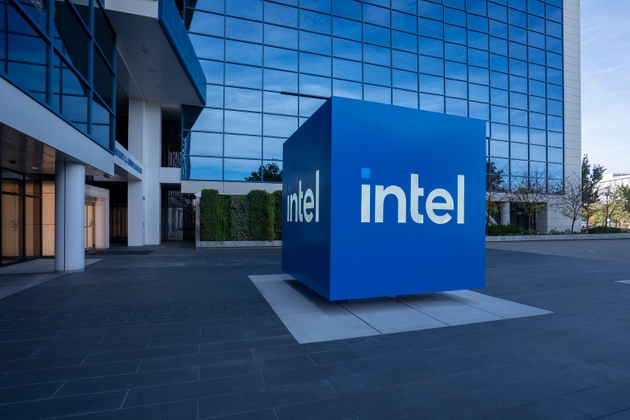
Intel Corporation’s recent quarterly performance has shifted the narrative from a focus on legacy market share erosion to the viability of its foundry-first business model. The company’s ability to navigate a complex capital expenditure cycle while simultaneously scaling its manufacturing footprint has prompted a reassessment of its long-term recovery trajectory. Investors are now weighing the company's internal manufacturing pivot against the broader competitive pressures within the semiconductor sector.
Foundry Scaling and Capital Intensity
The central challenge for Intel remains the heavy capital investment required to establish a competitive foundry business. While the recent quarterly results provided a baseline for stability, the path forward depends on the company's ability to attract external customers to its process nodes. This transition requires a fundamental shift in how the organization manages its internal design and manufacturing divisions. The success of this strategy hinges on whether Intel can achieve the necessary yield improvements to compete with pure-play foundries that have dominated the advanced node market for years.
Sector Read-Through and Competitive Positioning
The semiconductor landscape is currently defined by a divergence between companies focused on high-performance computing and those managing broader industrial or automotive exposure. Intel’s efforts to integrate itself into the AI supply chain represent a high-stakes attempt to capture value in a market currently dominated by specialized design firms. This shift is not occurring in a vacuum, as companies like ON Semiconductor continue to navigate their own specific cyclical pressures within the industrial and automotive segments. The broader sector remains sensitive to any signals of cooling demand in data center infrastructure, which serves as the primary engine for current capital allocation strategies.
AlphaScala Data and Market Context
AlphaScala currently assigns INTC an Alpha Score of 53/100, reflecting a mixed outlook as the market digests the company's transition costs. Similarly, ON holds an Alpha Score of 45/100, underscoring the volatility inherent in the current semiconductor manufacturing environment. These scores highlight the ongoing tension between potential long-term technological breakthroughs and the immediate financial burden of maintaining massive manufacturing infrastructure. As the industry evolves, the ability to balance operational efficiency with aggressive R&D spending will be the primary determinant of relative stock performance.
The Next Operational Marker
The next critical juncture for Intel will be the disclosure of specific customer wins for its advanced foundry nodes. While the current narrative focuses on the potential for a turnaround, the market will eventually require evidence of sustained revenue growth from external foundry clients to justify current valuation multiples. Investors should monitor upcoming regulatory filings and management commentary regarding capacity utilization rates at new fabrication facilities. These data points will serve as the primary indicators of whether the foundry strategy is gaining the necessary traction to offset the decline in traditional PC-centric revenue streams. The transition from capital-intensive investment to revenue-generating operations remains the definitive hurdle for the company in the coming fiscal periods.