A Watershed Moment for Digital Assets
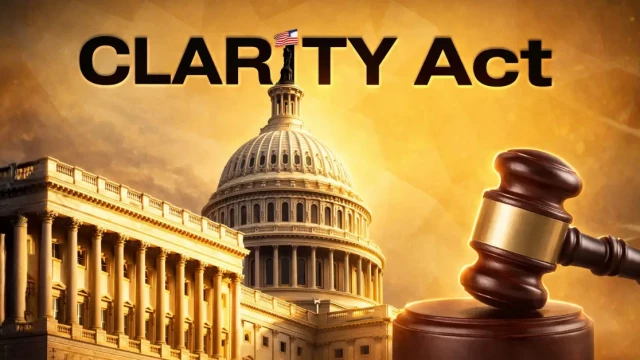
The U.S. regulatory landscape for digital assets is undergoing a seismic shift, with the emerging momentum behind the CLARITY Act signaling a potential end to the era of regulatory ambiguity. For professional traders and institutional allocators, the bill represents more than just legislative progress—it is a foundational catalyst that could unlock billions in sidelined capital, finally providing the legal certainty required for massive Wall Street integration into the crypto ecosystem.
The Architects of Change
The political and industry coalition backing the CLARITY Act is as notable as the bill itself. The legislation has garnered high-profile endorsements from Coinbase CEO Brian Armstrong, who has long campaigned for a transparent regulatory framework, and Scott Bessent, the influential investor and founder of Key Square Group. Their support underscores a strategic pivot: the industry is moving away from purely grassroots advocacy toward high-level institutional lobbying, aiming to align digital assets with the established standards of traditional finance.
For market participants, this alignment is critical. Institutional capital has historically been deterred by a 'regulation by enforcement' environment. By codifying definitions and oversight responsibilities, the CLARITY Act seeks to replace this volatility-inducing uncertainty with a structured, rules-based environment that mimics the regulatory clarity of the equities and commodities markets.
Market Implications: Beyond Bitcoin
While Bitcoin remains the primary gateway for institutional entry, the implications of the CLARITY Act ripple significantly further down the market cap spectrum. Analysts are already observing early institutional positioning in high-utility assets, specifically Ethereum, Solana, and Chainlink.
Historically, institutional interest begins with the most liquid, 'blue-chip' assets. However, as the legal framework solidifies, the focus typically shifts toward protocols that provide infrastructure for decentralized finance (DeFi) and enterprise blockchain solutions. Ethereum’s status as a foundational layer, Solana’s high-throughput capabilities, and Chainlink’s role as the industry’s oracle standard make them prime candidates for institutional portfolios looking to diversify beyond simple digital gold proxies.
Why This Matters for Traders
For the active trader, the passage or even the steady legislative progress of the CLARITY Act serves as a 'de-risking' event. Currently, crypto-assets trade with a high beta to tech stocks and are hypersensitive to Federal Reserve policy. Institutional adoption would fundamentally alter this correlation structure. A broader base of institutional holders—pension funds, endowments, and sovereign wealth vehicles—would likely increase market depth, reduce flash-crash volatility, and transition the asset class into a core component of modern portfolio theory.
Investors should be monitoring the 'CLARITY premium'—the extent to which assets that are clearly defined as commodities rather than securities might outperform in a post-legislation landscape. As the bill gains traction, watch for shifts in institutional sentiment regarding the classification of altcoins, which have historically faced the highest risk under the current SEC oversight regime.
Looking Ahead: The Regulatory Horizon
The months ahead will be defined by the legislative calendar in Washington. Traders should watch for key committee hearings and bipartisan signals that suggest the act is moving toward a floor vote. Historical precedents in other sectors, such as the initial regulatory frameworks for ETFs, suggest that the period leading up to legislative approval often sees a 'front-running' effect, where institutional 'smart money' accumulates positions ahead of retail-focused mainstream adoption.
While the path to law is rarely linear, the involvement of figures like Bessent and Armstrong suggests that the CLARITY Act is the most serious attempt at comprehensive reform to date. For those currently operating in the crypto space, the focus should remain on the intersection of legislative progress and asset liquidity, as the next institutional bull cycle may well be written into law.