Stocks● Neutral
IndiGo, Air India Express Restore 70% of West Asia Capacity
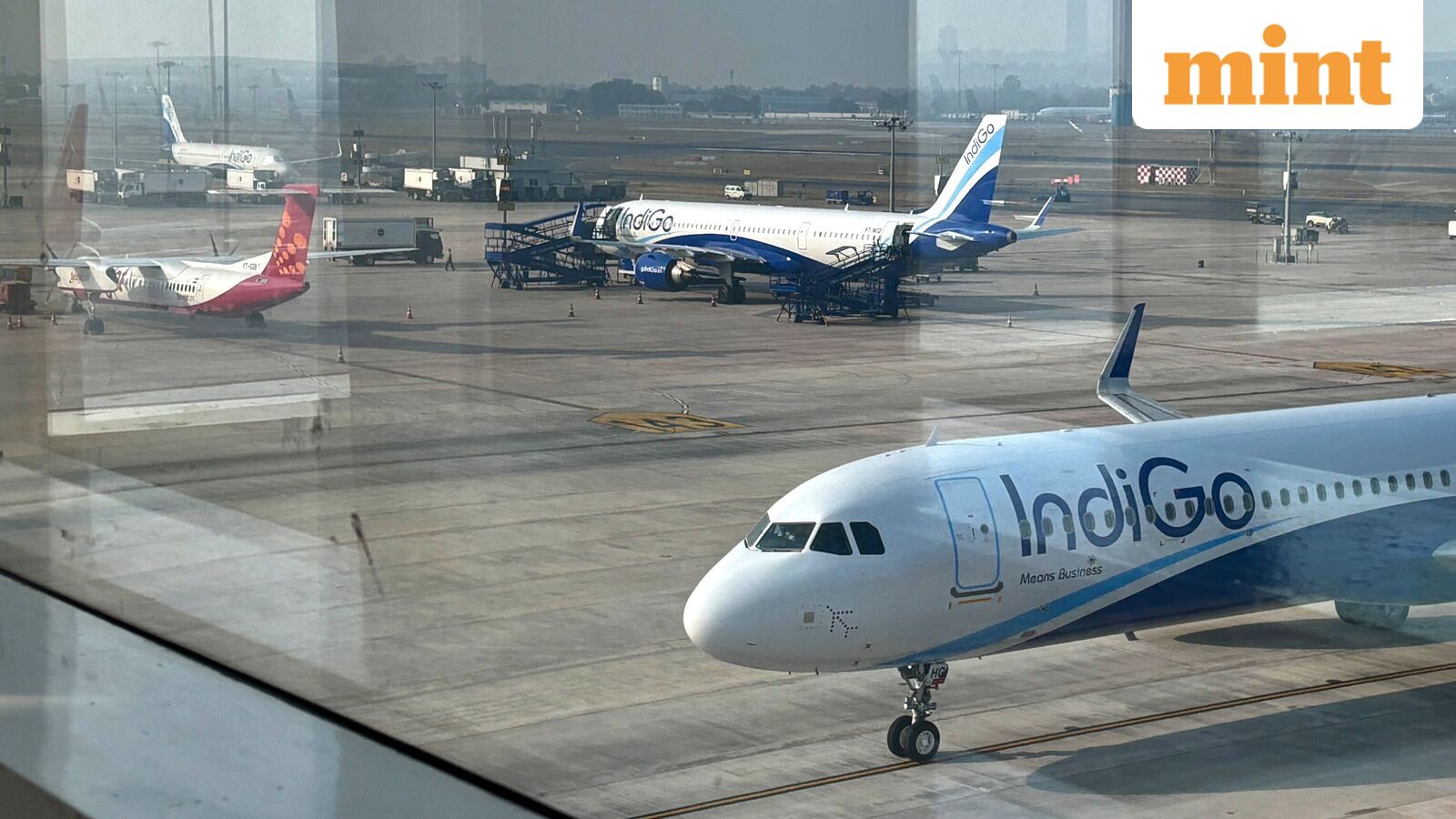
IndiGo restored 74% of West Asia departures by June. Total capacity remains 16% below last year on fuel costs and airport restrictions. Analysts flag uneven route economics.
Continue with
NEW DELHI – Indian airlines are racing to rebuild West Asia flight schedules after a conflict-driven pullback that cut capacity by as much as 77% in April. IndiGo and Air India Express lead the recovery, restoring roughly 70-74% of last year's June departures. Caution remains: total capacity in the region is still 16% below year-ago levels, and fuel costs stay elevated.
UK-based aviation analytics firm OAG, reviewed by Mint, shows IndiGo operated 1,730 departures to West Asia in June, down from 2,343 a year earlier. Air India Express scheduled 1,244 departures against 1,784 last year. Air India operated 355 departures, down from 607.
The pullback began in late February, when conflict in West Asia triggered airspace restrictions, forcing cancellations and rerouting. The closure of Pakistani airspace since April 2025 added flight time and fuel burn. April was the steepest month. For IndiGo, departures fell 72% to 623. Air India Express dropped 68% to 597. Air India's decline was steepest at 77% to 148 departures.
By May, conditions improved as restrictions eased. Airlines gradually rebuilt schedules, and by June the pace accelerated. Key destinations such as Dubai, Abu Dhabi, Doha and Jeddah saw restored service.
“IndiGo has been progressively restoring its India–West Asia capacity, with most of it expected to be back in operation by the end of June,” an IndiGo spokesperson said. The airline cautioned that some airports in the region still face operational restrictions and infrastructure constraints.
Air India Express said it has restored around 80% of its West Asia operations. The carrier operates about 2,500 monthly flights to and from the region, a spokesperson said. It is adding new routes such as Navi Mumbai–Abu Dhabi. Air India did not respond to queries.