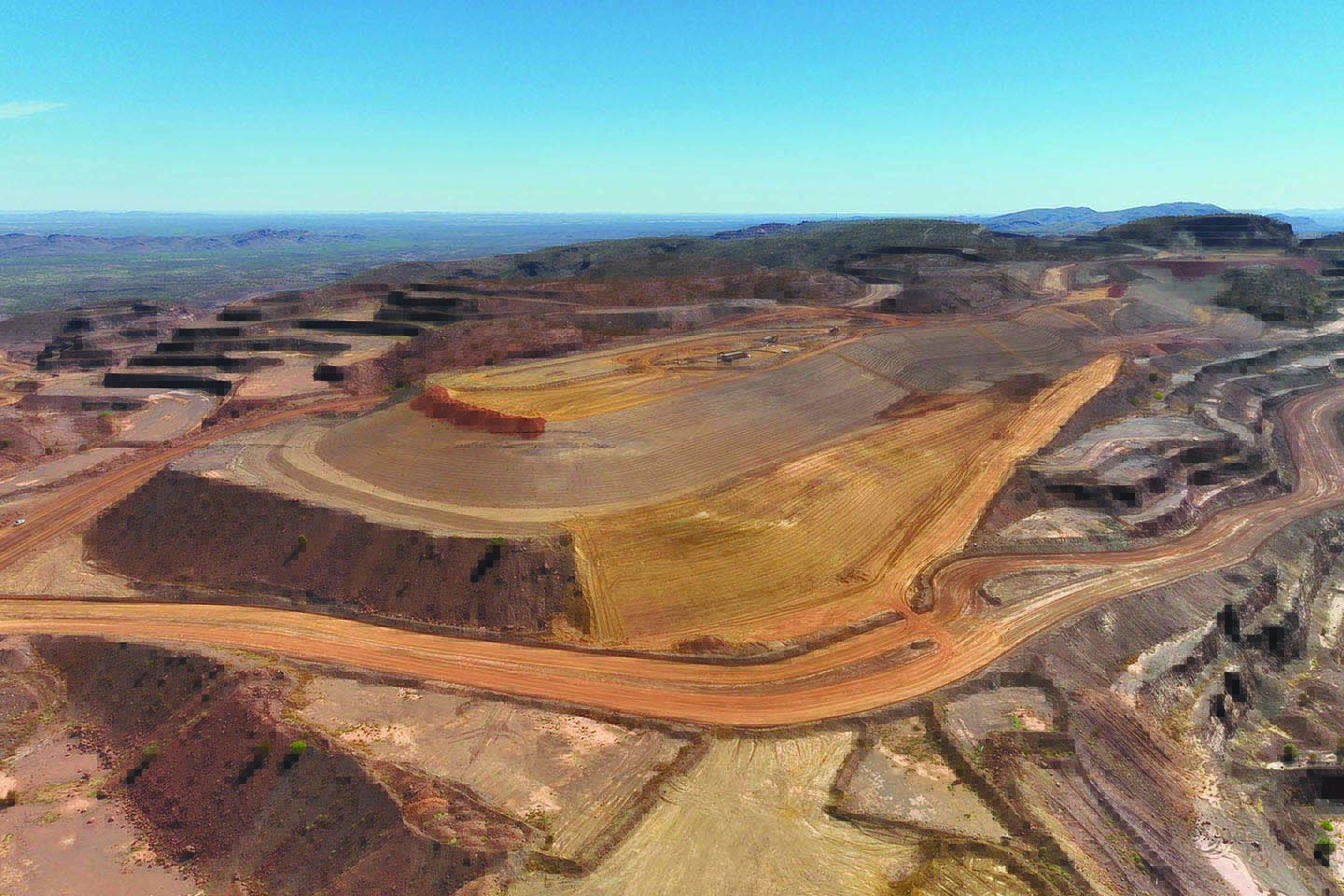
Indigenous businesses have taken on a growing share of the mine rehabilitation work in Western Australia, where the industry faces an estimated $50 billion cleanup bill over the next decade.
Mine closure has become a bigger line item on miner balance sheets globally. Nowhere is the gap between obligation and execution wider than in Australia. The state's Department of Mines, Industry Regulation and Safety estimates that 60,000 abandoned or orphaned mine sites dot the landscape, many from the gold rushes of the 19th and early 20th centuries.
Traditional owners and Indigenous-owned contracting firms have stepped into that void. The Kimberley Land Council, through its Indigenous ranger programs, now manages rehabilitation on more than 200 sites across the region. The work ranges from capping old shafts to replanting native vegetation on tailings dams.
Rio Tinto, BHP and Fortescue have all signed multi-year contracts with Indigenous businesses for closure work at their Pilbara operations. Rio's agreement with the Nyiyaparli People covers rehabilitation at the Marandoo mine, where the company plans to begin final closure in 2028. BHP's contract with the Banjima People covers the Yandi mine, one of the largest iron ore operations in the world, which is scheduled to stop production by the end of this decade.
The shift is partly regulatory. Western Australia's Mining Rehabilitation Fund, launched in 2013, requires miners to post bonds for closure costs. The fund now holds more than $1.2 billion in security. The state's auditor general warned last year that the total liability across all active and abandoned sites could exceed $50 billion.
Indigenous businesses bring local knowledge that conventional contractors often lack. Traditional owners know which water sources are culturally significant, where sacred sites are located, and which plant species belong on a given landform. That knowledge cuts the time needed for environmental surveys and reduces the risk of costly mistakes.
"Our people have been looking after this country for 60,000 years," said Peter Yu, chairman of the Yawuru Native Title Holders Aboriginal Corporation. "We know where the water flows and where the soil is fragile. A mining company's environmental officer might spend six months learning what we already know."
The economics work too. Indigenous businesses typically charge 15-20% less than conventional contractors for the same scope of work, according to data from the WA Department of Jobs, Tourism, Science and Innovation. Lower overheads and a willingness to work in remote locations drive the discount.
The model has limits. Most Indigenous contracting firms are small, with fewer than 20 employees. Scaling up to handle the largest closure projects – the kind that involve moving millions of tonnes of waste rock – requires capital and equipment that few can access. The state government's Aboriginal Business Development Fund, which provides grants of up to $500,000, has helped some firms buy excavators and dump trucks. The gap between available work and contractor capacity remains wide.
"The demand is there. The supply of capable Indigenous contractors is not," said John O'Brien, a mining analyst at Perth-based consultancy CRU Group. "You can't train a bulldozer operator in six months. It takes years."
The federal government's Indigenous Procurement Policy, which sets a target of 3% of Commonwealth contracts going to Indigenous businesses, has helped. Mining companies, which are not directly covered by the policy, have adopted similar targets voluntarily. Rio Tinto aims to spend $1 billion with Indigenous suppliers by 2030. BHP has a target of $500 million.
Whether those targets translate into enough capacity to handle the coming wave of mine closures is an open question. The first big test will come in 2028, when Rio's Marandoo closure begins in earnest. If the Indigenous contractors on that job deliver on time and on budget, the model will have proof of concept. If they struggle, the industry will have to rethink its approach.