Macro● Neutral
India's Rural Job Scheme Output Halves to 76.7M Person-Days
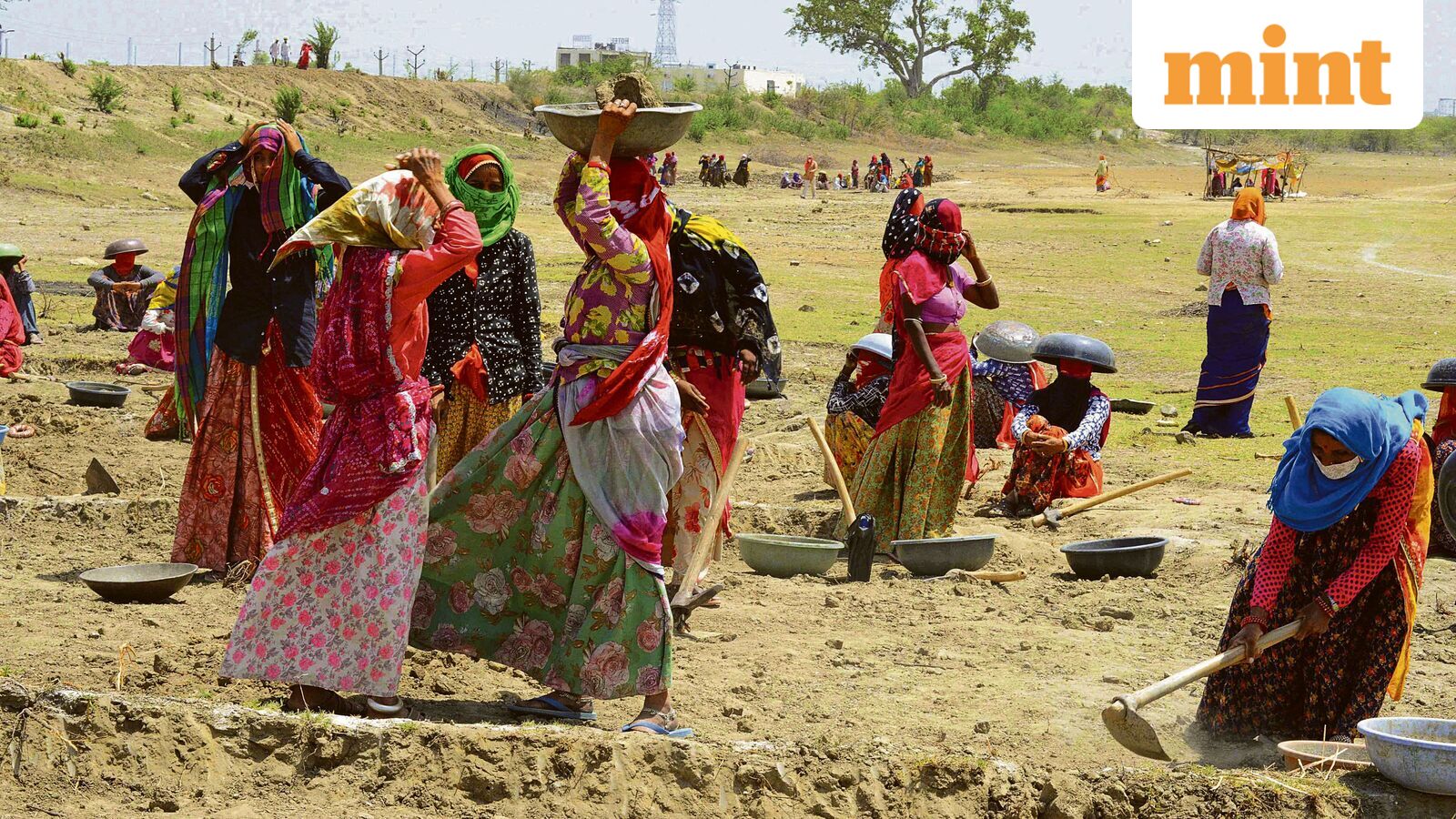
India's rural jobs scheme generated 76.7M person-days in July, half last year's 153M, after states took on 40% of costs. El Niño could deepen the rain deficit.
Continue with
India's rural employment guarantee produced 76.7 million person-days of work in July, about half the 153 million in July 2025 and a fifth of the 391 million in July 2020, Himanshu wrote in Mint.
July was the first full month under the Viksit Bharat Guarantee for Rozgar and Ajeevika Mission (Gramin) Act, known as VB-G RAM G, which replaced the Mahatma Gandhi National Rural Employment Guarantee Act (MGNREGA) on 1 July. The law was enacted in December 2025, and MGNREGA stayed in operation through the transition. The new law changes the 2005-era funding structure of the scheme. States now bear 40% of its cost, except in hill states. Under MGNREGA, the Centre funded almost all public expenditure.
Himanshu, associate professor at Jawaharlal Nehru University and visiting fellow at the Centre de Sciences Humaines in New Delhi, wrote that the July reading looks like part of a broader decline rather than an aberration.
A Drop Concentrated in Rain-Deficit States
Only Andhra Pradesh and Telangana generated more person-days than a year earlier. Elsewhere the fall was steep; Uttar Pradesh produced 12 million person-days, Madhya Pradesh 10 million, Jharkhand 9 million, Maharashtra 7 million, Bihar 5 million, Chhattisgarh 4 million and Assam 3 million. Most of those states carry the largest rainfall deficits of the current monsoon.
Himanshu said the July drop could partly reflect states using VB-G RAM G's pause provision during peak sowing and harvest months. He questioned that explanation. The scheme's basic apparatus was already in place, and rural demand for these jobs has not fallen given the distress visible in other data, he wrote. State financing does not appear to be the binding constraint either; most states, including poorer ones, have budgeted significant sums for implementation despite weak finances.