Macro● Neutral
India's Japan-worker pipeline hits language bottleneck
India's Japanese-language learner base jumped 47% in three years to nearly 53,000. The teaching pool grew only 13.5%. The gap threatens a 50,000-worker employment corridor.
Continue with
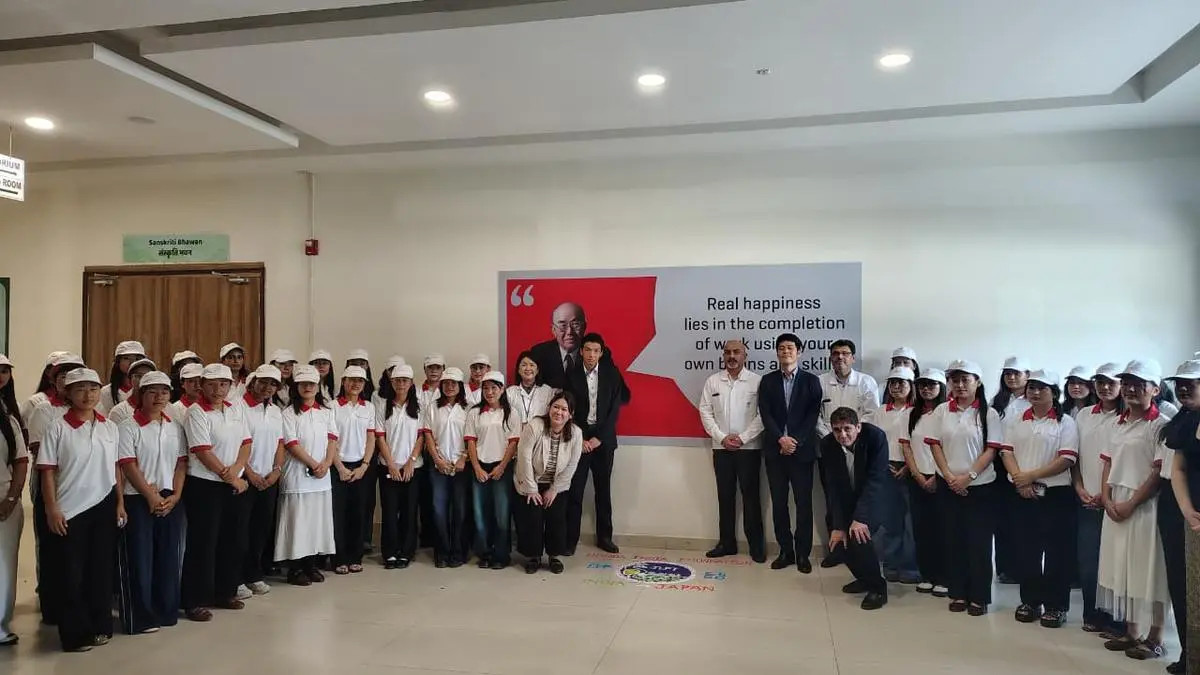
Honda's training centre in Manesar has 60 healthcare assistants starting a year of Japanese-language preparation. They will aim for N5 and N4 levels of the Japanese-Language Proficiency Test while sharpening caregiving skills and learning workplace culture. The programme is one piece of a larger corridor. It also shows how hard the conversion from interest to deployment can be.
India's Japanese-language learner base has jumped 47% in three years to nearly 53,000. The teaching pool has grown only 13.5% to 1,285, or about 41 learners per teacher. Industry estimates put the number entering elementary programmes at 18,000–22,000 a year, only 3,500–5,000 reach the proficiency Japanese employers require, said Munira Loliwala, a workforce strategist who has worked on talent requirements for Japanese companies in India.
Language is the first filter. It is not the only one.
“India doesn't have a shortage of people interested in opportunities in Japan,” Loliwala said. “The challenge is converting that interest into candidates who are language-ready, skills-ready and ultimately deployment-ready.”
Honda's inaugural batch are General Duty Assistants previously trained under its healthcare-skilling programme. The Foundation trains more than 4,000 youth annually in those skills, potentially creating a larger pool for future Japan-bound batches. Successful candidates receive documentation, visa, placement, deployment and post-placement support.
“Language is an important bridge to learning, working and adapting in a new country,” said Vinay Dhingra, Trustee of the Honda India Foundation.
Japanese manufacturers have already built vocational-training capacity in India. Maruti Suzuki's Japan-India Institutes for Manufacturing and Toyota's technical-training infrastructure prepare young Indians in manufacturing practices and workplace culture. Those programmes are distinct from the language certification required for employment in Japan.