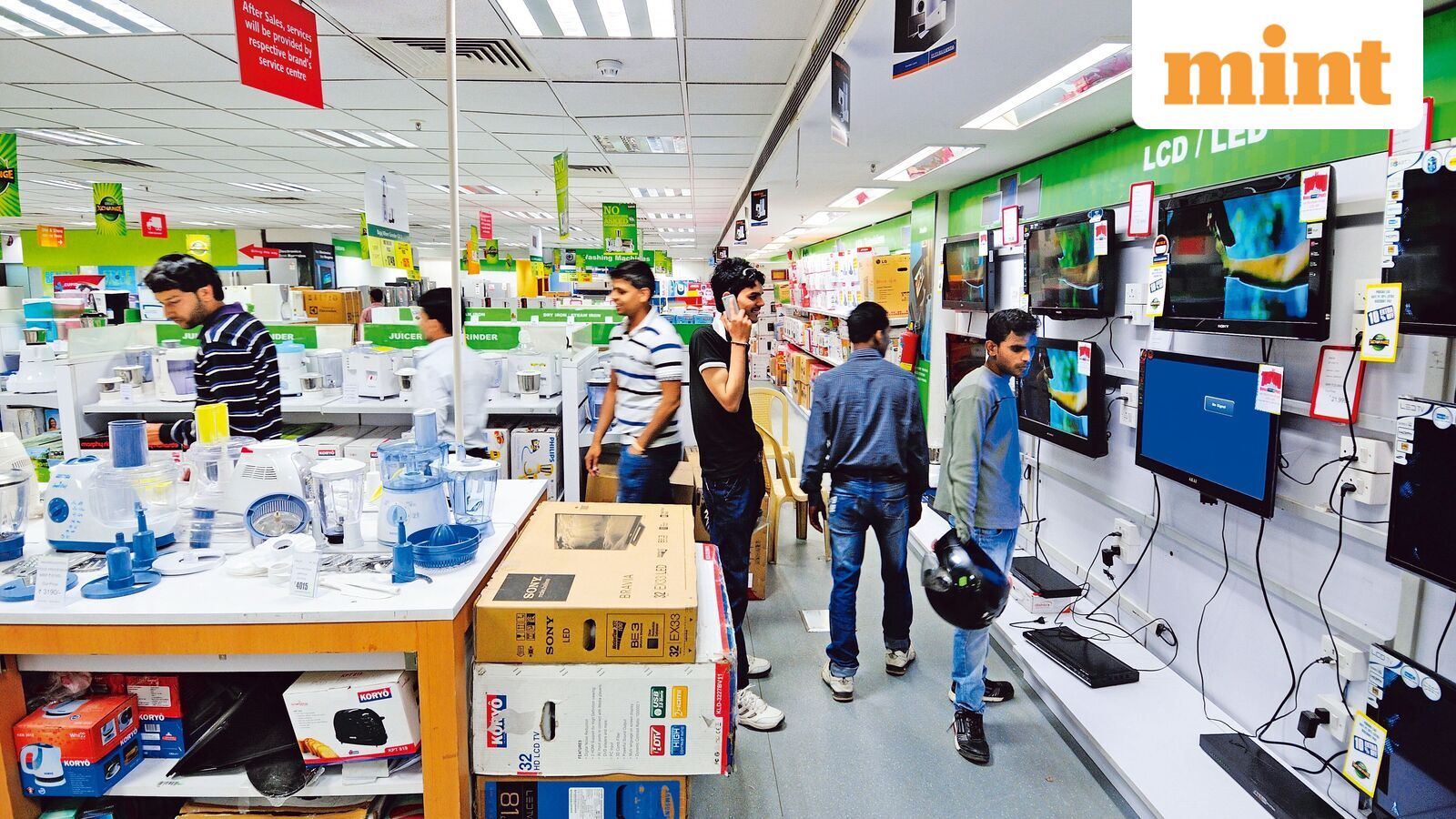
India's consumer durables sector enters the festive season this year without last year's tailwind. In 2026, a GST cut from 28% to 18% on major appliances pulled prices down 7-10%, giving retailers a clear run. This year, prices are up across the board. LG Electronics raised prices by a cumulative 16-17% in two rounds during April-June. Blue Star added 5%. Crompton Greaves Consumer Electricals pushed up prices by high-single to low-double digits. Smartphone prices rose about 15% by the end of the first quarter, according to Bharat Birla, executive director at Anand Rathi Advisors.
Retailers are still betting on growth. Nilesh Gupta, director and managing partner at Vijay Sales, said the chain expects 8-10% growth over last year, citing a strong start in the Independence Day sale. Shibashish Roy, CEO of Infiniti Retail which runs Croma stores, said consumer intent remains strong despite selective price increases, with a clear preference for premium, feature-rich products across lifestyle, entertainment and productivity-led categories.
Evidence supports that shift. Amazon India's Prime Day sale in June saw sales of premium TVs priced above ₹35,000 double from a year earlier, with demand moving toward screens of 65 inches and above. AI-enabled PCs accounted for one in five Windows laptops sold during the sale. Demand for newer kitchen products such as robotic vacuums, coffee machines and ice makers rose 4.3 times year on year. The more recent Freedom Sale also showed strong demand, with Amazon India reporting purchases across smartphones, electronics, home and kitchen more than twice those of a normal day, and customers opting for more premium products.
Birla noted that mobile growth from FY20 to FY25 has been driven by premiumization, not volume, given high penetration. He expects that trend to continue as consumers typically move up the value chain. EMI financing, which accounts for about 50% of purchases across tier 1 and tier 2 markets for some Anand Rathi clients, should cushion the impact of higher prices.
The squeeze, however, is likely to be greater at the mid- and entry-level, especially among price-sensitive aspiring consumers in tier 2 and smaller markets. Birla said elasticity is untested at these prices. Consumers are more likely to become cautious with their budgets than trade down, though exchange schemes and financing could help bridge the affordability gap.
Some large-ticket purchases have already been deferred. Deenadayalan C, CEO of Sathya Agencies which runs more than 400 stores across southern India, said purchases of large appliances such as side-by-side refrigerators and large-screen TVs above 32 inches have been postponed in recent months. Kitchen appliances and entry-level smartphones could prove more resilient, according to Birla.
Average selling prices of mobile phones in India rose 14.4% year over year in the second quarter of 2026 to a record $315, according to International Data Corporation.
The festive season typically runs from August through Diwali in mid-November. With Diwali falling in November this year, brands and retailers will have a longer promotional window from September to mid-November. Sanjay Chitkara, director and co-chief sales and marketing officer at LG Electronics, said whenever Diwali falls in November, the season outperforms because of the longer window. Last year it was in October.
The sector also enters the season with the lagged benefit of the GST rationalization. Anand Rathi Advisors expects the tax cut's effects to continue showing up, while the longer festive window should give brands, marketplaces and retailers more time to spread promotional schemes.
Manufacturers face higher raw-material costs. Copper prices are up about 45% from a year ago and aluminium prices about 25%, according to industry estimates, prompting the price increases. Companies are also using new products to encourage upgrades. Crompton Greaves Consumer Electricals has launched its super-premium brand Rhion, with a water device using desalination technology priced at an MRP of ₹42,000.
B. Thiagarajan, managing director of Blue Star, said in an analyst call on Aug. 7 that the revival will happen sometime from end-August to September as the festival season begins. He expects demand to pick up significantly in Q3 and Q4 as the company rejigs its product portfolio.