Macro● Neutral
India's 'Cockroach' Protest Signals Political Risk for Rupee
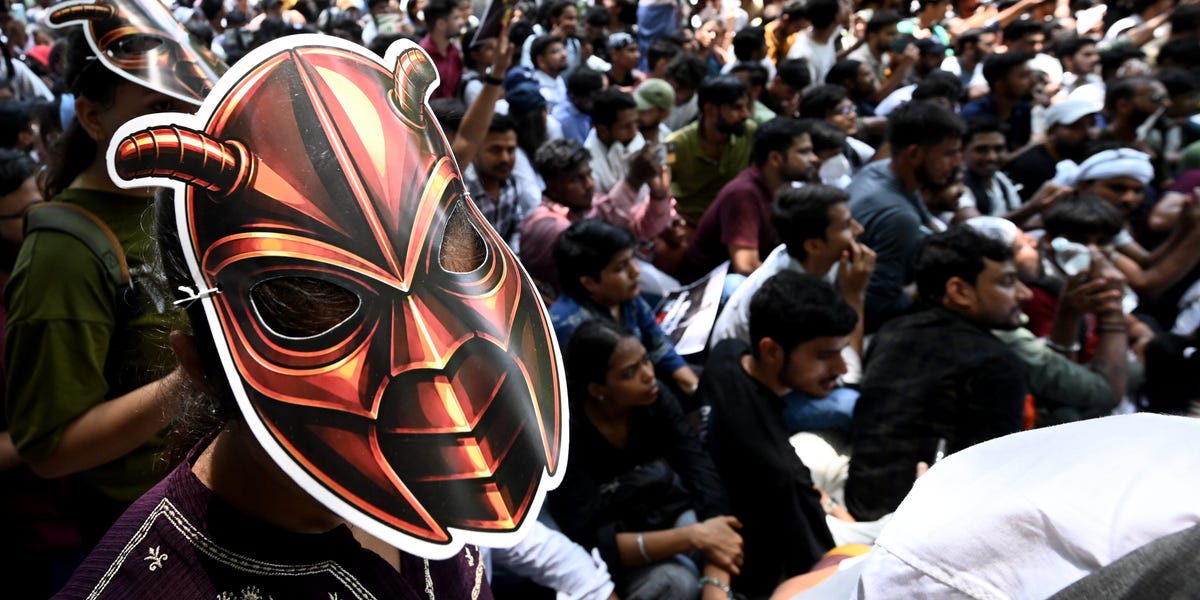
Hundreds of young Indians calling themselves cockroaches marched in New Delhi. The protest reprices political risk for the rupee, bonds, and equities.
Continue with
On Saturday, hundreds of young Indians converged on New Delhi, calling themselves cockroaches in a protest against unemployment and corruption. The self-identification signals a generation that feels abandoned by the formal economy. For macro traders, the event reprices India's political risk premium, with direct transmission to the rupee, bond yields, and equity flows.
Rupee and Foreign Portfolio Flows
The protest raises the risk premium embedded in the rupee. Foreign portfolio investors, already cautious after the dollar's strength and elevated Indian bond yields, may reduce exposure to Indian equities. The rupee has been one of Asia's weaker currencies in recent months. A prolonged protest campaign adds another headwind. The Reserve Bank of India has tools to smooth volatility. It recently covered hedge costs to lure foreign deposits. The cost of defending the currency rises if capital outflows accelerate. The RBI's tools become more expensive to deploy.
Bond Yields and Fiscal Expectations
The protest increases the probability of pre-election fiscal expansion. Any announcement of job schemes or direct transfers would widen the central government's fiscal deficit, pushing bond yields higher. The 10-year Indian government bond yield has already risen on global rate repricing. A populist budget could send it testing higher levels. Higher yield is not automatically bearish; it can attract carry traders. The RBI faces a dilemma: keep rates high to defend the rupee and inflation credibility, or cut to support growth and risk more outflows.