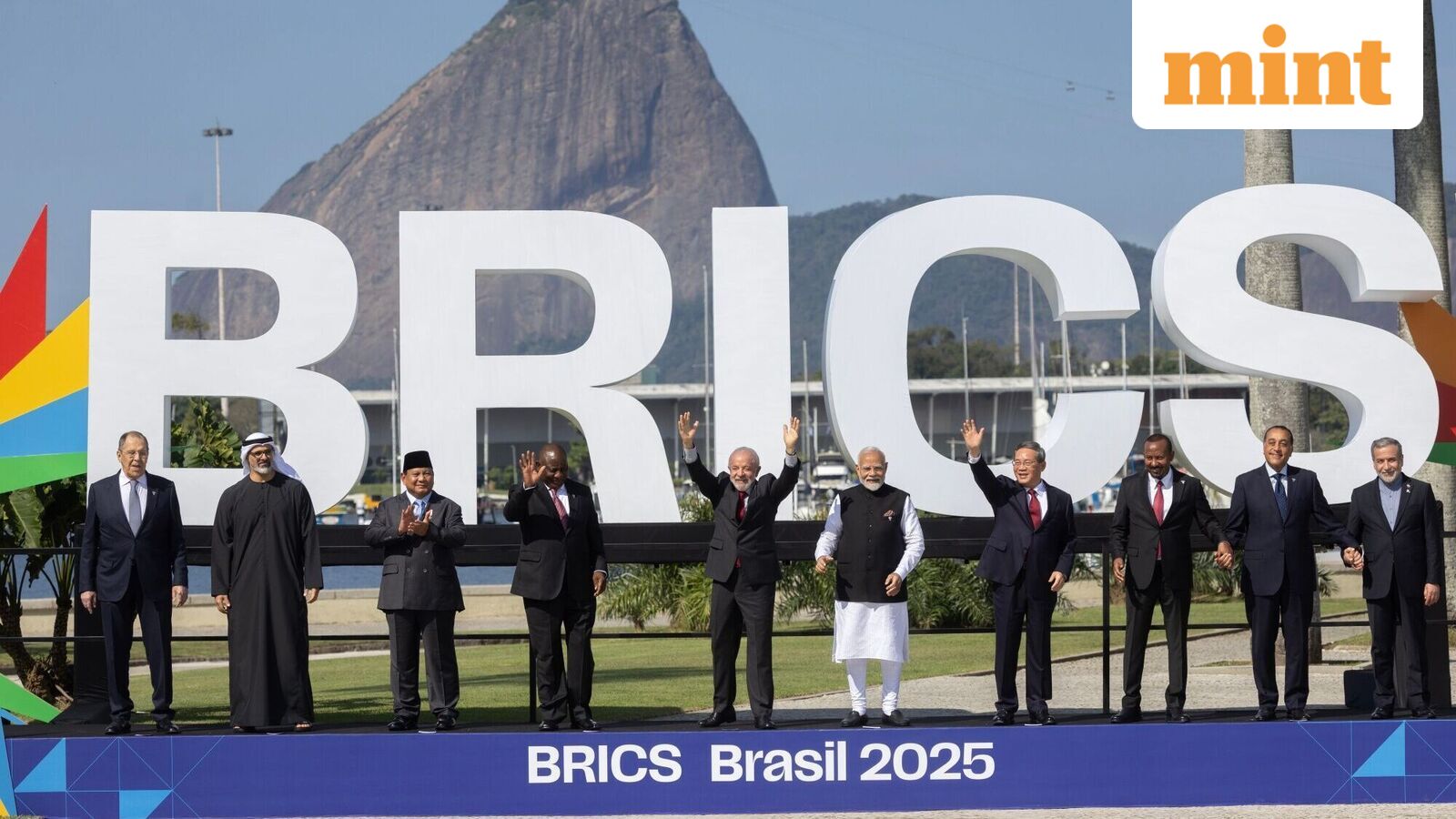
India’s BRICS Presidency and the Shift Toward Global South Financial Integration

India’s BRICS presidency signals a pivot toward institutionalizing the bloc as a functional representative of the Global South, focusing on trade reform and financial integration.
Alpha Score of 45 reflects weak overall profile with strong momentum, poor value, poor quality, weak sentiment.
Alpha Score of 47 reflects weak overall profile with moderate momentum, poor value, moderate quality. Based on 3 of 4 signals — score is capped at 90 until remaining data ingests.
Alpha Score of 34 reflects weak overall profile with moderate momentum, poor value, poor quality, weak sentiment.
HASBRO, INC. currently screens as unscored on AlphaScala's scoring model.
India’s upcoming presidency of the BRICS bloc arrives at a moment of significant global economic fragmentation. While the platform has historically struggled with internal cohesion, the transition to Indian leadership signals a pivot toward institutionalizing the bloc as a functional representative of the Global South. This shift moves the narrative away from purely geopolitical posturing and toward the practical mechanics of international trade and financial reform.
Strengthening Institutional Coherence
The primary challenge for the BRICS platform remains the alignment of disparate national interests into a unified economic agenda. Under Indian leadership, the focus is expected to center on improving the effectiveness of existing mechanisms, such as the New Development Bank and cross-border payment frameworks. By prioritizing technical cooperation over ideological expansion, New Delhi aims to transform the bloc into a credible alternative for emerging market infrastructure funding. This approach seeks to mitigate the risks of global volatility by creating a more resilient internal trade architecture.
For investors monitoring the broader stock market analysis, the success of this presidency will be measured by the concrete progress made in de-risking trade between member nations. If the bloc succeeds in streamlining regulatory standards for digital payments and supply chain logistics, it could significantly lower the cost of capital for companies operating across these jurisdictions. The focus on the Global South suggests that the platform is positioning itself to capture the next wave of infrastructure investment, which has historically been dominated by Western-led institutions.
Strategic Implications for Emerging Markets
India’s ability to navigate this role without alienating its existing trade partners in the West will be the ultimate test of its diplomatic strategy. The objective is to leverage the BRICS platform to amplify the economic concerns of developing nations while maintaining access to global liquidity pools. This balancing act is critical for maintaining the stability of emerging market currencies and ensuring that the bloc remains a constructive participant in the global financial system rather than a disruptive force.
As the presidency unfolds, the focus will shift toward the specific policy outcomes regarding debt sustainability and trade facilitation. Market participants should look for updates on the expansion of local currency settlement systems, as these will serve as the primary indicators of the bloc's progress toward financial autonomy. The ability to execute these reforms will determine whether the platform can evolve from a consultative forum into a functional economic bloc capable of influencing global trade dynamics.
AlphaScala currently tracks various consumer and industrial entities that are sensitive to these macroeconomic shifts. For instance, AS stock page reflects the broader volatility inherent in the consumer cyclical sector, which remains sensitive to shifts in global trade policy and emerging market demand. With an Alpha Score of 47/100, the stock is currently labeled as Mixed, highlighting the uncertainty surrounding international growth trajectories. The next concrete marker for this narrative will be the formal policy agenda released at the start of the presidency, which will detail the specific regulatory frameworks and infrastructure projects prioritized for the coming year.
AI-drafted from named sources and checked against AlphaScala publishing rules before release. Direct quotes must match source text, low-information tables are removed, and thinner or higher-risk stories can be held for manual review.