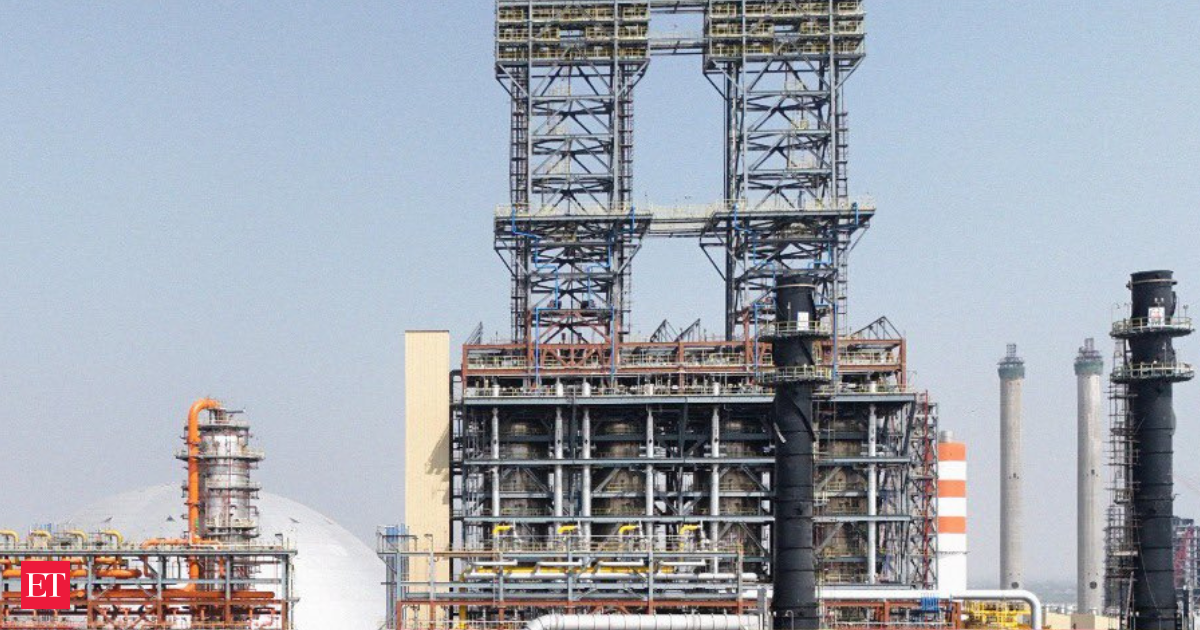
Prime Minister Narendra Modi inaugurated India's first integrated refinery-cum-petrochemical complex in Rajasthan. The 9-million-tonne-per-annum unit, a joint venture with Hindustan Petroleum Corp., cost Rs 1.06 lakh crore, the government said. Oil Minister Hardeep Singh Puri called it the first greenfield refinery in the country in a decade.
The complex links refining directly to petrochemical production. Traditional refineries mostly produce fuels. This one converts heavier fractions into naphtha, propylene, and other feedstocks. India imports roughly 40% of its petrochemical demand today.
For HPCL, the project adds significant throughput. Its existing refineries in Mumbai and Visakhapatnam had about 15 MMTPA combined. The new unit increases HPCL's total capacity by more than half. Petrochemical margins typically run higher than fuel margins. That could improve HPCL's earnings over the cycle, traders said.
The implications reach beyond HPCL. India's total refining capacity stands near 250 MMTPA, mostly geared to gasoline and diesel. A 9-MMTPA integrated unit tilts the balance toward petrochemicals at a time when global fuel margins face pressure from new Middle East and Asian capacity. The petrochemical link also absorbs some fuel output into derivatives, reducing the risk of overcapacity.
For crude suppliers, the new demand stream shifts the grade mix. The complex will likely process more light, sweet grades that yield higher naphtha volumes. That could shift India's buying profile away from heavier grades. Indian refiners already buy about 4.5 million barrels a day. The new unit adds roughly 180,000 bpd of processing capacity.
The government's energy security push extends beyond this project. Rajasthan, a landlocked state, also reduces logistical reliance on coastal refineries. Crude will move via pipeline from the coast, the government said.
The unit is expected to produce 1.6 million tonnes of polymers annually, along with propylene and other chemicals. That alone could replace about 5% of India's current petrochemical imports. For context on how such capacity additions affect commodity flows, see the commodities analysis page. For a deeper look at crude supply dynamics, the crude oil profile covers India's import patterns.